
Why Scents Smell Different on Your Skin
Table of Contents
- Why Scents Smell Different: The Role of Skin Chemistry
- How Body Chemistry Affects Perfume Performance
- Skin Hydration, Temperature, and Evaporation Rates
- Understanding the Perfume Dry Down Process Explained
- How to Make Perfume Last Longer on Skin
- Diet, Medication, and Lifestyle Impact on Fragrance
- Olfactory Fatigue vs. Actual Scent Changes
- Conclusion
Last Updated: August 14, 2026
Why Scents Smell Different: The Role of Skin Chemistry
Your skin is not a neutral canvas for fragrance. It's a living ecosystem that transforms how scents smell from the moment they touch your body. The same perfume can smell floral and fresh on one person, warm and spicy on another, or fade quickly on a third. These differences aren't random, they're the result of measurable interactions between your skin's chemistry, the fragrance's molecular structure, and environmental factors.
This guide breaks down the science behind why scents smell different on your skin and what you can do about it. Knowing how your body chemistry affects perfume performance will transform your fragrance experience.
How Body Chemistry Affects Perfume Performance
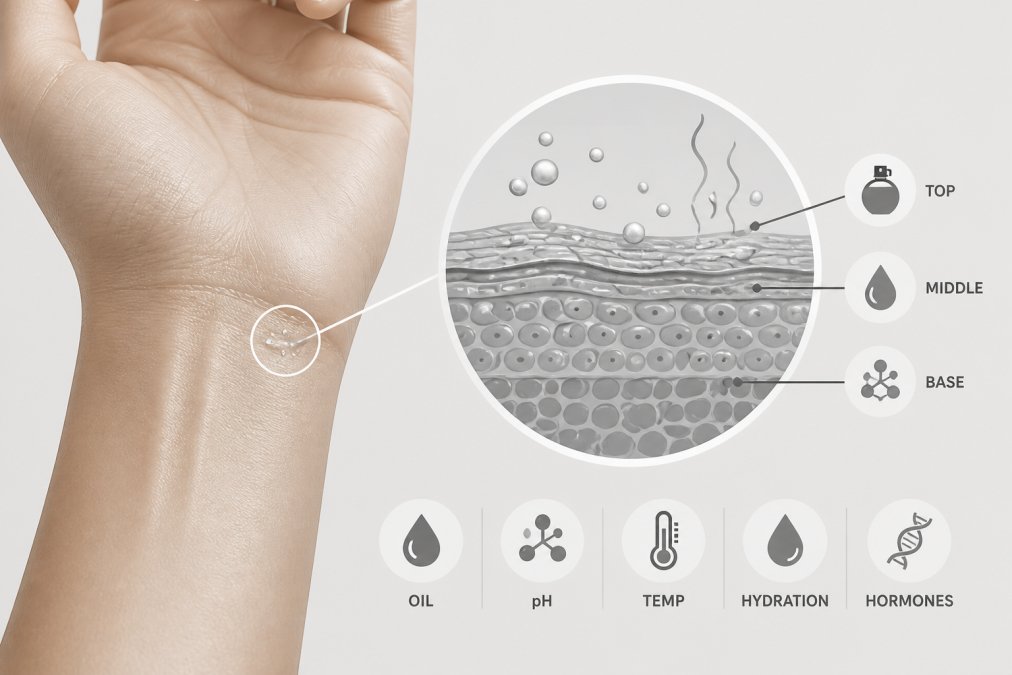
Your body chemistry fundamentally shapes how fragrance unfolds on your skin. Scent molecules interact with your skin's natural oils, pH levels, temperature, and microbiome. These interactions determine both how a fragrance smells and how long it lasts. No two people have identical skin chemistry, which is why the same perfume smells different on different people.
Skin pH and Fragrance Interaction
Your skin's pH level, measured on a scale from 0 to 14, plays a direct role in how fragrance molecules behave. Healthy skin typically maintains a pH between 4.5 and 5.5, which is slightly acidic. This acid mantle influences how fragrance compounds dissolve and disperse.
Fragrance molecules are designed to interact with skin at specific pH levels. When your skin's pH shifts, even slightly, the molecular structure of fragrance compounds can change. An acidic environment may intensify certain scent notes while diminishing others. If your skin runs more alkaline than average, floral or citrus notes may fade quickly while deeper base notes become more prominent.
Common reasons for pH fluctuations include hormonal changes, diet, stress, skincare products, and time of day. A person using alkaline soaps or experiencing hormonal shifts during their menstrual cycle may notice that their favorite fragrance smells noticeably different.
Sebum Production and Scent Molecules
Sebum is your skin's natural oil, produced by sebaceous glands. It plays a critical role in how fragrance molecules bind to your skin and how they're released over time. Higher sebum production means more oil for fragrance molecules to interact with, which can enhance longevity or alter the scent profile.
People with oily skin tend to experience fragrance differently than those with dry skin. On oily skin, fragrance molecules dissolve more readily into the sebum layer, creating a richer, more intense scent experience. On dry skin, fragrance molecules have less oil to bind with, so they evaporate more quickly, making fragrances feel lighter and more fleeting.
Sebum production varies throughout the day, month, and year. This is why the same fragrance might feel different depending on when you apply it.
Skin Hydration, Temperature, and Evaporation Rates
How well your skin retains moisture directly impacts fragrance performance. Hydrated skin holds onto fragrance molecules longer because the moisture layer slows evaporation. Dehydrated skin causes fragrance to evaporate more rapidly, resulting in shorter wear time and less sillage.
Your skin's temperature also influences how scents smell different on your skin. Fragrance molecules are volatile and transform from liquid to gas more readily at higher temperatures. Warmer skin accelerates evaporation and can intensify fragrance projection. This is why fragrances often smell stronger in summer than winter, and why pulse points, areas where blood vessels are closer to the surface, are ideal application zones.
Metabolism plays a role too. People with faster metabolisms or higher baseline body temperatures experience faster fragrance evaporation and may find that fragrances don't last as long as on others.
Understanding the Perfume Dry Down Process Explained
The dry down is the final stage of fragrance evolution, where the scent settles into its base notes after the top and heart notes have faded. Understanding how the dry down works on your specific skin helps you choose fragrances that align with what you actually want to smell like after the first few hours.
When you first apply fragrance, you experience the top notes, the lightest, most volatile compounds that evaporate within 5 to 15 minutes. These are followed by the heart notes, which last 30 minutes to a few hours. Finally, the base notes emerge and persist for hours or even all day.
The dry down is where why scents smell different on your skin becomes most apparent. Two people applying the same fragrance will experience identical top and heart notes for the first hour. But as the fragrance dries down, their individual skin chemistry takes over, creating unique final impressions.
Top Notes, Heart Notes, and Base Notes
Top notes are the first impression, bright, fresh, and fleeting. They include citrus oils, bergamot, lemon, and grapefruit, typically lasting 5 to 15 minutes. Top notes behave almost identically to how they smell in the bottle because they haven't had time to interact deeply with your skin chemistry yet.
Heart notes (middle notes) emerge as the top notes fade. These include floral notes, spices, herbs, and fruity compounds lasting 30 minutes to several hours. This is where individual skin chemistry begins to influence the scent experience. A rose note might smell sweeter on one person and more green or tart on another.
Base notes are the foundation, rich, heavy, long-lasting compounds like musk, amber, sandalwood, vanilla, and patchouli, lasting 6 to 24 hours or longer. By the time base notes dominate, your skin chemistry has fundamentally transformed the fragrance. The dry down is essentially your skin's unique interpretation of the fragrance's base.
Sillage and Scent Projection on Your Skin
Sillage refers to how much fragrance you project into the air around you, the scent trail you leave. It's different from longevity (how long the fragrance lasts on your skin).
Your skin chemistry directly influences sillage. People with oily skin and higher body temperature typically project fragrance more strongly. People with dry skin or lower body temperature may find that even long-lasting fragrances don't project as far. Humidity also plays a role, humid environments amplify sillage, while dry environments suppress it.
Sillage varies throughout the fragrance's lifecycle. Top notes typically project the strongest because they're the most volatile. As the fragrance dries down into heart and base notes, sillage often decreases even though longevity increases.
How to Make Perfume Last Longer on Skin
Making fragrance last longer starts with understanding that longevity depends on three factors: the fragrance's concentration, your skin chemistry, and your application technique. You can't change your skin chemistry, but you can optimize the other two.
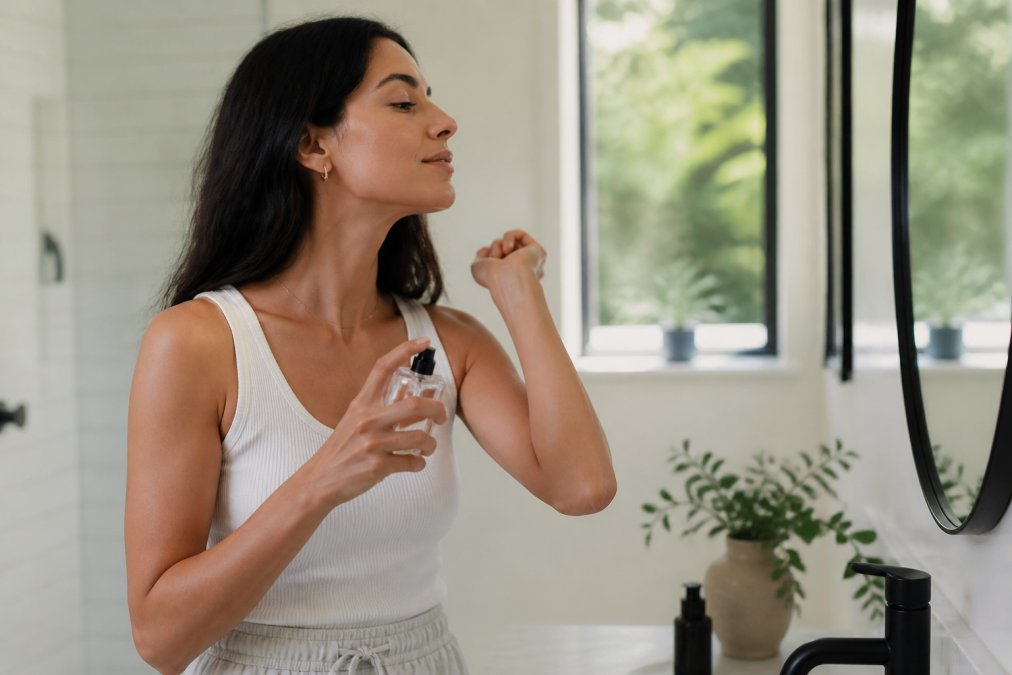
Strategic Application Techniques
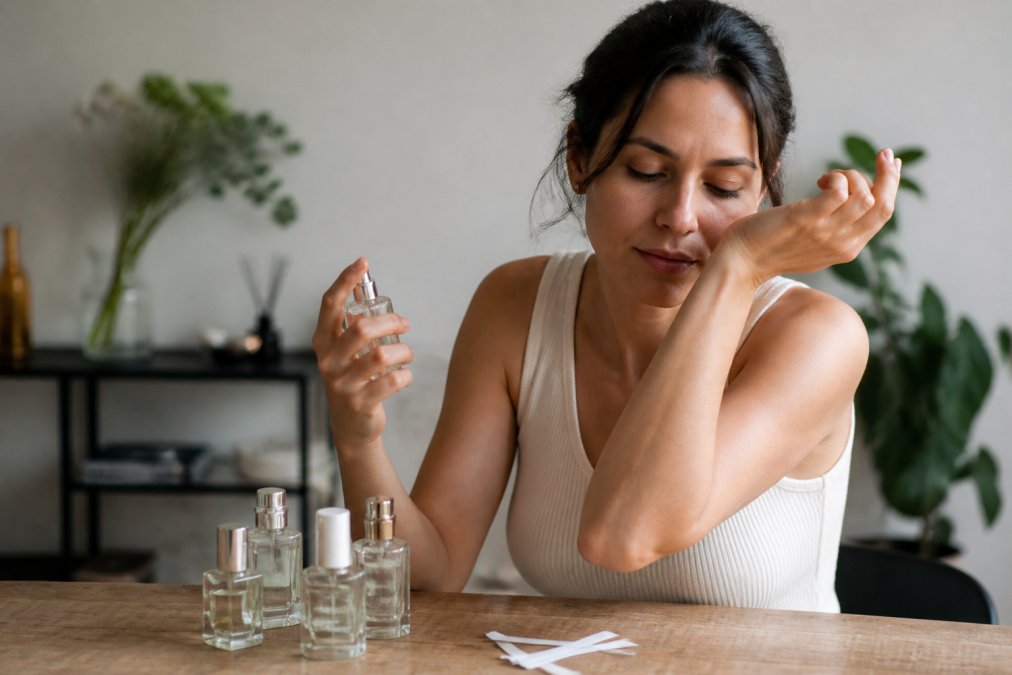
Apply fragrance to pulse points, areas where blood vessels are close to the surface, creating natural warmth that helps fragrance molecules evaporate and project. The most effective pulse points are your wrists, the inside of your elbows, your neck, behind your ears, and the inside of your ankles.
Avoid rubbing your wrists together after applying fragrance. This breaks apart fragrance molecules and speeds up evaporation. Instead, let the fragrance settle on your skin for a few minutes.
Apply fragrance to moisturized skin. Hydrated skin holds onto fragrance molecules longer than dry skin. Apply a fragrance-free moisturizer to your pulse points before applying fragrance, or apply fragrance immediately after showering when your skin is still slightly damp. This simple step can noticeably extend wear time.
Consider layering fragrance by applying it to your body (chest, inner elbows, pulse points on your legs) rather than just your wrists and neck. More application points mean more surface area for fragrance molecules to interact with your skin, extending overall longevity.
Preparation and Storage Factors
Proper storage preserves fragrance integrity and ensures it performs as intended on your skin. Store fragrances in a cool, dark place away from direct sunlight. Heat and light degrade fragrance molecules, which can alter how the scent smells and reduce longevity. A closet, drawer, or cabinet is ideal. Avoid storing fragrance in the bathroom, where humidity and temperature fluctuations can damage the composition.
Prepare your skin before application by moisturizing your entire body. Well-hydrated skin creates a better foundation for fragrance longevity. Drink water throughout the day to support skin hydration from within. Dehydrated skin causes fragrance to fade faster.
Your diet and lifestyle choices affect skin hydration and oil production, which in turn influence fragrance performance. Eating foods rich in healthy fats supports sebum production. Staying hydrated supports skin moisture retention.
Diet, Medication, and Lifestyle Impact on Fragrance
Your internal chemistry, what you eat, what medications you take, and your lifestyle habits, influences how your skin's chemistry changes, which directly affects how scents smell different on your skin.
Certain medications alter skin chemistry. Medications that affect hormone levels, such as birth control or hormone replacement therapy, can change sebum production and skin pH, which shifts how fragrance interacts with your skin. Medications that cause dehydration can also reduce skin hydration, affecting fragrance longevity.
Dietary choices influence skin chemistry. A diet high in processed foods and sugar can affect skin pH and sebum production. Diets rich in antioxidants, healthy fats, and hydrating foods support skin health and optimal fragrance performance.
Stress and sleep patterns affect hormones that regulate sebum production and skin pH. High stress can trigger hormonal fluctuations, leading to changes in how your skin interacts with fragrance. Poor sleep disrupts hormone regulation, which can shift your skin's chemistry noticeably.
Exercise affects body temperature and sweat production, both of which influence fragrance performance. People who exercise regularly tend to have higher baseline body temperatures, which can intensify fragrance projection. Caffeine consumption increases body temperature and can accelerate fragrance evaporation. Alcohol consumption can dehydrate your skin, reducing fragrance longevity.
Olfactory Fatigue vs. Actual Scent Changes
One of the most common sources of confusion is distinguishing between olfactory fatigue and actual changes in how a fragrance smells on your skin.
Olfactory fatigue (also called olfactory adaptation) occurs when your nose becomes desensitized to a scent you've been exposed to continuously. After wearing a fragrance for a few hours, your olfactory receptors adapt to the constant presence of those scent molecules. You stop noticing the fragrance, even though it's still there. This is a neurological response, not a change in the fragrance itself.
To test whether you're experiencing olfactory fatigue or actual fragrance fading, step away from the scent for 15 to 20 minutes. When you return, you'll immediately smell the fragrance again if it's still present. If you can't smell it after stepping away, the fragrance has likely faded.
Olfactory fatigue is completely normal and doesn't indicate a problem with the fragrance or your skin chemistry. Actual scent changes occur when fragrance molecules genuinely evaporate or when your skin chemistry shifts enough to alter the scent profile. If a fragrance that normally lasts 8 hours suddenly lasts only 4 hours, your skin chemistry or the fragrance's storage conditions have likely changed.
Understanding why scents smell different on your skin transforms how you approach fragrance. Rather than assuming a fragrance didn't work for you, you now recognize that your unique skin chemistry created a personalized version of that scent. Ruth+Bo's curated discovery sets and thematic gift collections are designed with this reality in mind. By applying the techniques in this guide and exploring fragrances that resonate with your personal chemistry, you'll discover scents that truly become part of your signature presence. Start your fragrance journey with Ruth+Bo and find the scents that were meant for your skin.
Frequently Asked Questions
Why does my perfume smell different after a few hours?
Your fragrance evolves as it dries down on your skin. Top notes, which are the most volatile compounds, evaporate first within 5-15 minutes. Heart notes then emerge, followed by base notes that can last for hours. Additionally, your skin's pH, temperature, and oil production continuously interact with scent molecules, causing the fragrance profile to shift. This is normal and expected, it's part of the fragrance's designed journey on your skin.
How does body chemistry affect fragrance longevity?
Your skin's pH level, sebum production, hydration, and natural body temperature all influence how fragrance molecules interact with your skin barrier. Oily skin tends to hold fragrance longer because scent molecules dissolve more readily in oils, while dry skin may experience faster evaporation. Your metabolism, hormonal fluctuations, and even diet affect your skin's chemistry and can alter how long a scent lasts and how it smells on you personally compared to someone else wearing the same fragrance.
Can diet and medication change how perfume smells on my skin?
Yes. Diet influences your skin's pH, oil production, and even body temperature through metabolism, which all affect scent perception and longevity. Certain medications and supplements can alter hormonal levels, skin hydration, and body chemistry, changing how fragrance molecules interact with your skin. Even caffeine intake and hydration levels impact skin temperature and evaporation rates. If you've noticed a sudden shift in how a fragrance smells on you, lifestyle or medication changes may be the cause.
How can I tell if my perfume is degrading or if my skin chemistry has changed?
Fragrance degradation occurs when volatile compounds break down over time, especially if the bottle is exposed to light, heat, or air. Signs include a noticeably muted scent or an off smell. To distinguish this from skin chemistry changes, test the fragrance on someone else's skin or on a fabric. If it smells normal on them but different on you, your body chemistry has shifted. If it smells off on everyone, the fragrance itself may be degrading. Store fragrances in cool, dark places to slow degradation.
This article was written using GrandRanker