
How to Choose Perfume Online: A Complete Guide
Table of Contents
- How to Choose Perfume Online: Start With Your Preferences
- Understanding Fragrance Families: A Guide to Olfactory Categories
- How to Read Fragrance Notes and Decode the Olfactory Pyramid
- Perfume Concentration Guide: EDP vs EDT and Scent Intensity
- Best Perfume Discovery Sets and Safe Sampling Strategies
- Skin Chemistry, pH Balance, and Fragrance Longevity
- Clean Fragrance Labeling and Sustainable Choices
- The Psychology of Scent Memory and Personal Identity
How to Choose Perfume Online: A Complete Guide
Last Updated: August 4, 2026
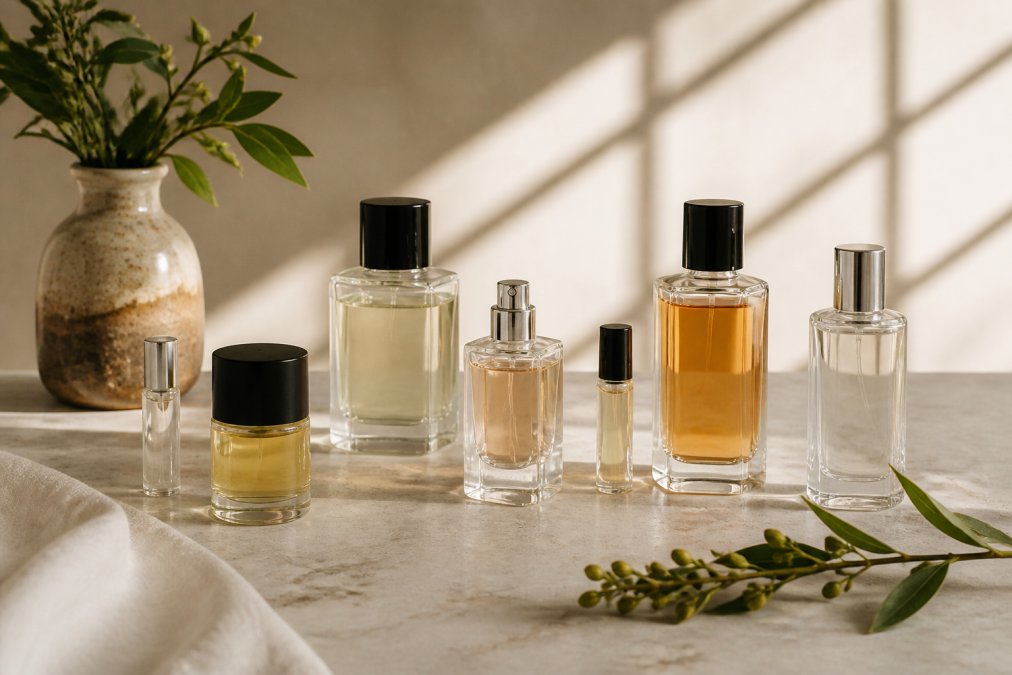
Learning how to choose perfume online requires understanding your personal scent preferences, fragrance chemistry, and the practical realities of buying fragrances without smelling them first. At Ruth+Bo, we recognize that selecting a fragrance online involves more than browsing descriptions, it demands knowledge of olfactory families, concentration levels, and your own skin chemistry. With the right approach, you can discover signature scents that work beautifully on your skin and reflect your personal identity.
This guide walks you through every decision point, from identifying your scent profile to navigating sample programs and understanding why some fragrances perform better on your skin than others.
How to Choose Perfume Online: Start With Your Preferences
Your scent preferences are deeply personal, shaped by memory, mood, and the life you live. Before researching fragrance families or concentration levels, identify what draws you to certain scents.
Assess Your Scent Profile and Mood
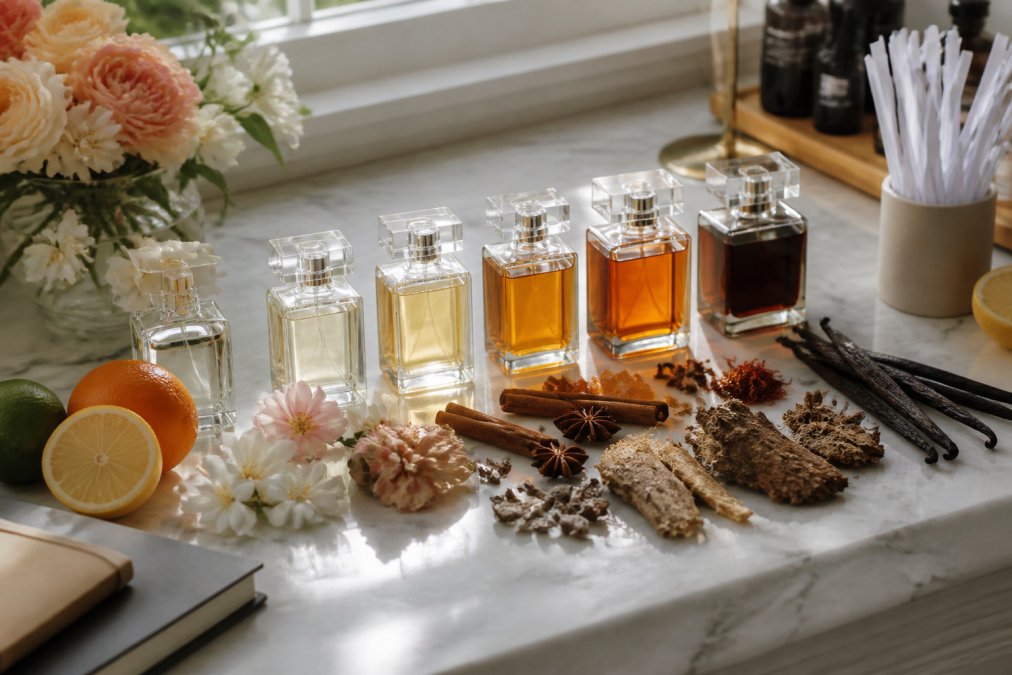
Begin by thinking about scents you already love. Do you gravitate toward fresh morning smells like citrus and green tea, or the warmth of vanilla and amber on cooler evenings? Your instinctive preferences reveal patterns that guide your fragrance wardrobe.
Mood matters enormously. A scent perfect for a professional presentation might feel wrong for a weekend with friends. Many people benefit from building a fragrance wardrobe with multiple scents for different occasions and seasons. Discovery sets allow you to test several scents before committing to full bottles.
Consider also how you want to feel when wearing a fragrance. Some people seek confidence and projection; others prefer intimacy, a fragrance that reveals itself only to those close enough to notice.
Consider Seasonal and Occasion-Based Choices
Fragrance preferences shift with temperature and context. Heavier, warmer scents feel suffocating in summer but perfect in winter. Light, crisp scents can feel insubstantial in winter layers.
Seasonal fragrance selection doesn't require buying four full bottles. Think about your lifestyle. If you work in an office year-round, you might need versatile scents that work indoors. If you spend significant time outdoors, seasonal shifts matter more. The best approach: test scents in the season when you'll wear them most.
Understanding Fragrance Families: A Guide to Olfactory Categories
Fragrance families provide a framework for understanding scent profiles. Learning the major families helps you predict whether a scent will resonate with you.
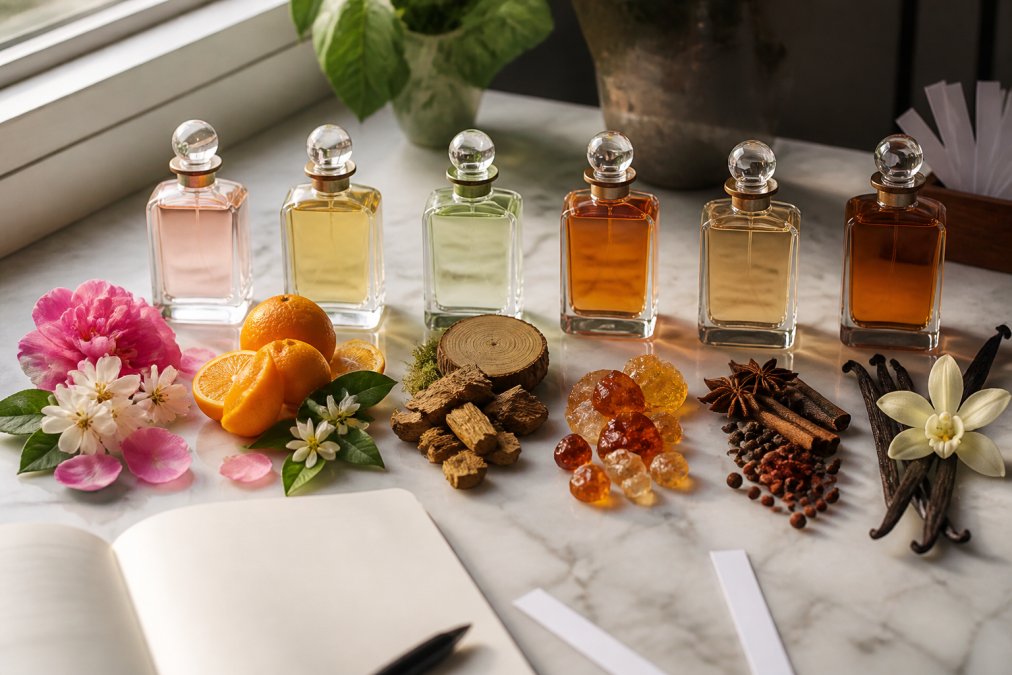
Floral, Citrus, Woody, Oriental, and Gourmand Families
Floral fragrances form the largest category, ranging from single-flower scents to complex blends. Light florals work well for daytime wear; heavier florals suit evening.
Citrus fragrances lead with bright, energetic notes, lemon, bergamot, grapefruit, orange. They feel fresh and uplifting, making them popular for morning wear and summer. Citrus scents typically don't last as long as heavier fragrances.
Woody fragrances build on base notes like sandalwood, cedar, and vetiver. They feel grounded and work across seasons, projecting well without overwhelming.
Oriental fragrances emphasize warmth and sensuality, built on amber, vanilla, musk, and spices. They feel luxurious and intimate, with strong sillage and longevity. They suit evening wear and cooler months.
Gourmand fragrances smell edible: vanilla, caramel, chocolate, coconut, almond. They're playful and comforting, working well for people who want fragrance to feel personal and unconventional.
How to Read Fragrance Notes and Decode the Olfactory Pyramid
Every fragrance is built in layers. Understanding the olfactory pyramid explains why a scent smells one way when you first apply it and different after an hour.
Top, Heart, and Base Notes Explained
Top notes hit first and evaporate quickly, usually within 5-15 minutes. They're often citrus, herbs, or bright florals, creating the initial impression.
Heart notes (middle notes) emerge as top notes fade and form the fragrance's core, typically lasting 30 minutes to several hours. Heart notes are usually florals, spices, or fruits. When evaluating a fragrance online, focus on heart notes, they reveal what you're actually buying.
Base notes anchor the fragrance with heavy, long-lasting molecules like musk, amber, sandalwood, and vanilla that can linger for hours or days on skin and fabric.
Sillage, Longevity, and Dry Down
Sillage describes how far a fragrance projects. High sillage means people nearby will smell you; low sillage means the scent stays close to your skin. Neither is better, it depends on context and preference.
Longevity measures how long a fragrance lasts on your skin. Some fade within 2-3 hours; others last 8+ hours. When shopping online, look for longevity information in product descriptions or reviews.
Dry down is the final stage when only base notes remain. The dry down often feels different from the opening. Testing fragrances at home over several hours reveals the dry down before you commit to a full bottle.
Perfume Concentration Guide: EDP vs EDT and Scent Intensity
Fragrance concentration determines both how strong a scent is and how long it lasts.
What Concentration Levels Mean for Longevity and Performance
Eau de Parfum (EDP) contains 15-20% fragrance oils. It's the sweet spot for most people, strong enough to last 6-8 hours and affordable enough for daily wear. Most designer fragrances are EDPs.
Eau de Toilette (EDT) contains 5-15% fragrance oils. It's lighter and fresher, fading in 3-5 hours typically. EDTs work well for people who prefer subtlety or change fragrances throughout the day.
Eau de Cologne (EDC) contains 2-5% fragrance oils. It's very light and typically lasts 2-3 hours.
Fragrance or Parfum contains 20-30% fragrance oils. It's the most concentrated and longest-lasting (8-12+ hours). It's expensive and intense, a little goes a long way.
The concentration you choose depends on your lifestyle and preferences. Office workers might prefer EDT's subtlety. Those wanting all-day scent without reapplication should choose EDP or higher.
Best Perfume Discovery Sets and Safe Sampling Strategies
Buying full-size bottles without testing is risky. Discovery sets and sampling programs let you explore multiple fragrances before committing significant money.
Testing Fragrances at Home and Blind Buying Risks
Blind buying, purchasing a full bottle based only on description or reviews, carries real risk. Fragrances smell different on every person's skin. What works beautifully on a reviewer might clash with your skin chemistry.
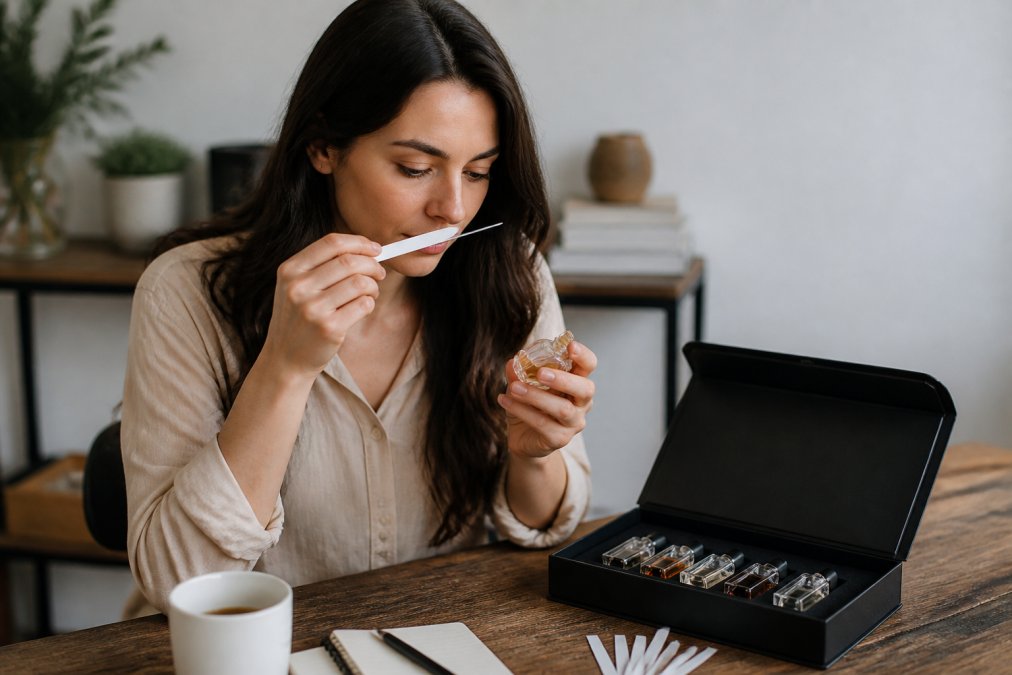
Ruth+Bo's discovery sets solve this problem by providing curated samples of multiple fragrances, allowing you to test each scent over several days on your actual skin in your actual environment. Fragrance performance depends on temperature, humidity, your skin's pH, and whether you're indoors or outdoors.
When testing fragrances at home, apply one fragrance to one wrist, another to the other wrist. Wear them for at least 30 minutes, preferably several hours. Notice how the scent evolves. Test only 2-3 fragrances per day maximum, your nose fatigues with too many scents.
Navigating Online Sample Programs and Decants
Many fragrance retailers offer sample programs. Some provide official samples from the brand; others offer decants, small portions of full bottles (typically 2-5 ml). Official samples represent the fragrance accurately. Decants are cheaper but may vary slightly if stored improperly. Buy decants from reputable sellers with good reviews.
When ordering samples online, request a variety of fragrance families. If you always wear florals, deliberately order a woody or oriental sample.
Skin Chemistry, pH Balance, and Fragrance Longevity
Why does a fragrance smell amazing on your friend but mediocre on you? The answer lies in skin chemistry, the unique combination of factors that makes your skin different from everyone else's.
Why Your Skin Chemistry Matters and How to Troubleshoot Scent Performance
Your skin's pH, natural oils, temperature, and even diet affect how fragrances perform. Acidic skin tends to amplify fragrance longevity; alkaline skin can make scents fade faster. Oily skin holds fragrance longer; dry skin may cause scents to fade quickly.
If a fragrance fades within an hour despite good longevity ratings, try these approaches: apply fragrance to moisturized skin immediately after showering. Use an unscented moisturizer or fragrance primer on pulse points before applying perfume. Apply fragrance to areas that generate heat, wrists, neck, inner elbows, where warmth helps the scent project.
If a fragrance projects too strongly, try applying less product or choosing lighter concentrations (EDT instead of EDP). Apply to less heat-generating areas like the back of your neck or behind your ears.
Fragrance longevity also depends on environmental factors. Humidity helps fragrance last longer; dry air makes it fade faster. Cold weather can suppress scent projection; heat amplifies it.
Clean Fragrance Labeling and Sustainable Choices
Fragrance transparency matters increasingly to consumers. Understanding what "clean" means and how to verify ingredient quality helps you make informed choices.
Identifying IFRA-Compliant and Ethically Sourced Fragrances
IFRA compliance (International Fragrance Association) means the fragrance meets safety standards for ingredient concentration and use. IFRA-compliant fragrances are safe to wear.
"Clean fragrance" labeling varies widely. Some brands use it to mean naturally derived ingredients; others use it for fragrances free of certain chemicals. Ask brands directly what they mean by "clean." Reputable brands provide clear ingredient lists and sourcing information.
Sustainable fragrance choices consider ingredient sourcing, packaging, and brand practices. Ruth+Bo emphasizes story-driven fragrances rooted in meaning and quality ingredients. When evaluating any brand, look for transparency about ingredients, sourcing, and the brand's values.
The Psychology of Scent Memory and Personal Identity
Fragrance connects to memory and identity in powerful ways. The scents we wear become part of how we present ourselves to the world.
Scent memory is remarkably durable. A fragrance can instantly transport you to a specific moment, person, or place because the olfactory system connects directly to the brain's limbic system, which processes emotion and memory. This psychological connection explains why fragrance choice feels personal. Your signature scent becomes part of your identity.
Choosing fragrance online works best when you approach it as a journey of self-discovery rather than a transaction. Take time testing different scents. Notice which ones feel like extensions of your personality. Your authentic preferences will emerge.
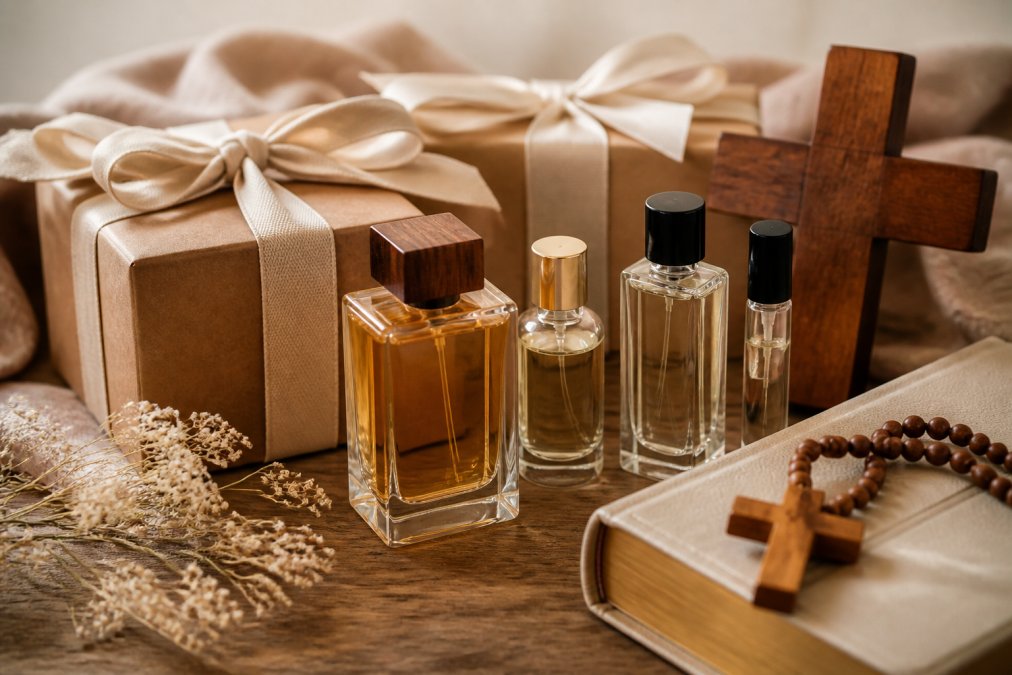
For gift-giving, this psychology matters enormously. A fragrance chosen thoughtfully, one that reflects the recipient's personality or an important shared memory, becomes meaningful. Ruth+Bo's thematic gift sets pair fragrances intentionally, creating opportunities for shared scent experiences and meaningful gifting moments.
Choosing the right fragrance online requires patience, self-awareness, and willingness to test before committing. The process becomes easier when you understand fragrance families, concentration levels, and how your unique skin chemistry affects scent performance. Ruth+Bo's discovery sets and curated collections make this exploration accessible, offering story-driven fragrances that connect personal identity with refined olfactory experiences. Start with samples, test multiple scents across different times of day, and trust your instincts. Your signature scent is waiting.
Frequently Asked Questions
How do I know if a fragrance will work with my skin chemistry when buying perfume online?
Skin chemistry and pH balance significantly affect how a fragrance performs on you. Before committing to a full bottle, use discovery sets or sample programs to test how a scent develops on your skin over several hours. Pay attention to the dry down phase, where the fragrance settles after initial application. If possible, test fragrances at different times of day and on different skin types. Ruth+Bo's discovery sets allow you to experience multiple scents safely, helping you identify which fragrances complement your unique chemistry before making a larger purchase.
What's the difference between eau de parfum and eau de toilette, and which should I choose?
Eau de Parfum (EDP) contains 15-20% fragrance concentration and typically lasts 4-6 hours, making it ideal for all-day wear. Eau de Toilette (EDT) has 5-15% concentration and lasts 2-4 hours, offering a lighter option. Your choice depends on your lifestyle and preferences: choose EDP if you want longevity and stronger projection, or EDT for everyday freshness. Understanding fragrance concentration helps you select the right product for your needs and budget. Ruth+Bo offers both options so you can choose the intensity and lasting power that matches your routine.
How do I read fragrance notes and understand the olfactory pyramid?
Fragrances are structured in three layers: top notes (citrus, fresh scents that last 5-15 minutes), heart notes (floral, spicy accords that emerge after top notes fade), and base notes (woody, vanilla, musk that provide lasting foundation). This olfactory pyramid explains how a fragrance evolves on your skin. When choosing perfume online, read the note breakdown to understand what you'll experience at each stage. A scent's true character emerges during the dry down, so test samples over time to appreciate the full olfactory journey before deciding if it matches your signature scent preferences.
What's the best way to sample fragrances before buying them online?
Discovery sets and sample programs are the safest way to test multiple fragrances without committing to full bottles. Test each scent on clean skin, allowing at least 15 minutes for the top notes to settle before evaluating. Avoid testing more than 3-4 fragrances in one session, as olfactory fatigue will affect your judgment. Apply samples to pulse points where body heat enhances projection and longevity. Ruth+Bo's curated discovery sets let you explore story-driven fragrances in manageable quantities, reducing blind buy risk while building confidence in your choices before making larger purchases.
This article was written using GrandRanker