
How to Test Perfume Chemistry: A Step-by-Step Guide
Table of Contents
- Why Testing Perfume Chemistry Matters Before You Buy
- Understanding Perfume Skin Chemistry Explained
- Step 1: Prepare Your Skin for Accurate Testing
- Step 2: Apply Fragrance to Pulse Points Correctly
- Fragrance Notes Explained: What You're Actually Smelling
- How to Test Perfume Longevity on Your Skin
- Common Testing Mistakes That Skew Your Results
- Seasonal and Lifestyle Factors That Change How Perfume Performs
Last Updated: August 9, 2026
Why Testing Perfume Chemistry Matters Before You Buy
Your skin's unique chemistry dramatically alters how any scent performs, evolves, and lasts throughout the day. What smells divine on a paper blotter might turn sour or fade within an hour on your skin. Testing perfume chemistry directly on your body is the only reliable way to know if a fragrance is truly right for you.
At Ruth+Bo, we recognize that choosing a meaningful fragrance rooted in story and faith requires hands-on testing to ensure the scent aligns with your personal chemistry and lifestyle. By learning to test perfume chemistry properly, you'll make confident decisions that lead to fragrances you'll actually wear and love.
Understanding Perfume Skin Chemistry Explained
Perfume skin chemistry is the interaction between fragrance molecules and your skin's unique biological characteristics. Your skin acts as a living canvas that transforms how a fragrance smells from application through dry down. The same fragrance can smell entirely different on different people because skin chemistry varies based on pH, hydration, temperature, and microbiome composition.
How Body Chemistry Affects Scent Profile
Skin pH, the acidity or alkalinity of your skin's surface, plays a critical role. Most human skin ranges from 4.5 to 5.5 pH (slightly acidic). Acidic skin tends to amplify warm, musky, and woody notes while softening bright citrus and floral accords. Neutral skin often emphasizes fresh, herbal, and aromatic qualities.
Body temperature accelerates fragrance evaporation. Your skin's warmth is why pulse points, areas where blood vessels sit close to the skin's surface, project fragrance more powerfully than other areas.
Skin hydration directly affects fragrance longevity. Well-hydrated skin holds fragrance molecules longer because moisture slows evaporation. Dehydrated skin causes fragrances to fade faster and can amplify certain notes unpredictably. This is why your fragrance might perform differently in winter versus summer.
Lifestyle factors influence hydration and pH balance. Caffeine and alcohol consumption dehydrate skin. Stress elevates cortisol, which can shift skin pH slightly. Regular exercise increases perspiration, temporarily altering skin chemistry. These variations explain why a fragrance might perform differently on different days.
Step 1: Prepare Your Skin for Accurate Testing
Cleanse your wrists and neck with gentle, unscented soap to remove any residual fragrance. Pat your skin dry completely. Apply an unscented moisturizer to the areas where you'll test the fragrance and allow it to absorb fully, which typically takes 10-15 minutes.
Avoid wearing any other fragrances or scented products during your testing day. If testing multiple fragrances, space them at least 2-3 hours apart to allow your olfactory palate to reset. Test in a neutral environment without strong ambient scents.
Step 2: Apply Fragrance to Pulse Points Correctly
Pulse points are areas where blood vessels sit close to your skin's surface, creating natural heat that amplifies fragrance projection. The primary pulse points are your inner wrists, inside of your elbows, behind your ears, and the base of your throat.
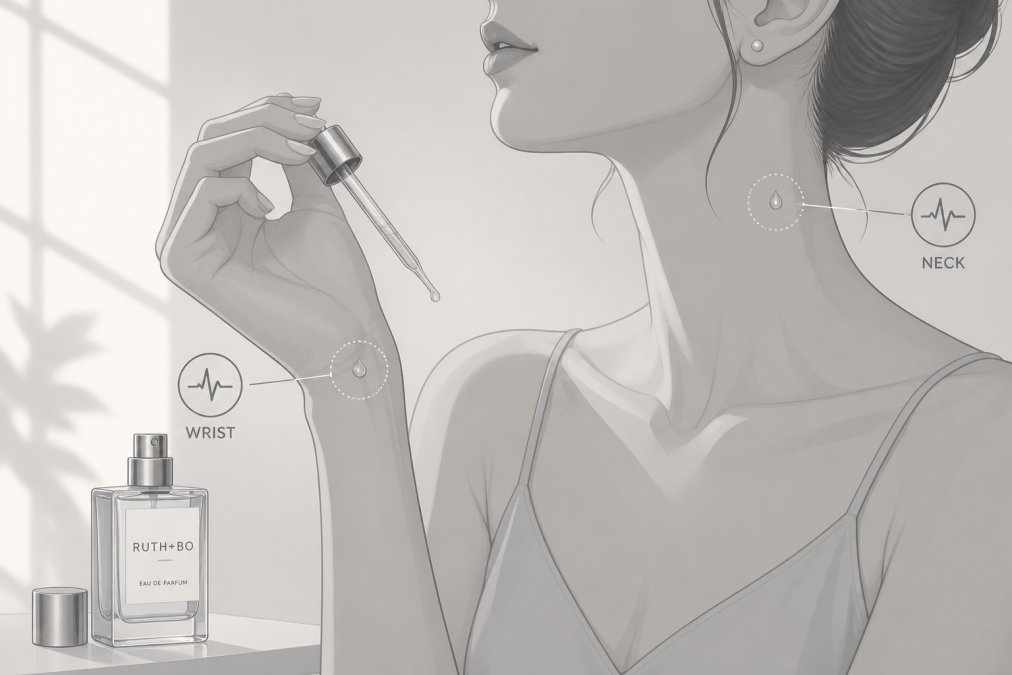
Apply fragrance using a single spray or 1-2 dabs from the bottle. One application to each wrist and one behind each ear is sufficient for comprehensive testing. Do not rub your wrists together after applying fragrance, as this breaks apart fragrance molecules and artificially shortens the scent's lifespan. Let the fragrance settle naturally for 2-3 minutes.
Consider applying one fragrance to your left side and a different fragrance to your right side if comparing two scents. This side-by-side approach lets you experience both fragrances' evolution simultaneously.
Fragrance Notes Explained: What You're Actually Smelling
When you smell a fragrance, you're experiencing three distinct phases of scent evolution. Understanding these phases helps you recognize what you're smelling at each stage and whether the fragrance's overall profile appeals to you.
Top Notes, Heart Notes, and Base Notes
Top notes are the first scents you smell immediately upon application, typically lasting 5-15 minutes. They consist of highly volatile compounds like citrus, bergamot, lemon, and fresh herbal accords. Many people make purchasing decisions based solely on top notes, then feel disappointed when the scent shifts dramatically.
Heart notes (also called middle notes) emerge as top notes fade, typically appearing 15-30 minutes after application and lasting 4-6 hours. Heart notes form the fragrance's core identity and usually consist of floral, fruity, or spice accords. This phase represents the true character of the fragrance and is where most of your wearing experience occurs.
Base notes appear after heart notes begin to fade, typically 6-8 hours after application. Base notes are the least volatile compounds and can persist for 12-24 hours or longer. Common base notes include musk, sandalwood, vetiver, amber, and vanilla. They provide depth, warmth, and longevity to the fragrance and interact most intensely with your skin chemistry.
Understanding this fragrance pyramid structure helps you evaluate whether a scent is worth purchasing. If you love the top notes but hate the heart notes, the fragrance isn't right for you. If the heart and base notes appeal to you, the fragrance is worth buying even if the top notes aren't your immediate favorite.
How the Fragrance Pyramid Reveals Scent Evolution
The fragrance pyramid is a visual representation of how scent evolves over time. Top notes occupy a small portion of your experience despite being most noticeable initially. Heart notes occupy the largest portion, where you spend most of your time with the fragrance. Base notes provide the final hours of wear and significantly influence your overall impression of longevity. Ruth+Bo's story-driven fragrances are designed with intentional note progression that reveals meaning and complexity as you wear them throughout the day.
How to Test Perfume Longevity on Your Skin
Testing fragrance longevity requires patience and systematic observation. Longevity refers to how long a fragrance remains detectable on your skin from initial application through complete fade.
The 30-Minute to 8-Hour Testing Window
The first 30 minutes reveal top notes and early heart note development. Take note of the initial impression and how quickly the scent begins to shift.
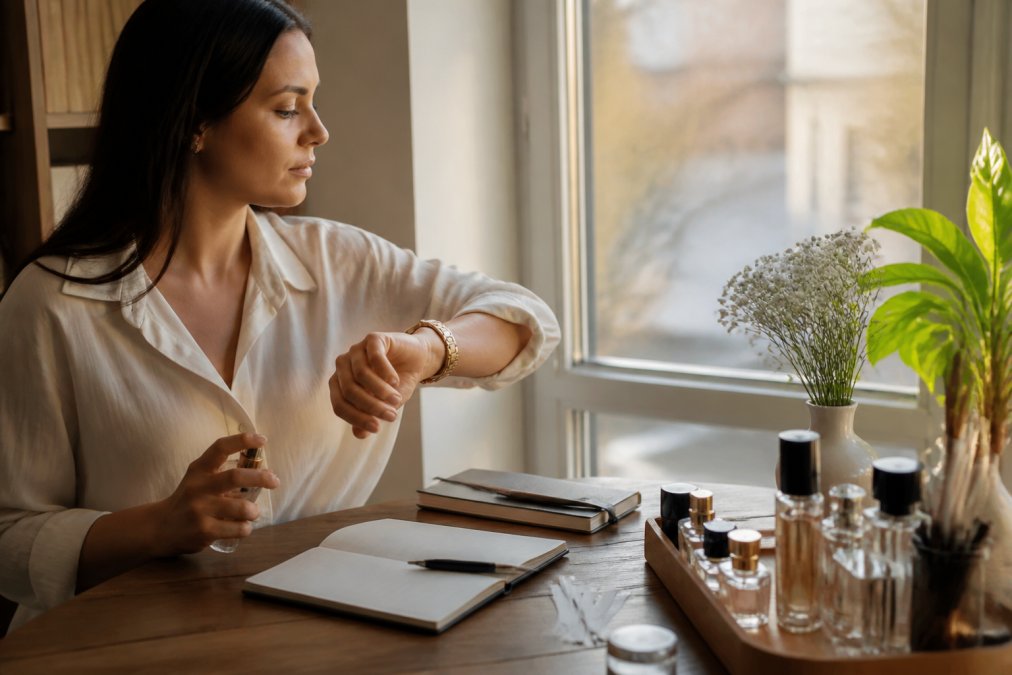
At the 1-hour mark, the heart notes should be fully emerged. This is when you get your clearest sense of the fragrance's true character. Continue checking the fragrance at 2-hour, 4-hour, and 6-hour intervals. Track how the scent evolves and when you notice it beginning to fade. At the 8-hour mark, assess whether the fragrance is still detectable without actively smelling your wrist.
Avoiding Olfactory Fatigue During Testing
Olfactory fatigue (also called nose blindness) is your olfactory system's natural adaptation to constant scent exposure. After 15-20 minutes of continuous exposure, your nose stops registering it as strongly.
To avoid olfactory fatigue, step away from the fragrance periodically and spend 10-15 minutes in a different environment. When you return, your nose will have reset and you'll perceive it more accurately. Alternate between smelling your wrists and other areas where you applied fragrance. Avoid testing multiple fragrances simultaneously if possible. If you must test multiple fragrances, space them at least 3 hours apart.
Common Testing Mistakes That Skew Your Results
Testing fragrance on paper blotters or fabric swatches instead of your skin is the most fundamental error. Paper and fabric don't replicate skin chemistry, generate body heat, or have the natural oils and microbiome that influence fragrance development.
Judging a fragrance based solely on the first 5-10 minutes leads to poor purchasing decisions. Always wait at least 30 minutes before forming a judgment, and ideally wait 1-2 hours to experience the heart notes fully.
Applying too much fragrance distorts the testing experience. One spray per pulse point replicates how most people wear fragrance. Testing fragrances in heavily scented environments like department store fragrance counters introduces olfactory confusion. Whenever possible, test in neutral environments where you can focus entirely on the fragrance without competing scents.
Seasonal and Lifestyle Factors That Change How Perfume Performs
Winter testing conditions are typically cooler and drier. Your skin loses moisture more rapidly, which can shorten fragrance longevity and alter how scent notes develop. Fragrances that perform beautifully in winter might feel too heavy in summer heat.
Summer heat and humidity accelerate fragrance evaporation, though summer humidity also increases skin hydration, which can extend longevity. Testing the same fragrance in summer and winter reveals whether it performs consistently across seasons.
Activity level influences fragrance performance significantly. A fragrance tested while sitting quietly will perform differently than the same fragrance worn during exercise or a busy workday. Perspiration, increased body temperature, and air circulation all affect how fragrance develops and lasts.
Dietary factors influence skin chemistry and can subtly shift how fragrances perform. Caffeine and alcohol consumption dehydrate skin, potentially shortening fragrance longevity. Stress levels affect skin pH and hydration. High-stress periods often correlate with dehydrated skin and slightly elevated skin pH, both of which can alter fragrance performance.
| Testing Factor | Impact on Performance | Adjustment Strategy |
|---|---|---|
| Skin hydration | Affects longevity and note development | Moisturize before testing; test in different seasons |
| Body temperature | Influences projection and evaporation rate | Test during different activity levels |
| Skin pH | Alters how notes present themselves | Test across different stress and dietary periods |
| Olfactory fatigue | Makes longevity assessment inaccurate | Step away periodically; reset between fragrances |
| Environmental scents | Interferes with accurate perception | Test in neutral, unscented environments |
| Application amount | Distorts initial impression and longevity | Use one spray per pulse point consistently |
Testing perfume chemistry properly transforms how you choose fragrances. Instead of relying on brief counter experiences or descriptions, you gain direct knowledge of how a fragrance will actually perform on your skin across different conditions and throughout the day. This systematic approach eliminates costly purchasing mistakes and ensures you invest in fragrances you'll genuinely love wearing.
Ruth+Bo's discovery sets are specifically designed to facilitate this kind of thorough testing. By sampling multiple story-driven fragrances before committing to full bottles, you can apply these testing principles to find scents that resonate with your personal chemistry and lifestyle.
Frequently Asked Questions
How do I test my skin chemistry for perfume before buying?
Test perfume chemistry by applying a small amount to clean, moisturized pulse points (wrists, inner elbows, neck) and observing how the scent develops over 30 minutes to 8 hours. Your body chemistry, skin pH, and hydration level all influence how the fragrance evolves. If possible, test the same perfume on different days or seasons to account for lifestyle and dietary changes that affect skin chemistry. Ruth+Bo's discovery sets allow you to test multiple fragrances on your own skin before committing to a full bottle.
Why does perfume smell different on different people?
Perfume chemistry is highly individual because of variations in body chemistry, skin pH, skin hydration, and even diet. Your natural oils, hormones, and metabolism influence how fragrance compounds interact with your skin. Additionally, olfactory fatigue means your nose becomes desensitized to a scent after 15-20 minutes of continuous exposure, so you may perceive longevity differently than others. Testing perfume on your own skin reveals how it will actually perform for you, which is why discovery sets are valuable for finding scents that work with your unique chemistry.
What is the best way to test perfume without wasting product?
Use blotter strips or paper testers first to assess the top notes and overall scent profile without applying to skin. For skin testing, apply one spray to a pulse point and wait at least 30 minutes before deciding. Avoid testing multiple fragrances in one day to prevent olfactory fatigue, which dulls your ability to smell accurately. Store your test samples away from heat and light to preserve them. Testing one scent per day gives you the clearest picture of how it performs on your skin chemistry over the full fragrance longevity window.
How long should I wait to smell perfume on my skin after applying it?
Wait at least 30 minutes to get an accurate read on how the fragrance settles into your skin chemistry. The top notes (which evaporate quickly) will fade within 5-15 minutes, revealing the heart notes. The base notes and true longevity emerge after 1-2 hours. For a complete assessment of fragrance longevity, wear the perfume for 4-8 hours and note how the scent evolves. This extended testing window shows you whether the fragrance has staying power and whether the dry down (final stage) appeals to you.
This article was written using GrandRanker