
How to Make Perfume Last: 9 Proven Tips That Work
Table of Contents
- Why Your Perfume Fades Faster Than It Should
- Perfume Concentration Explained: Which Type Lasts Longest
- How to Make Perfume Last with Proper Skin Preparation
- The Best Pulse Points for Perfume Application
- Fragrance Layering Techniques That Extend Wear Time
- How to Make Perfume Last: Application Techniques and Habits
- Perfume Storage Tips That Protect Scent Quality and Shelf Life
- Conclusion
Last Updated: July 29, 2026
Knowing how to make perfume last is the difference between a scent that carries through an entire evening and one that disappears within an hour. The truth is, longevity depends almost entirely on how you apply it, prepare your skin, and store the bottle.
Fragrance longevity depends on skin hydration, application technique, concentration level, storage conditions, and your personal skin chemistry. Get one of those wrong and you are fighting an uphill battle regardless of how premium your scent is.
Why Your Perfume Fades Faster Than It Should
Perfume fades prematurely for several predictable, avoidable reasons. The most common culprit is dry skin. Fragrance molecules need something to anchor to, and skin that lacks moisture provides almost no grip. The scent evaporates off the surface rather than bonding with the skin's natural oils.
A second reason is incorrect application. Rubbing the wrists together after spraying is perhaps the single most widespread mistake in fragrance application. This friction breaks apart the top notes before they can properly develop, which collapses the fragrance pyramid and shortens the overall scent trail.
Third: storage. Many people keep their perfume on a bathroom shelf or windowsill, exposing the bottle to heat, humidity, and direct light. These conditions accelerate oxidation and degrade the aromatic compounds.
Common Mistakes That Kill Fragrance Longevity
- Rubbing wrists together after application, which destroys delicate top notes
- Spraying into the air and walking through the mist, which wastes most of the fragrance
- Applying to dry, unprimed skin with no moisture barrier to hold the scent
- Storing the bottle in the bathroom where heat and humidity cause oxidation
- Overapplying to one spot instead of distributing across multiple pulse points
- Ignoring fragrance concentration and buying an eau de toilette when longevity is the priority
Perfume Concentration Explained: Which Type Lasts Longest
Fragrance concentration is the single biggest factor in how long a scent lasts on skin. The concentration refers to the percentage of aromatic compounds dissolved in the alcohol-and-water base. Higher concentration means more fixatives, richer base notes, and significantly longer wear.
Here is a practical breakdown:
| Concentration Type | Aromatic Compound % | Typical Longevity | Best For |
|---|---|---|---|
| Parfum (Extrait) | 20-40% | 8-12 hours | Maximum longevity |
| Eau de Parfum (EDP) | 15-20% | 6-8 hours | Everyday elegance |
| Eau de Toilette (EDT) | 5-15% | 3-5 hours | Lighter daytime wear |
| Eau de Cologne (EDC) | 2-5% | 2-3 hours | Refreshing, casual use |
| Eau Fraiche | 1-3% | 1-2 hours | Minimal projection |
An eau de parfum is the practical sweet spot for most people who want fragrance longevity without the intensity of a pure parfum. According to the Fragrance Foundation's consumer education resources, EDP formulations consistently outperform EDT in longevity tests across skin types.
Understanding the Fragrance Pyramid: Top, Heart, and Base Notes
The fragrance pyramid is the structural architecture of any scent. Top notes are the first impression you smell immediately after spraying, typically light, volatile compounds like citrus or herbs that evaporate within 15-30 minutes. Heart notes form the core character of the fragrance, emerging as the top notes fade. Base notes are the heaviest, slowest-evaporating compounds that determine how long the scent ultimately lasts on your skin.
Fixatives are the compounds that anchor base notes to the skin. Common fixatives include musks, woods, resins, and ambers. Fragrances with rich base notes and strong fixatives will always outperform lighter, citrus-forward compositions in raw longevity.
How to Make Perfume Last with Proper Skin Preparation
Skin preparation is where fragrance longevity is won or lost before the first spray. Think of your skin as the canvas. A dry, rough canvas absorbs and releases quickly. A moisturized, primed canvas holds scent for hours longer.
Moisturizing Before Application: Why Hydrated Skin Holds Scent
Moisturized skin holds fragrance significantly longer than dry skin. Fragrance molecules bind to the lipids in skin oils and moisturizers, slowing evaporation and extending the scent trail. Apply an unscented lotion or body oil to pulse points about five minutes before spraying your fragrance. Oil-based moisturizers, particularly those with jojoba or almond oil, perform better than water-based lotions as fragrance anchors. A light layer of petroleum jelly on pulse points before application is an old perfumer's trick that genuinely works.
How Your Skin Chemistry and pH Affect Fragrance
Your skin's pH level directly affects how fragrance compounds interact with your body chemistry. Skin that leans more acidic tends to amplify certain aromatic compounds and suppress others, which is why the same fragrance smells different on two people. Diet, hormones, medications, and stress levels can shift your skin's pH temporarily.
Oily skin generally holds fragrance longer than dry skin because the natural sebum acts as a binding agent for aromatic molecules. People with drier skin types often notice shorter wear times and may need to reapply more deliberately. According to dermatological research on skin pH and topical absorption, the average skin surface pH sits between 4.5 and 5.5, but this varies considerably between individuals.
Always test a new fragrance on your own skin before committing. A sample or discovery set is the only reliable way to understand how a scent will perform on your specific chemistry.
The Best Pulse Points for Perfume Application
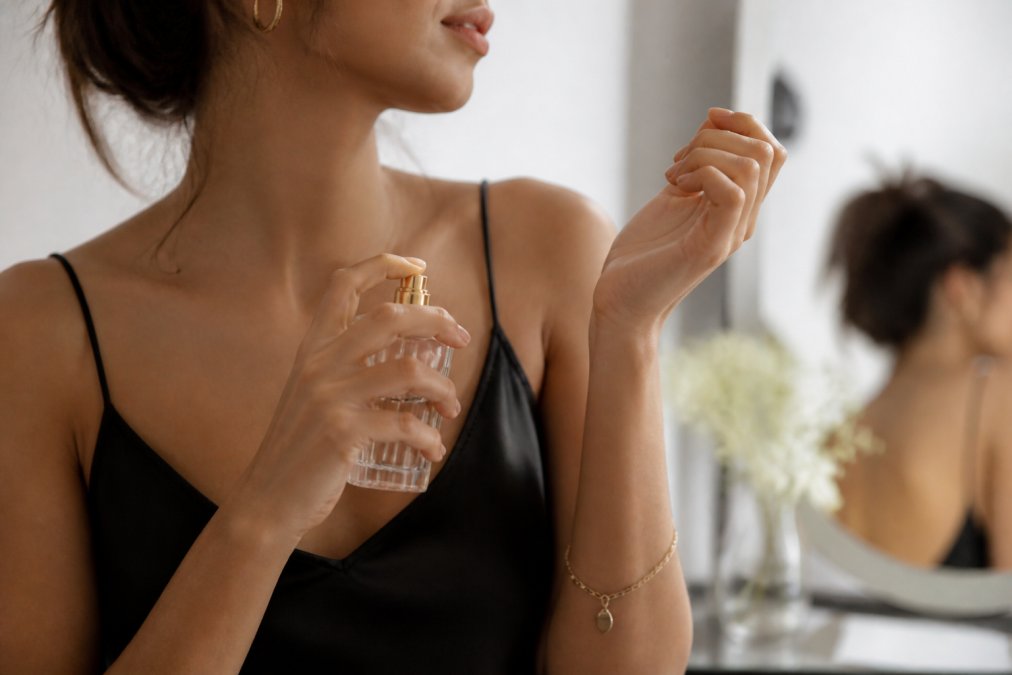
The best pulse points for perfume application are areas where blood vessels sit close to the skin surface, generating heat that continuously diffuses the fragrance into the air around you.
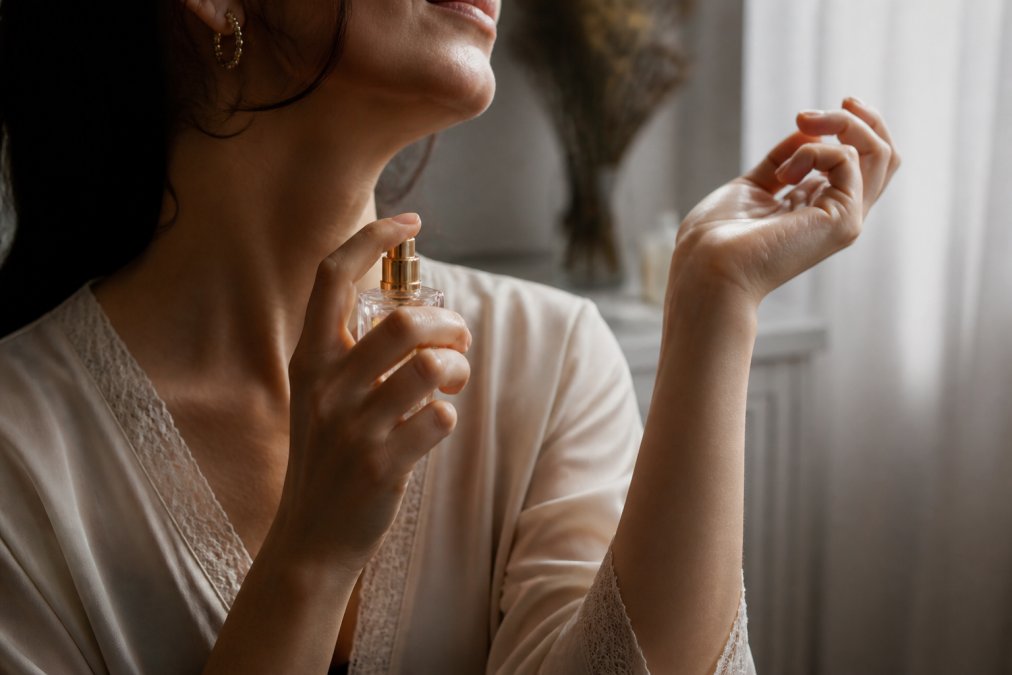
The most effective pulse points include:
- Inner wrists - Warm, accessible, and easy to reapply throughout the day
- Base of the throat - One of the highest-heat areas on the body; excellent for sillage
- Behind the ears - Close to the nose of anyone nearby; ideal for intimate wear
- Inner elbows - Often overlooked, but highly effective for diffusion
- Back of the knees - Particularly useful in warmer months when heat rises from the lower body
- Chest and collarbone - Creates an upward scent projection as body heat rises
Spray from roughly six to eight inches away to achieve even distribution rather than a concentrated wet spot.
Should You Apply Perfume to Hair or Clothing?
Hair holds fragrance exceptionally well because it traps aromatic molecules in its structure. A light mist across the hair can extend the perceptible scent trail for hours beyond what skin application alone achieves. Most alcohol-based fragrances can dry out hair with repeated use, so spray your brush or comb and run it through your hair instead, or use a dedicated hair mist formulation.
Applying to clothing is effective for longevity but prevents the fragrance from interacting with your skin chemistry. The scent on fabric is static and does not evolve the way it does on skin.
Fragrance Layering Techniques That Extend Wear Time
Fragrance layering is the practice of building a scent profile across multiple products to create depth and extend wear time. Use a scented body wash, follow with a matching or complementary unscented lotion, then apply your fragrance on top. Each layer reinforces the aromatic compounds below it.
A more intentional approach involves combining two separate fragrances that share common base or heart notes. For example, a warm sandalwood-based fragrance layered under a floral eau de parfum creates a richer, more complex scent profile than either fragrance achieves alone.
How to Make Perfume Last: Application Techniques and Habits
The application technique itself matters more than most people realize. Spraying correctly, targeting the right locations, and resisting the urge to rub are habits that compound into noticeably better fragrance longevity.
Stop Rubbing Your Wrists: Here's What to Do Instead
Rubbing wrists together after applying fragrance actively damages the scent. The friction breaks apart the molecular structure of the top notes, which are the most delicate compounds in the fragrance pyramid. The result is a flattened, shorter-lived scent that never fully develops its heart.
The correct technique is simple: spray and let the fragrance dry naturally. If you want to layer the scent from one wrist to the other, press them together gently without any rubbing motion.
Travel-Friendly Longevity Hacks for On-the-Go Reapplication
Maintaining fragrance longevity while traveling requires a slightly different approach:
- Atomizer refill bottles (5-10ml) allow you to carry your fragrance in carry-on luggage within TSA liquid limits
- Solid fragrance balms are oil-based, travel exceptionally well, and provide longer-lasting wear than alcohol-based sprays on dry skin
- Fragrance-soaked cotton pads sealed in a small zip-lock bag are a practical backup for reapplication
- Moisturize before you board - airplane cabin air is extremely dry, which accelerates fragrance evaporation
Olfactory fatigue is another consideration during travel. After wearing a fragrance for several hours, your nose stops registering it. Ask a companion whether the scent is still detectable before adding more.
Perfume Storage Tips That Protect Scent Quality and Shelf Life
Proper perfume storage is about chemistry. Fragrance is a complex mixture of volatile organic compounds, and several environmental factors accelerate their degradation.
The three main enemies of fragrance longevity in the bottle are heat, light, and oxygen. Heat speeds up the chemical reactions that break down aromatic compounds. UV light triggers oxidation, which alters the scent profile. Oxygen introduced through repeated opening or a poorly sealed atomizer has a similar effect.
The correct storage conditions:
- Cool, dark location - A drawer or closed cabinet away from windows is ideal
- Consistent temperature - Avoid areas with temperature fluctuations, including near radiators or air conditioning vents
- Original bottle - The bottle's design is often engineered to minimize air exposure; decanting into decorative bottles accelerates oxidation
- Upright position - Storing bottles on their side can cause the seal to degrade over time
A fragrance stored correctly can maintain its scent profile for three to five years or longer. According to guidance on cosmetic product shelf life from the FDA, cosmetic products including fragrances should be stored away from direct sunlight and extreme temperatures to maintain stability.
The bathroom is genuinely the worst place in most homes to store perfume. The combination of steam, heat from showers, and light exposure creates ideal conditions for rapid oxidation. Move your collection to a bedroom drawer or a cool closet shelf.
Fragrance longevity is a solvable problem, and the solution does not require spending more money on your next bottle. It requires understanding the system behind how scent interacts with skin, environment, and application technique. Ruth+Bo offers fragrances with rich base notes and quality fixatives designed to evolve on the skin across a full day of wear. Explore the Ruth+Bo discovery sets to find which scent profile performs best with your unique skin chemistry, then add to cart and experience what a well-crafted, story-driven fragrance is actually capable of.
Frequently Asked Questions
Why does my perfume not last long on my skin?
Perfume longevity depends on several factors: dry skin absorbs fragrance quickly without holding it, low concentration formulas like eau de toilette evaporate faster than eau de parfum, and your skin's natural pH can alter how base notes develop and linger. Applying to unmoistened skin, rubbing your wrists together, and storing your bottle in a warm bathroom also accelerate fading. Addressing these habits one by one can dramatically improve how long your scent lasts throughout the day.
Where should I spray perfume to make it last the longest?
The best pulse points for perfume are areas where body heat radiates outward, the inner wrists, base of the throat, behind the ears, inside the elbows, and behind the knees. Body heat activates fragrance and pushes the scent trail outward, improving sillage. Spraying lower on the body, such as behind the knees, also allows the scent to rise naturally throughout the day, giving you longer, more even wear without needing frequent reapplication.
Does Vaseline actually help perfume last longer?
Yes, applying a thin layer of unscented petroleum jelly or unscented lotion to pulse points before spraying creates an oil-based surface that helps anchor fragrance molecules to the skin. Since oil-based products slow evaporation, they act as a fixative, extending how long your scent stays detectable. This technique works especially well for those with dry skin, who tend to lose fragrance faster. Any unscented moisturizer works, it does not need to be petroleum jelly specifically.
How should I store perfume to protect its shelf life?
Proper perfume storage tips include keeping bottles away from heat, humidity, and direct sunlight, all of which accelerate oxidation and break down fragrance molecules. A cool, dark drawer or a dedicated fragrance cabinet is ideal. Avoid storing perfume in the bathroom, where temperature and moisture fluctuate constantly. Keep the original cap on tightly to minimize air exposure. When stored correctly, most fragrances maintain their intended scent profile for two to five years after opening.
What type of perfume concentration lasts the longest?
Eau de parfum (EDP) typically lasts longer than eau de toilette (EDT) because it contains a higher percentage of fragrance oil, generally 15-20% versus 5-15% for EDT. Parfum or extrait de parfum sits at the top of the fragrance concentration scale, often exceeding 20% oil content, and can last eight hours or more on moisturized skin. If fragrance longevity is a priority, choosing an EDP or parfum formulation is one of the most straightforward upgrades you can make.
Should you rub perfume into your skin after spraying?
No, rubbing perfume into your skin is one of the most common application mistakes. The friction generates heat that breaks apart the top notes prematurely, disrupting the fragrance pyramid and shortening overall wear time. Instead, spray and let the fragrance dry naturally on the skin. This allows the top, heart, and base notes to unfold in their intended sequence, giving you a more complete and longer-lasting scent profile throughout the day.
This article was written using GrandRanker