
Scents That Evolve on Skin: A Guide to Fragrance Chemistry
Table of Contents
- What Are Skin Scents and Why They Matter
- How Skin Chemistry Affects Perfume Performance
- Fragrance Notes Explained: Top, Heart, and Base
- The Science Behind Scent Evolution on Skin
- How to Test Perfume on Skin for Best Results
- Troubleshooting Scent Fatigue and Longevity
- Choosing Scents That Evolve Beautifully on Your Skin
- Conclusion
Last Updated: August 24, 2026
What Are Skin Scents and Why They Matter
Scents that evolve on skin are fragrances designed to transform throughout the day, revealing different layers of aroma as they interact with your body chemistry and environment. Unlike static fragrances that smell largely the same from application to dry down, evolving scents create a personal olfactory journey, what fragrance experts call a "scent story."
This concept matters because it shifts how you think about fragrance. You're not buying a single smell; you're investing in an experience that unfolds through distinct phases: the opening burst gives way to the heart of the fragrance, which then settles into a base that can linger for hours. Ruth+Bo designs fragrances rooted in meaningful narratives, and the evolution of scent on skin is central to that storytelling. Understanding how scents that evolve on skin actually work transforms your purchasing decisions, you stop chasing a single "favorite smell" and start seeking fragrances that grow richer with time.
How Skin Chemistry Affects Perfume Performance
Your skin is a living canvas that fundamentally alters how any fragrance performs. The pH level of your skin, its hydration, temperature, and natural oils create a unique environment where fragrance molecules interact in ways they never could on paper or fabric.
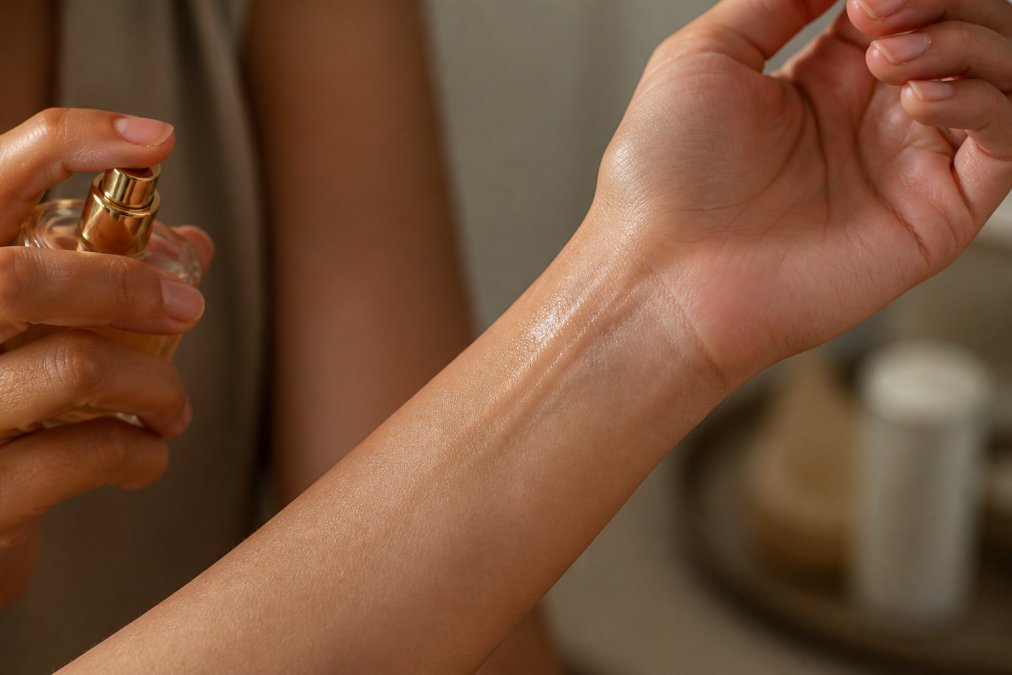
When you spray fragrance on your skin, the molecules dissolve into the lipid layer of your epidermis and interact with your body's natural scent profile. This is why the same fragrance smells noticeably different on different people. Someone with naturally acidic skin might find a floral scent becomes more powdery, while someone with neutral pH might experience it as brighter and fresher.
Hydration levels matter enormously. Well-hydrated skin holds fragrance molecules longer because there's more moisture for the scent to bind to. Dehydrated skin tends to project fragrance more intensely at first but lose it faster. Applying fragrance right after a shower, when your skin is still slightly damp, can extend longevity significantly.
Your body temperature also plays a crucial role in how scents that evolve on skin develop. Warmer areas like your inner wrists, the base of your throat, and behind your ears create micro-climates where fragrance molecules evaporate at different rates. This differential evaporation creates the evolution you experience: the most volatile top notes evaporate first, exposing the heart notes underneath, and as those fade, the heavier base notes become dominant.
Fragrance Notes Explained: Top, Heart, and Base
Understanding fragrance structure is essential to predicting how a scent will evolve on your skin. Every fragrance is composed of three distinct layers of aroma chemicals, each with its own evaporation rate and role in the scent story.
Top notes are the first impression, the bright, volatile molecules you smell in the first 5-15 minutes (peer-reviewed research). These are typically citrus, herbal, or fruity compounds like bergamot, lemon, and ginger. Because they're so fleeting, top notes are often the least representative of the fragrance's true character.
Heart notes (also called middle notes) emerge as the top notes fade, typically after 15-30 minutes, and often last 4-6 hours (peer-reviewed research). These form the emotional core of the fragrance and include florals, spices, and some woody elements like jasmine, rose, vanilla, and cardamom. This is often the phase where people realize whether they actually like a fragrance.
Base notes are the foundation, heavy, stable molecules that anchor the fragrance and provide longevity. These include musks, sandalwood, vetiver, amber, and cedarwood, lasting 8+ hours on skin. They provide depth and warmth that makes a fragrance feel complete.
The interplay between these layers creates the evolution in scents that evolve on skin. A well-composed fragrance guides you through this progression intentionally: top notes draw you in, heart notes engage you emotionally, and base notes provide a satisfying conclusion.
| Fragrance Layer | Typical Duration | Common Ingredients | Role |
|---|---|---|---|
| Top Notes | 5-15 minutes | Citrus, herbs, fruits | First impression, attention-grabbing |
| Heart Notes | 15 minutes - 6 hours | Florals, spices, some woods | Emotional core, main character |
| Base Notes | 6+ hours | Musks, sandalwood, amber | Longevity, depth, warmth |
The Science Behind Scent Evolution on Skin
The transformation you experience when wearing fragrance is governed by molecular chemistry and physics. Understanding this science helps you appreciate why certain fragrances evolve beautifully while others flatten quickly.
Molecular Fragrance Interaction
Fragrance molecules exist in different sizes and weights. Smaller, lighter molecules evaporate faster; larger, heavier ones linger. When you apply fragrance to skin, you're creating a miniature chemical ecosystem where these molecules compete for space and interact with your skin's natural compounds.
Aroma chemicals don't exist in isolation, they form what chemists call an an "olfactory profile," a complex mixture where individual molecules influence how others smell. A single molecule might smell sharp and unpleasant in pure form but become warm and inviting when combined with other compounds. This is why fragrance composition is an art form.
Your skin's natural oils, sebum, play a crucial role in this interaction. Sebum is lipophilic, meaning it readily dissolves fragrance molecules and acts as a reservoir, slowly releasing them over hours. On drier skin, fragrance molecules don't have this buffer, so they evaporate more quickly. The pH of your skin also influences molecular interaction, which is why the same fragrance genuinely smells different on different people.
Temperature and Projection
Projection, how far your fragrance travels from your body, is almost entirely controlled by temperature. Warmer skin accelerates evaporation, which means fragrance molecules reach the air faster and travel farther. This is why you notice your fragrance more strongly on hot days and why it seems more subtle in cold environments.
By choosing where to apply fragrance, you're essentially controlling how aggressively it will project and how quickly it will evolve. Higher temperatures speed up molecular evaporation, which means the progression from top notes to heart notes to base notes happens faster on warm skin than on cool skin.
How to Test Perfume on Skin for Best Results
Testing fragrance properly requires patience and the right technique. Start by testing on clean skin. Wash your wrists or neck with unscented soap and dry completely. This removes competing scents and gives you a neutral canvas.
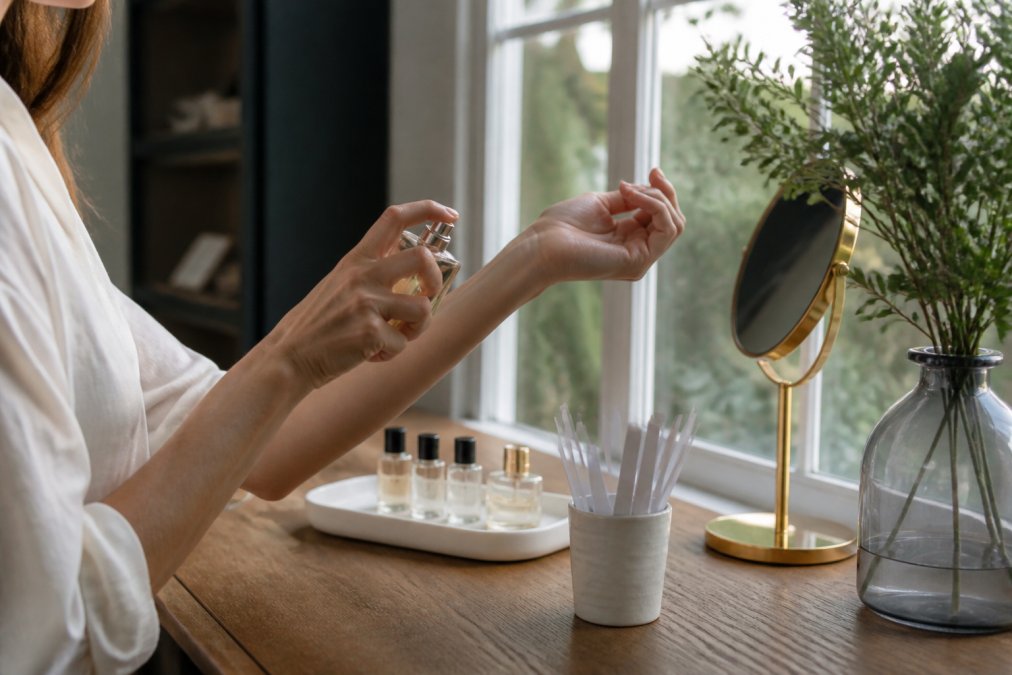
Spray the fragrance once on your inner wrist or the base of your throat. One spray is enough. Resist the urge to rub your wrists together, as this breaks down fragrance molecules and disrupts the natural evolution. Let it dry for 30 seconds before smelling it.
Now comes the hard part: wait. Smell the fragrance immediately (top notes), then again at 5 minutes, 15 minutes, 30 minutes, 1 hour, and again 3-4 hours later if possible. This timeline shows you the complete evolution. Many people fall in love with a top note only to discover they dislike the heart note. You need to experience all three phases before deciding.
Pay attention to how the fragrance evolves on your skin specifically. Does it stay bright and fresh, or does it become warmer and more sensual? Does it project noticeably, or does it stay close to your body? Does it last, or does it fade quickly?
If you're testing multiple fragrances, space them out. Test one fragrance thoroughly, then wait at least 30 minutes before testing another. Your olfactory system fatigues quickly, and testing too many scents in rapid succession dulls your perception. Consider testing at different times of day if possible, as fragrances can smell noticeably different in morning light versus evening.
Troubleshooting Scent Fatigue and Longevity
One of the most frustrating experiences with fragrance is "scent fatigue", where you stop smelling your own fragrance even though it's still there and others can still smell it on you. After about 20-30 minutes of continuous exposure to a scent, your olfactory receptors stop firing as actively (peer-reviewed research). This is called olfactory adaptation, and it's actually protective, it allows you to notice new smells in your environment.
Scents that evolve on skin have a real advantage here. Because the fragrance is constantly changing, new notes emerging as others fade, it provides fresh olfactory stimuli. Your nose doesn't adapt as quickly to a moving target. An evolving fragrance keeps your olfactory system engaged longer than a static one.
Longevity issues usually stem from application technique or skin conditions rather than fragrance quality. Applying to dry skin without moisturizing first shortens longevity significantly. Moisturizing with an unscented lotion before applying fragrance creates a better base for fragrance molecules to bind to. Application location also affects longevity, fragrance applied to areas with more oil and warmth lasts longer. Your inner wrists and the base of your throat are ideal.
Choosing Scents That Evolve Beautifully on Your Skin
Selecting a fragrance that evolves beautifully requires understanding your own preferences and skin chemistry. Start by identifying what you love in the heart and base notes, not just the top notes. Many people choose fragrances based on the initial spray and regret it later when the heart note emerges.
Consider your skin type. If you have naturally oily skin, you can wear heavier, more complex fragrances because your skin's sebum will support the evolution beautifully. If you have dry skin, you might prefer fragrances with lighter compositions, though layering with moisturizer helps.
Think about the narrative you want the fragrance to tell. Some fragrances evolve from bright and energetic to warm and sensual. Others move from fresh and clean to woody and grounding. Ruth+Bo's approach to fragrance design centers on this evolution, with each fragrance crafted to unfold a story and reveal meaning as it develops on your skin.
Testing fragrances from a discovery set is an excellent way to explore how different compositions evolve on your specific skin without committing to full bottles. Pay attention to the base notes when making your final decision, as these are what you'll smell most of the day once the fragrance settles.
Understanding how scents that evolve on skin actually work transforms fragrance shopping from guesswork into informed decision-making. You're no longer chasing a single "perfect smell", you're seeking fragrances that unfold beautifully on your unique body chemistry and align with the narratives that matter to you. Ruth+Bo's curated collection is specifically designed with this evolution in mind, offering fragrances that reveal new dimensions as they settle on your skin. Explore the discovery sets to find scents that tell your story, and experience the difference that intentional fragrance design makes.
Frequently Asked Questions
Why do scents that evolve on skin smell different on different people?
Skin chemistry, including pH levels, natural oils, hydration, hormonal shifts, and body temperature, alters how fragrance molecules interact with your skin. Base notes and musk compounds bind differently to each person's unique dermal profile. Additionally, olfactory adaptation means your nose stops detecting the same scent intensity over time, while others around you still perceive it fully. This is why a fragrance that smells subtle and sensual on one person might project boldly on another.
How can I test if a fragrance evolves well on my skin?
To test how a fragrance evolves on your skin, apply a single spray to a clean pulse point, such as your inner wrist. Avoid rubbing it in. Smell the fragrance immediately to catch the top notes, then check again after 15-30 minutes for the heart notes, and finally after 3-4 hours to experience the base notes. This allows you to observe the full progression and how it interacts with your unique body chemistry. Ruth+Bo offers discovery sets that are ideal for this kind of personal exploration, allowing you to experience the full story of each scent on your skin before committing to a full bottle.
What are the best ingredients for scents that evolve on skin?
Base notes like sandalwood, musk, and synthetic compounds create longevity and evolve as they warm on your skin. Natural oils and oil-based formulations tend to develop more complexity over time compared to alcohol-based versions. Heart notes such as florals and spices emerge as the fragrance settles, while top notes provide the initial impression. IFRA-compliant aroma chemicals ensure safety and consistent performance. The combination of these layers, top, heart, and base, is what creates a fragrance that genuinely evolves rather than simply fading.
How long do scents that evolve on skin typically last?
Fragrance longevity depends on concentration, skin hydration, body temperature, and the specific aroma chemicals used. Skin scents designed to evolve often have moderate projection but can last 4-8 hours or longer on well-moisturized skin. The evaporation rate slows as base notes develop, meaning the scent's character may shift but its presence remains. Factors like environmental conditions and your individual skin pH also affect how long the fragrance maintains its evolution cycle.
This article was written using GrandRanker