
How to Store Fragrance Collection: 7 Essential Tips
Table of Contents
- Why Proper Storage Matters for Your Fragrance Collection
- Keep Fragrances in a Cool, Dark Place
- Maintain Consistent Temperature to Prevent Scent Degradation
- Protect Against Humidity and Moisture
- Keep Bottles in Original Packaging
- How to Make Perfume Last: Storage Techniques for Longevity
- Signs of Expired Perfume and When to Retire Your Scents
- Understanding Perfume Shelf Life and Storage Duration
Last Updated: August 23, 2026
Why Proper Storage Matters for Your Fragrance Collection
Fragrance molecules are volatile compounds designed to unfold over time, but only under the right conditions. Expose them to heat, light, humidity, or temperature swings, and you're accelerating oxidation and scent degradation instead of preservation. A fragrance stored poorly can lose its top notes within weeks, leaving behind a flat, one-dimensional version of what it was meant to be.
At Ruth+Bo, we understand that a carefully curated fragrance collection represents more than just bottles on a shelf. Each scent tells a story and deserves to maintain its integrity from the moment you open it until the last spray. This guide covers seven essential practices for storing your fragrance collection properly, ensuring your fragrances stay true to their original scent profile for years.
Keep Fragrances in a Cool, Dark Place
The foundation of fragrance preservation is simple: cool temperatures and darkness. Light penetrates clear glass, triggering chemical reactions that break down volatile compounds. Heat accelerates this process exponentially.
Ideal Temperature Range
Store fragrances between 55°F and 75°F for optimal preservation (the FDA). This range keeps fragrance molecules stable without allowing chemical composition to shift. A bedroom closet that stays consistently cool year-round is ideal. A bathroom that swings from 65°F to 85°F depending on the season is not. Heat accelerates evaporation and oxidation, meaning your fragrance loses potency faster when stored warm.
Minimize Light Exposure
Store fragrances in a dark environment. Direct sunlight is the enemy, UV exposure degrades fragrance notes, particularly delicate top notes. Even indirect daylight through a window can cause measurable damage over weeks.
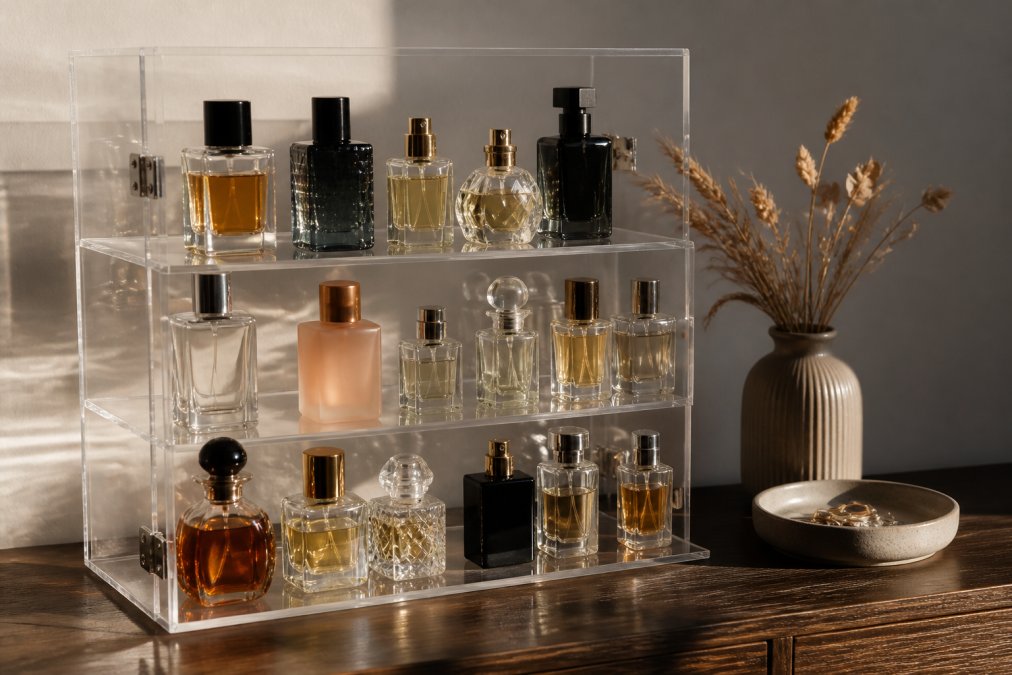
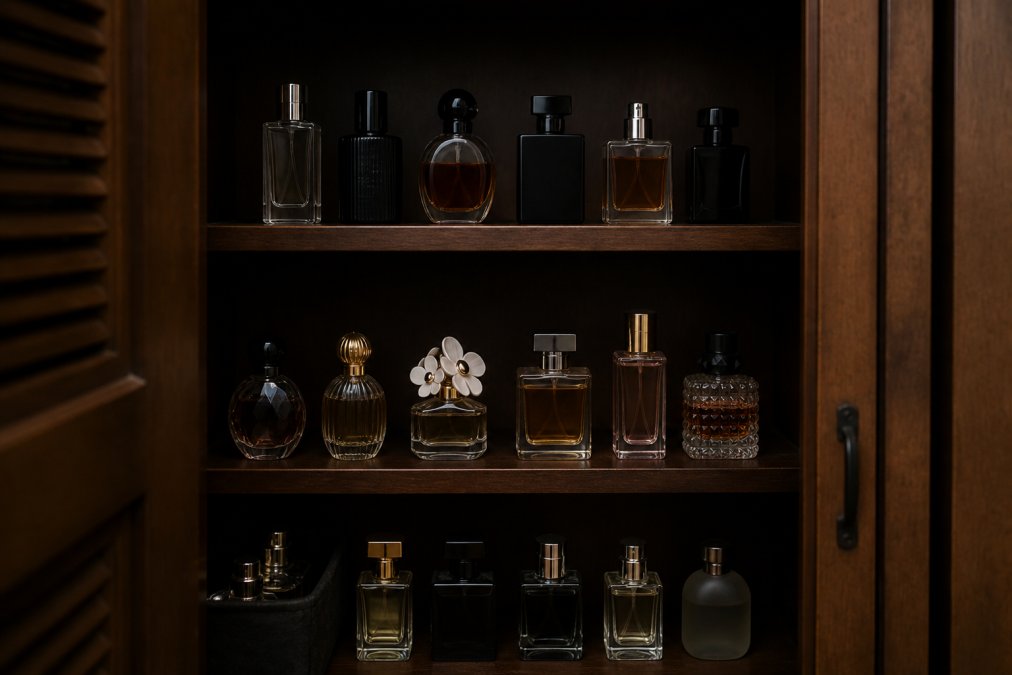
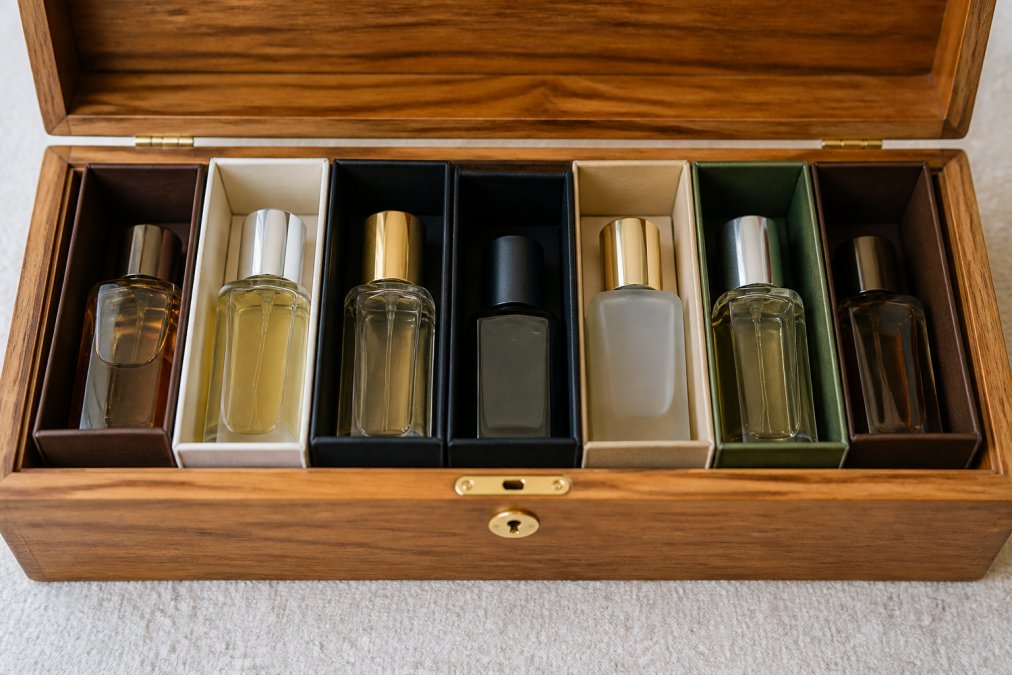
The best storage locations are interior closets, dresser drawers, or opaque storage boxes. If you display fragrances, keep them away from windows and direct light sources. Many collectors use dark glass or wooden display cases that allow visibility without exposing bottles to UV radiation.
Maintain Consistent Temperature to Prevent Scent Degradation
Temperature fluctuations are more damaging than a consistently cool environment. When a fragrance bottle heats and cools repeatedly, the liquid inside expands and contracts, accelerating breakdown of the fragrance's chemical composition and causing sealing issues over time.
Avoid storing fragrances in spaces with dramatic temperature swings: bathrooms with hot showers, kitchens near appliances, windowsills, or cars. These environments experience 20-30 degree temperature shifts regularly. A bedroom closet or interior dresser drawer maintains stable temperatures far more effectively.
Thermal shock, rapid temperature changes, is particularly destructive. If you travel with fragrances, allow them to acclimate to room temperature gradually before opening. Don't spray a fragrance that's just come from a cold car into a warm room. Let it sit for 15-20 minutes first.
Protect Against Humidity and Moisture
Humidity is the silent killer of fragrance collections. Moisture damages bottle integrity, corrodes metal components, and accelerates oxidation. Store fragrances in environments with humidity levels between 30-50% (the CDC). Most climate-controlled homes stay within this range, but basements, bathrooms, and kitchens often exceed 60% humidity.
Avoid storing fragrances in bathrooms, even in closed cabinets. The moisture from showers and baths permeates the space. If you must store fragrances in a humid area, use airtight containers with desiccant packets to create a microclimate that controls moisture levels. Check storage containers periodically for condensation and add fresh desiccant packets as needed.
Keep Bottles in Original Packaging
The original packaging shields the bottle from light and provides insulation against temperature changes. Keeping fragrances in their original boxes extends shelf life significantly compared to displaying bottles openly. For collection pieces or backups, original packaging is your best preservation tool.
Store boxes in a dark location. If you've already removed bottles from boxes, keep the boxes anyway, they're valuable for long-term storage and resale. For discovery sets from Ruth+Bo or other curated collections, the original packaging is designed to protect multiple bottles in one container.
How to Make Perfume Last: Storage Techniques for Longevity
Beyond choosing the right environment, how you handle and store bottles directly impacts how long your fragrances maintain their original scent profile.
Store Bottles Upright
Always store fragrance bottles upright, with the cap facing up. This positioning minimizes contact between the fragrance liquid and the bottle's atomizer or spray mechanism. Storing bottles on their sides or upside down increases the surface area of fragrance exposed to air inside the bottle, accelerating oxidation and causing sealing issues.
For decants and small sample bottles, keep them upright in a cool, dark place. If traveling with decants, use a dedicated travel case that holds bottles vertically or at a slight angle.
Avoid Bathroom Storage
Bathrooms are the worst storage location for fragrances. Humidity from showers and baths creates a hostile environment. Temperature swings stress the bottles, and moisture can corrode caps and seals, allowing fragrance to evaporate or oxidize faster.
If your bathroom is your primary fragrance location, move your collection to a bedroom closet or dresser drawer immediately. Keep only the fragrance you're actively using in the bathroom, stored away from the shower area. The convenience of bathroom storage isn't worth the degradation cost.
Travel Storage Solutions
Use a dedicated travel case or padded pouch designed for fragrance bottles. Keep the case in your carry-on bag rather than checked luggage, where temperature and pressure changes are more extreme. Limit the fragrances you bring, a single discovery set or two bottles is safer than a full collection. Decants are ideal for travel, representing less of a loss if something breaks.
Transfer fragrances into smaller bottles a few days before traveling, allowing them to acclimate to room temperature before packing. Keep fragrances away from direct sunlight in your hotel room. Upon returning home, let your fragrances acclimate to room temperature for 30 minutes before opening or using them.
Signs of Expired Perfume and When to Retire Your Scents
Fragrances don't expire in the traditional sense, but they do degrade. A fragrance is past its best when the scent profile has shifted noticeably. The opening notes may smell muted, the heart notes flat, or the base notes off or unpleasant.
Color changes indicate degradation. Most fragrances are clear or very pale. If a fragrance has darkened noticeably, oxidation has progressed substantially. Separation or cloudiness suggests the fragrance's chemical composition has broken down. Smell the fragrance directly from the bottle, if it smells off, sour, or unpleasant, trust your nose.
Understanding Perfume Shelf Life and Storage Duration
Under ideal storage conditions, most fragrances maintain their original scent profile for 3-5 years (peer-reviewed research). Some fragrances, particularly those with strong base notes, last longer. Others, especially those with delicate floral or citrus top notes, degrade faster. Shelf life depends on storage conditions more than anything else.
Ruth+Bo's curated fragrances are formulated with stability in mind. A discovery set will last longer if you store unopened bottles correctly and only use decants for testing.
Refrigeration Myths vs. Reality
Refrigerators maintain cool, stable temperatures, which slows oxidation. However, they also expose fragrances to humidity from food storage and temperature fluctuations every time the door opens. Fragrance bottles can develop condensation when removed from a cold refrigerator and brought to room temperature, damaging the atomizer and cap seals.
If you choose to refrigerate fragrances, keep them in a sealed, moisture-proof container and remove the container 30 minutes before opening a bottle to allow acclimation. For most people, a cool closet or dresser drawer is more practical and nearly as effective.
Storage for Decants and Samples
Decants and samples require different storage considerations than full bottles. They're typically stored in smaller bottles with less strong sealing mechanisms and are more prone to evaporation.
Store decants in airtight containers in a cool, dark place. Many collectors use small glass vials with tight-sealing caps or dedicated sample storage boxes. Keep decants sealed when not in use. Label decants clearly with the fragrance name and date. Decants typically last 6-12 months under ideal conditions, shorter than full bottles because of higher evaporation rates.
If you're building a collection through discovery sets, transfer samples into smaller decants immediately after opening. This preserves the unopened bottles in the set while allowing you to test the fragrances thoroughly.
Proper fragrance storage is the difference between a collection that evolves beautifully and one that slowly deteriorates. Cool, dark, stable storage in original packaging with careful handling is straightforward to implement and transformative in its impact. When you invest in story-driven fragrances from Ruth+Bo, you're investing in scents designed to tell a personal narrative on your skin. Store them with the same care you'd give any meaningful possession, and they'll reward you with years of authentic scent experiences that remain true to their original composition.
Frequently Asked Questions
Q: What is the best way to store a fragrance collection?
A: Store fragrances in a cool, dark place away from direct sunlight and heat sources. Keep bottles in their original packaging, store them upright, and maintain consistent temperatures between 55-75°F. Avoid bathrooms where humidity and temperature fluctuations degrade scent quality. A closet shelf, dresser drawer, or dedicated storage box works well. The original packaging protects the fragrance from UV exposure and oxidation, preserving the scent profile and volatile compounds that define the fragrance.
Q: How long can fragrances be stored before they expire, and what is the typical perfume shelf life?
A: Most fragrances last 3-5 years when stored properly, though some can remain potent for 10+ years. The shelf life depends on storage environment, original formulation, and chemical composition. Keep fragrances away from direct heat and light exposure to maximize longevity. If stored in ideal conditions, cool, dark, and dry, your collection will maintain its scent quality far longer than fragrances exposed to thermal shock or humidity.
Q: What are the signs of expired perfume I should watch for?
A: Signs of expired perfume include a noticeably different scent profile, darker color, or cloudiness in the liquid. The fragrance may smell musty, vinegary, or flat, losing the top notes and middle notes that define the original scent. Oxidation and scent degradation occur when bottles are exposed to light, heat, or air. If the atomizer is damaged or the bottle has been opened frequently, the volatile compounds evaporate faster. Trust your nose: if a fragrance smells off or significantly different from when you first purchased it, it's time to retire it.
Q: Should fragrance collections be stored in the refrigerator?
A: Refrigeration is unnecessary and can introduce moisture problems. While cool temperatures help preserve fragrance, a refrigerator's humidity levels and temperature fluctuations when the door opens and closes can damage the scent. Instead, store fragrances in a cool, dark closet or dresser drawer where temperatures remain stable. The ideal storage environment is consistently between 55-75°F with low humidity. If you live in a very warm climate, a dedicated fragrance storage box in a cool room works better than refrigeration, protecting your collection from thermal shock while maintaining proper humidity levels.
This article was written using GrandRanker