
Risen Fragrances vs Stories Parfums: A 2026 Comparison
Table of Contents
- Risen Fragrances vs Stories Parfums: Side-by-Side Comparison
- Brand Philosophy and Storytelling in Perfumery
- Ingredient Sourcing and the Synthetic vs Natural Debate
- Scent Profiles and Olfactory Notes
- Longevity and Sillage: How Each Brand Performs
- Benefits of Narrative Fragrances for Everyday Wear
- How to Choose a Signature Scent from Niche Perfume Brands with a Story
- Frequently Asked Questions
Last Updated: September 15, 2026
Risen Fragrances vs Stories Parfums: Side-by-Side Comparison
The risen fragrances vs stories parfums comparison comes down to a single question: do you want a fragrance that smells good, or one that means something? Risen Fragrances leans into dark, fruit-forward compositions built on a clean, faith-aligned ingredient promise. Stories Parfums builds each release around a narrative arc, treating the bottle as a chapter rather than a product.
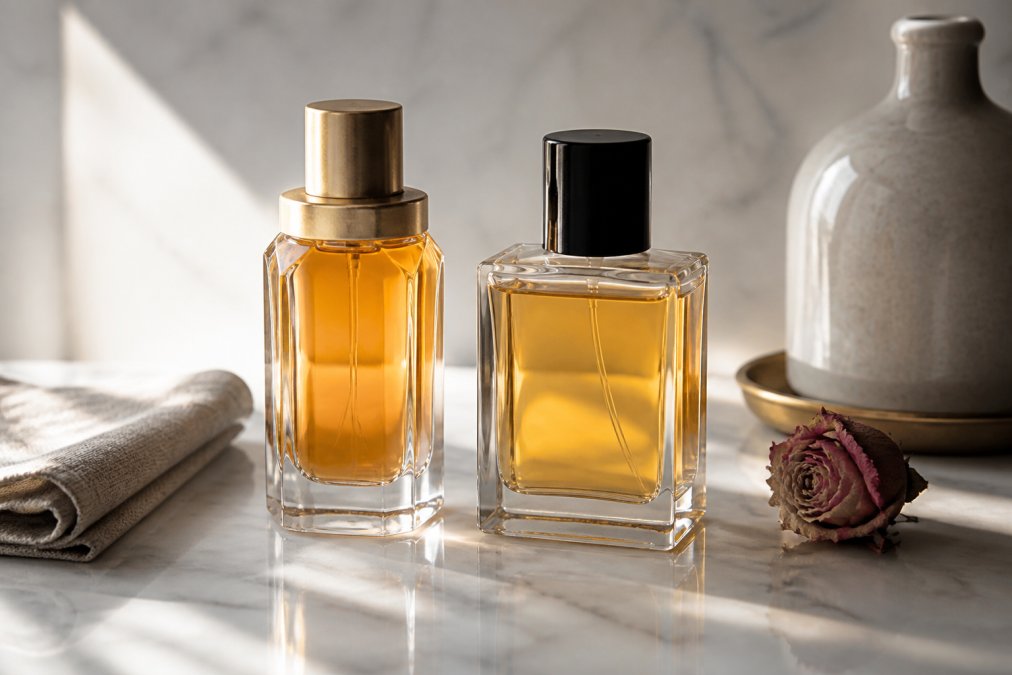
Here's the short version. Risen Fragrances wins on ingredient transparency and bold, recognizable scent profiles. Stories Parfums wins on emotional resonance and the way a scent unfolds over hours. Neither is the "right" answer, and anyone who tells you otherwise is selling something.
| Criteria | Risen Fragrances | Stories Parfums |
|---|---|---|
| Core philosophy | Faith-based, non-toxic, organic focus | Narrative-driven, story-first composition |
| Signature profile | Dark, fruity, cherry-forward | Varies by release, tied to a story arc |
| Ingredient stance | Emphasizes organic and non-toxic sourcing | Blends naturals and synthetics for effect |
| Best for | Clean-fragrance buyers with faith alignment | Buyers who want a scent with a backstory |
| Distribution | Limited, niche retail | Limited, niche retail |
The practical difference shows up the moment you wear either one for a full day. Risen's darker compositions tend to announce themselves early and hold a consistent character. Stories Parfums scents often shift more dramatically between the opening and the dry-down, which is either the whole point or a dealbreaker, depending on your tolerance for a scent that changes its mind.
That's the theory. Here's what actually happens when you commit to one for a month.
Brand Philosophy and Storytelling in Perfumery
Storytelling in perfumery is the practice of building a fragrance around a narrative, a place, a memory, or a set of values, rather than around a single appealing smell. Risen Fragrances uses faith as its narrative anchor, framing every scent as an expression of belief and stewardship. Stories Parfums takes a more literary route, treating each release as a standalone story with its own characters and mood.
A common mistake is assuming "story-driven" means "vague." It doesn't. A real brand narrative shows up in concrete choices: which ingredients get sourced, how a scent is named, what the packaging says, and what the brand refuses to do. When a faith-based house commits to non-toxic and organic sourcing, that's a narrative with teeth. When a narrative house builds a scent around a specific moment, the composition has to earn that moment.
For buyers weighing niche perfume brands with a story, the test is simple. Read the brand's stated values, then smell the fragrance. If the two don't match, the story is decoration.
Ingredient Sourcing and the Synthetic vs Natural Debate
The synthetic vs natural debate is less a moral question than a performance one. Natural botanical extracts deliver complexity and unpredictability. Synthetics deliver consistency, longevity, and access to notes that can't be sustainably extracted, like certain animalic or fruit accords. Nearly every serious fragrance house, including the ones that market themselves as "clean," uses both.
Risen Fragrances positions itself firmly on the non-toxic and organic side, which appeals to buyers who want to know what's in the bottle. That's a legitimate and increasingly common priority. The trade-off is that purely natural compositions often fade faster and vary more from batch to batch.
Stories Parfums takes the blended approach, using synthetics where they serve the story. This is standard practice in luxury perfumery, and it's why a well-built eau de parfum can hold its shape for eight hours while an all-natural oil-based scent might need reapplying by lunch.
For buyers who prioritize nontoxic ingredients and organic perfume sourcing, Risen's stance is the clearer match. For buyers who want a scent to evolve and hold, the blended approach usually wins.
Scent Profiles and Olfactory Notes
Scent profiles are where these two houses diverge most sharply, and it's the single easiest thing to compare before you buy. Risen Fragrances specializes in dark, fruity, and cherry-forward compositions. Stories Parfums spreads its bets across a wider olfactory range, because each release serves a different narrative. No current write-up breaks these down note by note, so here's the structured comparison.
| Olfactory layer | Risen Fragrances (signature style) | Stories Parfums (typical release) |
|---|---|---|
| Top notes | Black cherry, plum, sometimes a bright bergamot lift | Often citrus, green, or a single floral accord tied to the story's opening scene |
| Heart notes | Warm spice, almond, sometimes rose | Varies widely: rose, leather, or an herbal note depending on the chapter |
| Base notes | Resinous woods, amber, musk, vanilla | Cedar, musk, amber, or leather depending on the arc's resolution |
| Overall arc | Opens strong, stays recognizable, dries down warm | Opens bright, shifts noticeably, resolves into a different character |
| Signature vs. variety | One recognizable house signature | A different profile per release |
A few things worth knowing about how to read that table. Risen's cherry-forward signature is a deliberate choice: cherry accords are notoriously hard to build because the natural fruit doesn't extract cleanly, so a house that leans on cherry is usually relying on a carefully constructed accord rather than a single raw material. That's why the note reads as consistent from bottle to bottle. Stories Parfums, by contrast, treats the olfactory pyramid as the plot. The top notes are the setup, the heart is the turn, and the base is the resolution. If a release opens with bright citrus and green notes before settling into cedar and musk, that shift is the point, not a flaw.
If you like knowing exactly what you're getting, Risen's focus is an advantage. If you like the idea of a scent revealing itself over the course of an evening, Stories Parfums plays that game better. This is also where scent memory does its work: a fragrance tied to a specific story tends to stick in your memory longer than one you simply liked.
Longevity and Sillage: How Each Brand Performs
Longevity is how long a fragrance lasts on your skin.
How to test longevity and sillage yourself
What to expect from each house
The variables that actually change the result
Benefits of Narrative Fragrances for Everyday Wear
How to Choose a Signature Scent from Niche Perfume Brands with a Story
Frequently Asked Questions
What defines a narrative-driven fragrance brand?
A narrative-driven fragrance brand builds each scent around a specific story, memory, or theme. The fragrance composition, from top notes to base notes, is designed to evoke that narrative. Risen Fragrances and Stories Parfums both use this approach, but their stories differ: one leans faith-based, the other focuses on broader emotional themes. The goal is a sensory experience that connects you to the story every time you wear it.
Are Risen Fragrances and Stories Parfums considered niche perfume houses?
Yes, both are niche perfume houses. They produce limited batches, focus on artisan craftsmanship, and avoid mass-market distribution. This means you get unique scent profiles and often higher concentrations of perfume oils. However, niche also means less mainstream availability, so sampling through discovery sets is wise before committing to a full bottle.
How does storytelling influence the scent profile of a luxury perfume?
Storytelling guides the perfumer's choice of notes. For a faith-based narrative, you might see ingredients like frankincense or myrrh. For a memory-based story, notes like vanilla or sea salt might evoke a specific place. The olfactory pyramid is built to unfold that story over time. This makes the fragrance more than a scent; it becomes a personal journey that evolves on your skin.
What are the primary differences between faith-based and memory-based fragrance collections?
Faith-based collections often incorporate notes tied to religious traditions, such as incense, and aim to inspire spiritual reflection. Memory-based collections focus on personal or universal memories, like a summer garden or a favorite book. Both use narrative techniques, but the emotional trigger differs. Your choice depends on whether you want a scent that feels devotional or nostalgic.
How do I choose a fragrance based on personal meaning?
Start by identifying a story, memory, or value you want to express. Then look for brands whose narratives align. Sample discovery sets to test how scents evolve on your skin. Pay attention to longevity and sillage: a meaningful scent should last through your day. Finally, consider how the fragrance makes you feel, not just how it smells initially. That emotional connection is the hallmark of a signature scent.
Choosing between narrative fragrance houses is a decision about identity as much as scent. Risen Fragrances and Stories Parfums each solve that problem differently, and neither is wrong. If you want to skip the guesswork entirely, Ruth+Bo offers discovery sets for convenient sampling, curated feminine and masculine collections, and thematic gift sets featuring paired scents. Get started with Ruth+Bo and find a fragrance that actually means something to you.