
How to Choose a Faith-Inspired Fragrance: 2026 Guide
Table of Contents
- Start With the Spiritual Story You Want to Carry
- Read the Aromatic Profile: Top, Heart, and Base Notes
- Match Biblical Botanicals to Your Intent
- Her Legacy Beauty Alternative Scents: What to Look For
- How to Layer Perfume for Spiritual Reflection
- Meaningful Gift Sets for Faith-Based Individuals
- Test Safely: Skin Sensitivity, Purity, and Scent Longevity
- Frequently Asked Questions
Last Updated: September 16, 2026
Start With the Spiritual Story You Want to Carry
Learning how to choose a faith-inspired fragrance begins with a single question: what do you want to remember? A faith-inspired fragrance is a scent built around a spiritual narrative, using biblical botanicals and symbolic notes to connect daily wear with belief. At Ruth+Bo, we build every scent around that idea first.
Most shoppers do this backwards. They smell a bottle, like it, and then hunt for meaning afterward. The result is a shelf of perfumes that smell good and mean nothing.
Try this instead:
- Name the story or season you want to carry (a wedding, a season of prayer, a passage you return to).
- Write down two or three words that describe it (steadfast, quiet, joyful).
- Only then start reading aromatic profiles.
The rest of this guide walks through notes, botanicals, layering, and safety so the final choice actually matches the intent you started with.
Read the Aromatic Profile: Top, Heart, and Base Notes
Every fragrance unfolds in three stages, and understanding them prevents disappointment. Top notes are the first impression and fade within 15 to 30 minutes. Heart notes emerge next and define the scent's character. Base notes linger for hours and shape what people remember about you.
An aromatic profile is the complete map of these stages, from opening sparkle to final dry-down. When you read a product description, look for all three layers rather than just the opening.
| Layer | Timing on Skin | What It Does | Common Faith-Inspired Examples |
|---|---|---|---|
| Top notes | First 15-30 minutes | Creates first impression | Citrus, light florals |
| Heart notes | 30 minutes to 3 hours | Defines character | Rose of Sharon, cinnamon, hyssop |
| Base notes | 3 hours onward | Creates longevity and memory | Frankincense, myrrh, cedarwood, spikenard |
Scent longevity depends on base notes. If you have bought "sophisticated" scents before that faded within a couple of hours, thin base notes can be a factor.
Match Biblical Botanicals to Your Intent
The fastest way to choose well is to start from intent and work toward ingredients. Biblical botanicals each carry centuries of association, and matching them to your purpose narrows the field quickly. What separates a well-chosen faith-inspired fragrance from a generic "spicy" or "woody" one is knowing not just what each botanical smells like, but where it appears in scripture and why that context matters to you.
Here is the working reference most practitioners use, organized by the intent each botanical serves:
- Frankincense: a gum resin tapped from Boswellia trees, burned as temple incense (Exodus 30) and brought by the Magi (Matthew 2:11). Smells dry, lemony-resinous, and slightly piney. Best for prayer, meditation, and quiet reflection.
- Myrrh: a resin from Commiphora trees, used in the holy anointing oil (Exodus 30:23) and offered to Christ at the crucifixion (Mark 15:23). Smells warm, bitter, and balsamic. Suits solemn or grounding moments.
- Spikenard: an aromatic root oil from the Himalayas, used by Mary of Bethany to anoint Jesus' feet (John 12:3). Deep, earthy, and contemplative, one of the most expensive biblical materials by weight.
- Cedarwood: the timber of the Jerusalem temple (1 Kings 6) and a purification ingredient (Leviticus 14). Sturdy, dry, and clean; tied to strength and permanence.
- Hyssop: a small herbaceous plant used in the Passover marking (Exodus 12:22) and in cleansing rites (Psalm 51:7). Fresh, slightly camphoraceous, and green; connected to renewal.
- Cinnamon and cassia: two distinct warm spices, both listed in the holy anointing oil (Exodus 30:23-24). Sweet, hot, and balsamic; historically part of sacred blends.
- Rose of Sharon: a poetic floral reference (Song of Solomon 2:1), not a single botanical species. Floral and soft; often chosen for devotion and love.
- Galbanum: a green, bitter resin also named in the anointing oil (Exodus 30:34). Sharp and grassy; adds an unusual, ancient edge to incense blends.
- Onycha: a resin of uncertain modern identity, listed alongside galbanum in Exodus 30:34. Rare in modern perfumery; when a brand claims it, ask which material they actually use.
A common pattern is to match the botanical's scriptural role to the moment you want the scent to accompany. For a morning devotional, frankincense or hyssop keeps the tone clear and alert. For evening reflection, myrrh, spikenard, or cedarwood settles the mind. For celebration, rose of Sharon or cinnamon brings warmth without heaviness. For a season of repentance or fasting, galbanum and myrrh carry the right weight.
One practical caution: a fragrance can list a biblical ingredient and still smell nothing like the raw material. Cinnamon and cassia are heavily restricted in modern perfumery because they can irritate skin, so a compliant formula often uses a fraction of the natural oil or a reconstructed accord. If the scriptural connection is the point for you, consider asking the brand about the presence of the named botanical.
Her Legacy Beauty Alternative Scents: What to Look For
If you have explored her legacy beauty alternative scents in the past, the selection criteria matter more than the label. The category has grown, and quality varies widely.
Look for these markers:
- Plant-derived ingredients listed plainly, not hidden behind "fragrance" as a catch-all.
- IFRA-compliant formulations. The International Fragrance Association standards set global safety limits on ingredient concentrations, and compliant brands publish or confirm this.
- Cold-pressed or steam-distilled natural extracts where the ingredient allows it.
- Full note pyramids so you know what you are buying before it arrives.
Ask any brand directly about third-party testing and sourcing.
Ethical sourcing deserves the same scrutiny. Ancient resins like frankincense and myrrh are harvested by hand, and supply chains vary in how they treat the harvesters and the trees. Brands that can describe where their resin comes from, and how the trees are protected, are often valued by conscious consumers.
How to Layer Perfume for Spiritual Reflection
Layering is where a fragrance becomes a ritual rather than a purchase. The goal is not to smell louder; it is to build a scent that unfolds slowly and keeps you present.
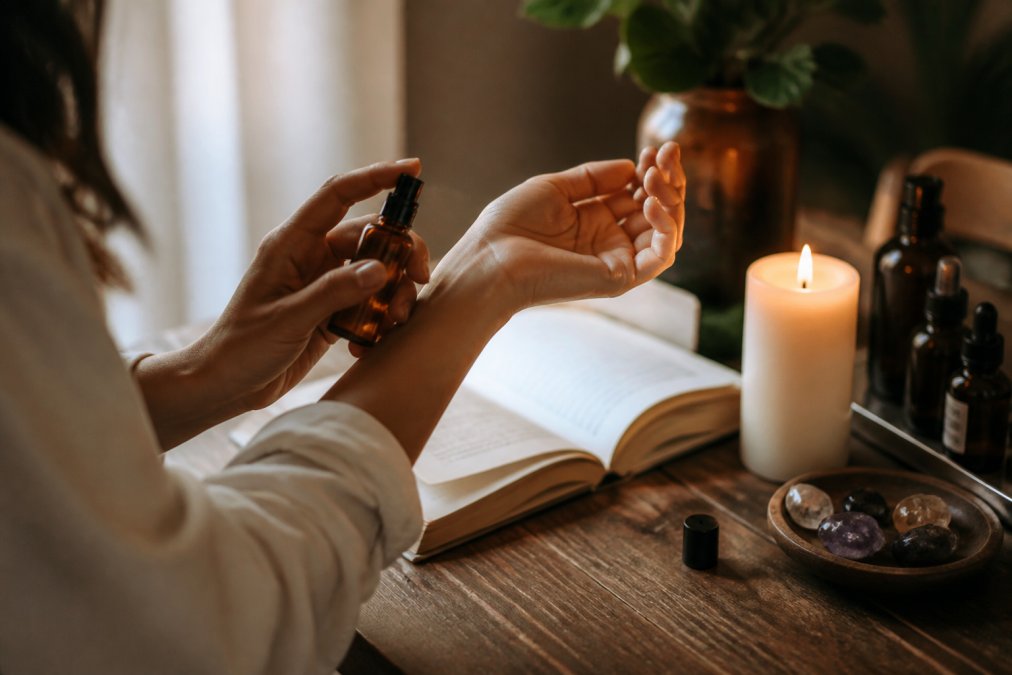
Follow this sequence:
- Apply an unscented moisturizer first. Hydrated skin holds scent longer.
- Spray the heavier, resin-based scent at pulse points: wrists, base of throat, behind the ears.
- Wait two minutes, then add a lighter floral or citrus layer on top.
- Never rub your wrists together. It crushes the top notes and shortens wear.
- Reapply only the base layer if you need more by evening.
For different liturgical seasons, shift the balance. Advent and Lent suit myrrh, cedarwood, and spikenard.
Meaningful Gift Sets for Faith-Based Individuals
- Does it include multiple scents? A pairing of one feminine and one masculine profile suits couples and lets the recipient test before committing.
- Is there a story behind the pairing? Sets built around a narrative, such as a wedding or an anniversary, carry more weight than a random assortment.
- Are the sizes practical? Smaller trial sizes let someone live with a scent for a week before buying full size.
Test Safely: Skin Sensitivity, Purity, and Scent Longevity
- Cinnamon and cassia contain cinnamaldehyde, a known irritant. IFRA restricts their concentration in leave-on products, which is why a compliant blend smells warm rather than hot.
- Citrus top notes (bergamot, lemon, bitter orange) can be phototoxic, they react with UV light and may cause burning or darkening on exposed skin. Bergamot is often sold "bergapten-free" for this reason; ask which version a brand uses if you wear scent in the sun.
- Frankincense, myrrh, and other resins are less reactive but can still trigger sensitivity in people with existing allergies to the Boswellia or Commiphora families.
Frequently Asked Questions
What are some biblical-inspired perfumes?
Biblical-inspired perfumes are fragrances built around ingredients named in scripture, such as frankincense, myrrh, spikenard, hyssop, cassia, and cedarwood. Modern versions may blend these with rose, cinnamon, or citrus to soften the resinous base. When shopping, look for the ingredient list rather than the name alone, since a scent called 'Jerusalem' may contain mostly synthetic accords. A faith-inspired fragrance works best when the notes connect to a story or verse you already value.
What scent did Jesus use?
Scripture describes Jesus being anointed with spikenard, a costly oil imported from the Himalayas, and myrrh is associated with his birth and burial. Frankincense is the third gift named in Matthew. Together these three, spikenard, myrrh, and frankincense, form the core of what many people mean by a biblical fragrance. A modern scent that lists any of these as a base note is drawing on that same tradition, even when it is blended with lighter top notes.
What is the best spiritual perfume?
There is no single best spiritual perfume, because the right choice depends on your intent. For prayer and meditation, a quiet frankincense or cedarwood base tends to support focus. For celebration or worship, brighter notes like rose of sharon or citrus work well. For grief or remembrance, myrrh and spikenard carry historical weight. Test a small amount on your skin and wear it through a full day before committing, since body chemistry changes how any faith-inspired fragrance reads.
How do scent notes influence the meaning of a fragrance?
Top notes are what you smell first and they fade within 15 to 30 minutes. Heart notes shape the character for the next few hours. Base notes, often resins, woods, or musk, last longest and set the tone. In a devotional fragrance, the base note usually carries the symbolic weight, so a myrrh or frankincense base will feel more reverent than a bright fruit opening. Reading the note pyramid helps you predict how the scent will evolve on your skin.