
Perfume Safety: What You Need to Know
Table of Contents
- What Makes Perfume Safety a Concern
- Health Risks: From Dermatitis to Respiratory Irritation
- Endocrine Disruptors in Cosmetics: The Hidden Risk
- How to Read Perfume Labels and Identify Harmful Ingredients
- Natural vs. Synthetic Fragrances: Which Is Safer
- Safe Application Techniques for Perfume Use
- Regulatory Compliance and Consumer Protection
- Conclusion
Last Updated: August 28, 2026
What Makes Perfume Safety a Concern
Perfume safety is about understanding what you're actually spraying on your skin and inhaling into your lungs. Most people assume products sold in stores have been thoroughly vetted, but the reality is more complicated. Fragrance manufacturers aren't required to disclose all ingredients on product labels, leaving consumers unaware of what they're exposing themselves to.
At Ruth+Bo, we believe that knowing what's in your fragrance matters as much as how it smells. When you spray perfume, you're potentially introducing volatile organic compounds, endocrine disruptors, and allergenic substances directly onto your skin and into the air you breathe. Understanding these risks doesn't mean abandoning fragrance entirely, it means making informed choices about which products align with your health priorities.
Research reveals that dermatitis, respiratory irritation, hormonal imbalance, and contact allergy are documented outcomes for many fragrance users. What makes perfume safety particularly urgent is that these risks are largely preventable through knowledge and careful product selection.
Health Risks: From Dermatitis to Respiratory Irritation
Allergic Reactions and Contact Dermatitis
Fragrance is one of the most common causes of allergic contact dermatitis, an inflammatory skin reaction that can result in persistent redness, itching, blistering, and long-term sensitivity (the American Academy of Dermatology). The problem is that fragrance allergies often develop slowly, you might wear a perfume for months without issue, then suddenly experience a reaction as repeated exposure lowers your skin's tolerance threshold.
Fragrance mix, a combination of the most common allergenic fragrance ingredients, is included in dermatological patch testing kits because it triggers reactions so frequently. The wrists, neck, and inner elbows are common application sites but also areas where skin is thinner and more permeable, making them more vulnerable to chemical penetration.
Common fragrance ingredients known to trigger contact dermatitis include certain essential oils, synthetic musks, and preservatives. People with existing skin conditions like eczema or rosacea face even higher risk. The challenge is that manufacturers group fragrance components under the single term "fragrance," making it impossible for consumers to identify which ingredient caused their reaction.
Respiratory Distress and Inhalation Toxicity
When you spray perfume, you release volatile organic compounds into the air designed to evaporate and disperse. Inhalation of fragrance aerosols can trigger respiratory irritation, particularly in people with asthma, allergies, or respiratory sensitivities. Symptoms range from mild throat irritation to severe asthma attacks.
Inhalation toxicity from fragrance is often underestimated because exposure feels subtle. In enclosed spaces like cars, offices, and bedrooms, fragrance compound concentration can build up significantly. People with chemical sensitivities may experience symptoms hours after initial exposure.
Volatile organic compounds in perfumes can irritate mucous membranes, trigger inflammatory responses, and with repeated exposure, contribute to systemic toxicity. This is why fragrance-free products have gained traction among people with respiratory sensitivities.
Endocrine Disruptors in Cosmetics: The Hidden Risk
Phthalates, Parabens, and Synthetic Musk
Endocrine disruptors are chemicals that interfere with your body's hormonal systems, potentially causing hormonal imbalance, reproductive issues, and developmental problems. Several fragrance ingredients fall into this category, and because fragrance formulations aren't fully disclosed on labels, consumers have no way to know if they're using products containing these substances.
Phthalates are plasticizers used in fragrances to make scents last longer on the skin. They're hidden under the umbrella term "fragrance" on labels, meaning you could be applying phthalates directly to your skin multiple times daily without realizing it. Research has linked phthalate exposure to reproductive harm, developmental issues, and hormonal disruption (peer-reviewed research).
Parabens serve as preservatives in many fragrance formulations and have been detected in human blood and tissue samples, indicating systemic absorption (peer-reviewed research). Synthetic musk compounds, used to enhance and extend fragrance, also show endocrine-disrupting potential and have been found in human tissue and breast milk.
The regulatory compliance landscape around these ingredients is fragmented. The FDA doesn't require pre-market approval for cosmetic ingredients, and the fragrance industry's self-regulatory body, the International Fragrance Association (IFRA), sets safety standards that don't always align with the most conservative scientific guidance.
How to Read Perfume Labels and Identify Harmful Ingredients
Decoding Fragrance Mix and Ingredient Transparency
Reading a perfume label is frustrating because the most important information is deliberately obscured. The ingredient "fragrance" or "parfum" can contain hundreds of individual chemical compounds, and manufacturers aren't required to list them individually.
To identify potentially harmful ingredients, search for "phthalates," "parabens," "synthetic musk," and "phenoxyethanol" in the ingredient list. However, the absence of these names doesn't guarantee they're not present, they may be hidden under the fragrance umbrella.
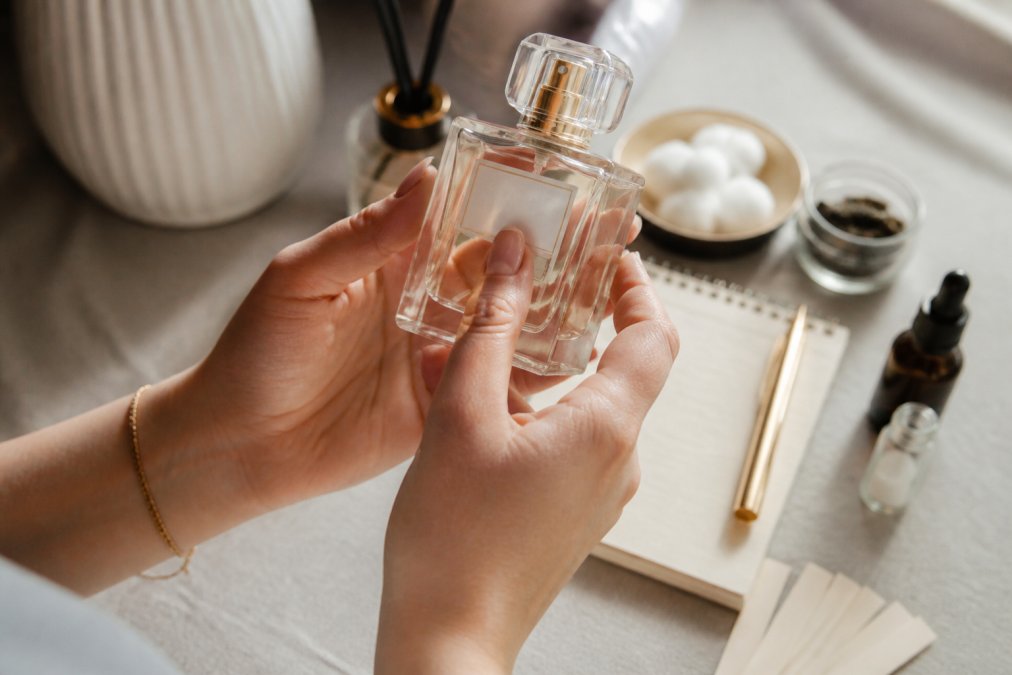
Look for certifications indicating higher ingredient standards. Products certified by IFRA have undergone safety assessment, though this doesn't guarantee they're free of endocrine disruptors. Labels explicitly stating "phthalate-free," "paraben-free," or "synthetic musk-free" are more transparent about what they don't contain.
Hypoallergenic claims on perfume labels are largely unregulated and don't have a standard definition. Similarly, "natural fragrance" doesn't guarantee safety, many natural fragrance ingredients are potent allergens. Understanding the difference between fragrance-free and unscented is crucial: fragrance-free products contain no fragrance ingredients at all, while unscented products may contain fragrance ingredients that mask odors.
Natural vs. Synthetic Fragrances: Which Is Safer
The assumption that natural fragrances are inherently safer than synthetic ones is widespread but not universally true. Natural fragrances come from essential oils and plant extracts, while synthetic fragrances are chemically created in laboratories.
Natural fragrances contain concentrated plant compounds. Essential oils like ylang-ylang, jasmine, and rose can trigger allergic reactions and dermal sensitization, particularly in people with sensitive skin. Some natural fragrance ingredients are volatile organic compounds that contribute to inhalation toxicity.
Synthetic fragrances offer more consistency and predictability. Laboratory-created fragrance compounds can be formulated to avoid known allergens and irritants. However, synthetic fragrances also include substances like synthetic musks and phthalates that raise endocrine disruption concerns.
The real safety difference comes down to ingredient transparency and formulation practices, not whether the source is natural or synthetic. The safest choice depends on your individual sensitivities, testing small amounts on a small skin area before full application is the best way to determine your personal tolerance.
Safe Application Techniques for Perfume Use
Where and How to Apply Fragrance
How you apply perfume significantly affects both the intensity of exposure and your risk of adverse reactions. Traditional application on pulse points like the wrists, neck, and inner elbows amplifies fragrance diffusion through body heat, but these areas have thinner, more permeable skin, making them higher-risk zones for dermal absorption and allergic sensitization.
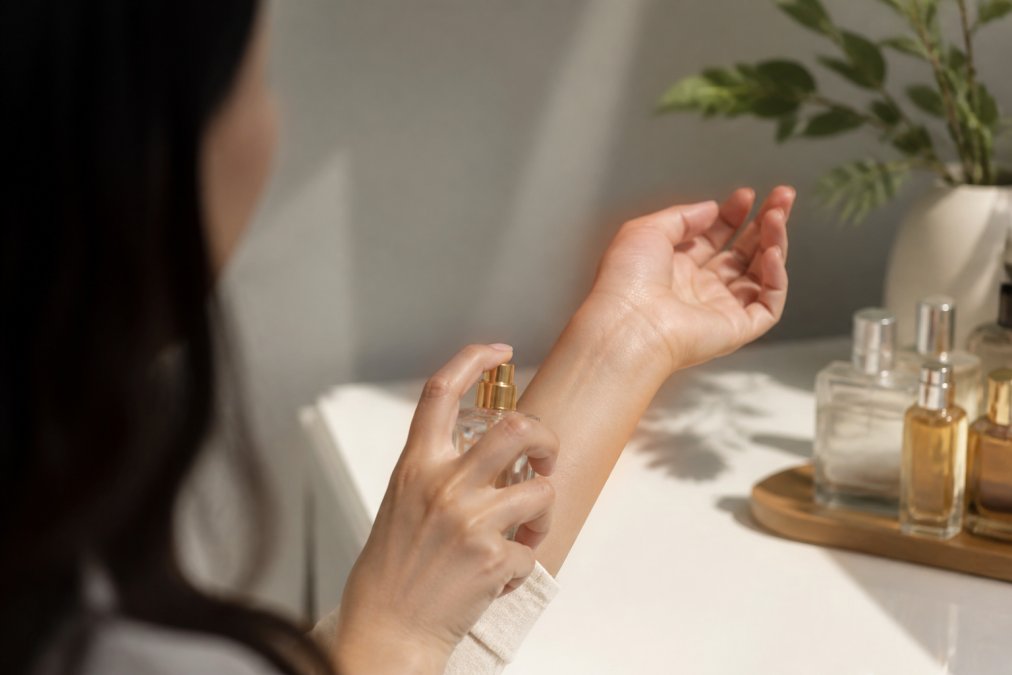
A safer approach involves spraying perfume on areas with thicker skin, like the outer arms or legs, where dermal absorption is slower. If you prefer applying to pulse points, use significantly less product, a single spray rather than multiple applications. Never apply perfume directly to broken or irritated skin.
Distance matters when spraying. Spraying into the air and walking through the mist distributes fragrance more evenly and reduces the intensity of exposure to any single area of skin, while also reducing inhalation exposure compared to direct application.
Storage and Handling Best Practices
Perfume storage conditions affect both fragrance stability and safety. Exposure to heat, light, and air can degrade fragrance compounds, potentially creating new chemical byproducts. Store perfume in a cool, dark place, ideally in a drawer or cabinet away from direct sunlight.
Keep perfume bottles tightly sealed when not in use. Wash your hands after applying perfume, particularly before eating or touching your face. If you experience any irritation, wash the area thoroughly with soap and water. Keep fragrance away from children and pets, as fragrance ingestion can cause systemic toxicity.
Regulatory Compliance and Consumer Protection
The regulatory landscape for perfume safety in the United States is fragmented and inadequate for consumer protection. The FDA regulates fragrances as cosmetics, but cosmetics don't require pre-market approval before being sold to consumers.
The fragrance industry operates under a self-regulatory system through the International Fragrance Association (IFRA), which sets safety standards and guidelines. However, IFRA standards are not legally binding in the United States, and compliance is voluntary.
The Federal Food, Drug, and Cosmetic Act requires that cosmetic ingredients be safe under the conditions of use, but enforcement is reactive rather than proactive. The FDA doesn't test cosmetics before they're sold; it relies on consumer complaints to identify problematic products.
Ingredient disclosure requirements are another weak point in consumer protection. Congress has proposed legislation to increase fragrance ingredient transparency, but as of 2026, no comprehensive federal law mandates full disclosure of fragrance components. The European Union requires more detailed fragrance ingredient disclosure and has banned or restricted many fragrance chemicals that remain legal in the United States.
Consumer protection ultimately depends on individual vigilance and choosing brands committed to ingredient transparency. Companies like Ruth+Bo that prioritize IFRA compliance and ingredient clarity are taking steps beyond regulatory minimums to protect consumer health.
Perfume safety comes down to informed choice. You don't have to abandon fragrance to protect your health, you have to understand what you're applying and choose products aligned with your safety priorities. Ruth+Bo's story-driven fragrances are designed with ingredient clarity and safety standards in mind, allowing you to experience sophisticated, meaningful scents without compromising on health. Explore our discovery sets to find fragrances that resonate with your values while maintaining the safety standards you deserve.
Frequently Asked Questions
Q: Are there harmful chemicals in perfumes?
A: Yes. Many conventional perfumes contain phthalates, parabens, and synthetic musks that act as endocrine disruptors and can trigger allergic sensitization and dermatitis. The FDA does not require fragrance manufacturers to disclose all ingredients on labels, hiding potentially harmful compounds under the term 'fragrance.' Look for IFRA-compliant fragrances and brands that provide full ingredient transparency to minimize chemical exposure.
Q: How can I identify hypoallergenic or non-toxic fragrances?
A: Check for brands that list all ingredients explicitly rather than using 'fragrance' as a catch-all term. Look for certifications that indicate higher ingredient standards. IFRA compliance indicates adherence to safety standards. When in doubt, perform a patch test on a small area of skin 24 hours before full application.
Q: What symptoms might indicate a perfume sensitivity or reaction?
A: Common signs include redness, itching, or burning at application sites (contact dermatitis), difficulty breathing or chest tightness (respiratory irritation), headaches, or dizziness from inhalation. Systemic symptoms like hormonal imbalance or fatigue may develop with chronic exposure to endocrine disruptors. If you experience any of these reactions, discontinue use immediately, wash the affected area thoroughly, and consult a healthcare provider if symptoms persist.
Q: Does the FDA regulate fragrance ingredients in perfumes?
A: The FDA classifies fragrance as a cosmetic and requires safety, but manufacturers are not required to disclose specific fragrance ingredients on product labels due to trade secret protections. This lack of label disclosure is a major consumer protection gap. The International Fragrance Association (IFRA) sets voluntary safety standards, but compliance is not mandatory. Choosing brands committed to transparency and third-party testing provides better assurance of perfume safety.
This article was written using GrandRanker