

Why Perfume Is Safe: A Science-Based Guide
Table of Contents
- Why Perfume Is Safe: The Regulatory Foundation
- Understanding Fragrance Ingredients and Health Concerns
- IFRA Standards for Perfume Safety and Compliance
- How to Identify Safe Perfume Ingredients Through Labeling
- Safe Usage Protocols for Daily Fragrance Wear
- Addressing Common Health Concerns About Perfume
- Conclusion
Last Updated: August 29, 2026
Why Perfume Is Safe: The Regulatory Foundation
Perfume safety rests on rigorous scientific oversight and decades of safety data. The International Fragrance Association (IFRA) establishes strict safety standards based on toxicological research, exposure assessments, and real-world usage patterns. Regulatory bodies in the United States, including the FDA and the Cosmetic Ingredient Review (CIR) panel, oversee fragrance safety through ingredient assessments and monitoring programs. Manufacturers cannot legally use ingredients that pose unreasonable health risks at typical usage levels, with the burden of proof lying on ingredient suppliers to demonstrate safety before materials enter the fragrance supply chain.
Understanding Fragrance Ingredients and Health Concerns
Volatile Organic Compounds and Safe Exposure Levels
Volatile organic compounds (VOCs) in perfume are often cited as a health concern, but understanding safe exposure levels reveals why this concern is largely overstated. VOCs are carbon-containing chemicals that evaporate at room temperature, creating the scent experience. What matters is concentration and duration of contact.
The EPA and occupational safety agencies have established exposure thresholds for workplace environments where workers encounter high concentrations of chemicals daily, often set 100 times lower than levels shown to cause harm in animal studies (the EPA). Consumer exposure to fragrance VOCs is dramatically lower than occupational exposure limits. A person wearing perfume experiences brief, localized exposure during application and then dispersal into surrounding air, falling well below established safety guidelines. Research shows that typical usage patterns result in VOC exposures far below levels associated with adverse respiratory effects.
Endocrine Disruptors and Phthalates: Separating Fact from Fear
Endocrine disruptors represent one of the most misunderstood fragrance safety concerns. Phthalates, chemicals sometimes used in fragrance formulations to enhance scent longevity, are frequently cited as endocrine-disrupting compounds. The presence of a chemical in a product doesn't automatically mean exposure at levels that cause endocrine disruption. The European Union banned certain phthalates (DBP, DEHP, BBP) from cosmetics entirely, and in the United States, fragrance manufacturers increasingly reformulate to exclude phthalates due to consumer preference and market demand (europa.eu).
Studies showing endocrine-disrupting effects of phthalates typically involve doses far exceeding consumer exposure from fragrance use. When researchers apply conservative safety margins used in occupational and pharmaceutical safety assessment to fragrance exposure, the risk drops substantially. Regulatory agencies worldwide have concluded that typical fragrance use does not result in phthalate exposure levels associated with endocrine disruption in humans.
IFRA Standards for Perfume Safety and Compliance
IFRA standards represent the gold standard for fragrance safety globally. The organization maintains a comprehensive list of fragrance materials with established safe usage levels, called the IFRA Code of Practice. Each fragrance material includes a maximum concentration limit, the highest level at which that ingredient can safely be used in a finished fragrance product, accounting for dermal absorption, inhalation exposure, and potential cumulative effects.
IFRA's expert panel regularly reviews new safety data and adjusts restrictions when warranted. Compliance is voluntary in the sense that no government agency directly enforces adherence, but the standards function as industry best practice. Fragrance manufacturers who fail to comply risk regulatory action, liability, and reputational damage. Major retailers increasingly require IFRA compliance as a condition of supply agreements.
How to Identify Safe Perfume Ingredients Through Labeling
Reading Fragrance Labels and Ingredient Transparency
Understanding fragrance labels is the first step toward making informed choices about the products you wear. Fragrance labeling presents a unique challenge: manufacturers are not required to disclose individual fragrance ingredients on product labels. Instead, all fragrance components are grouped under the term "fragrance" or "parfum." This regulatory approach reflects a balance between consumer safety and trade secret protection.
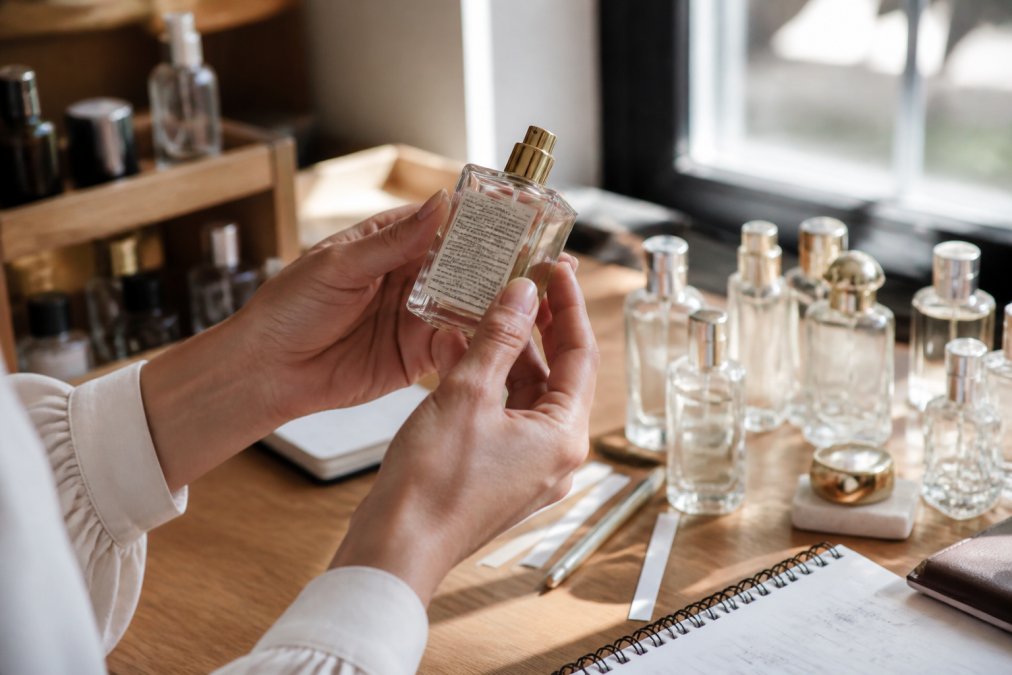
Fragrance formulas are proprietary recipes containing dozens of individual aromatic materials blended in precise proportions. Despite this limitation, consumers can identify safer fragrance products by looking for specific labeling claims and certifications. Products labeled as "IFRA compliant" indicate that the fragrance was formulated according to strict safety standards. When examining fragrance labels, look for the complete ingredient list in descending order of concentration. The presence of common allergens, such as limonene, linalool, or geraniol, may be listed separately if they exceed regulatory thresholds.
Natural vs. Synthetic Fragrances: The Safety Myth
A pervasive belief holds that natural fragrances are inherently safer than synthetic ones. This assumption doesn't align with toxicological reality. Both natural and synthetic fragrance materials undergo the same safety evaluation processes, and both can cause adverse reactions in sensitive individuals.
Natural fragrance materials contain complex mixtures of hundreds of organic compounds. Limonene, a natural component of citrus oils, is a common cause of allergic contact dermatitis (peer-reviewed research). Conversely, many synthetic fragrance materials are chemically identical to natural compounds but synthesized in laboratories. The safety of a fragrance material depends on its chemical properties and the concentration at which it's used, not its origin. IFRA standards apply equally to natural and synthetic ingredients.
Safe Usage Protocols for Daily Fragrance Wear
Proper fragrance application significantly reduces the risk of adverse reactions while maximizing scent longevity. For spray fragrances, one to two spritzes applied to pulse points, wrists, inner elbows, behind the ears, or the base of the throat, provides effective scent projection without overexposure.
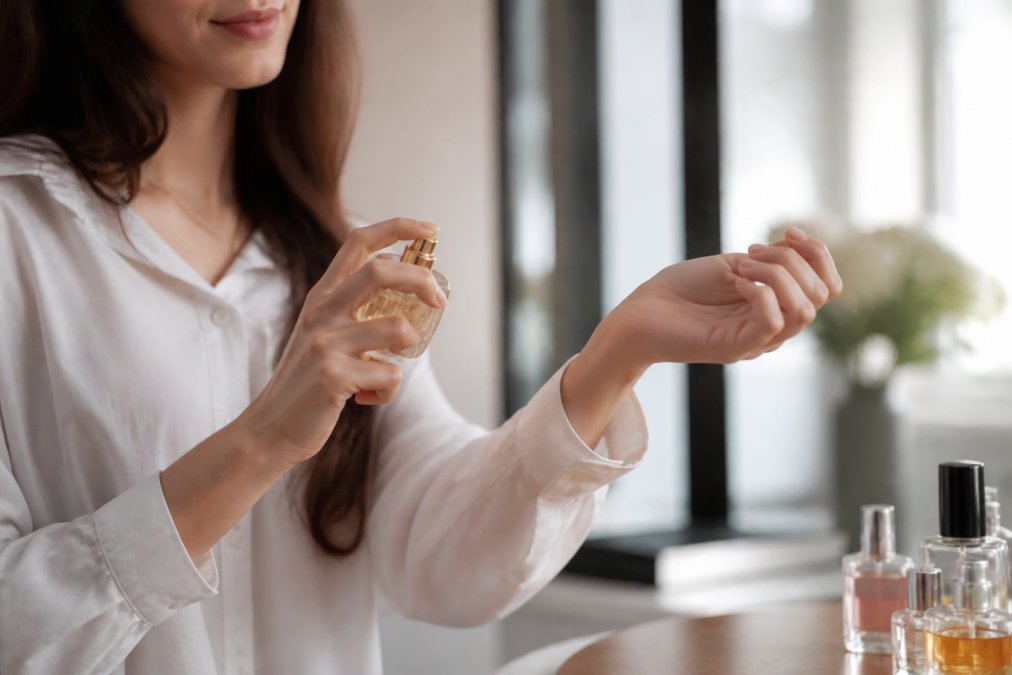
These areas have elevated skin temperature, which enhances fragrance diffusion. Avoid applying fragrance directly to broken or irritated skin, as this increases dermal absorption and irritation risk. Applying fragrance to clothing prevents direct skin contact, which is beneficial for individuals with sensitive skin or fragrance sensitivities.
Daily fragrance use at recommended application levels poses no documented health risk for the general population. However, individuals with asthma, chronic respiratory conditions, or documented fragrance sensitivities should exercise caution. Applying fragrance to clothing rather than skin, using lighter concentrations, or limiting frequency to specific occasions reduces exposure and minimizes triggering respiratory symptoms. Ventilation during and after fragrance application helps minimize inhalation exposure.
Addressing Common Health Concerns About Perfume
Respiratory Health and Scent Sensitivity
Respiratory concerns represent one of the most common health objections to fragrance use. Individuals with asthma or chronic obstructive pulmonary disease (COPD) sometimes experience symptoms triggered by fragrance exposure. This doesn't mean fragrance is inherently unsafe; rather, certain individuals have heightened sensitivity to airborne irritants, including fragrance components.
Scent sensitivity, also called fragrance sensitivity or multiple chemical sensitivity (MCS), describes a condition where individuals experience adverse reactions to fragrance exposure at levels tolerated by the general population. The existence of scent sensitivity in some individuals doesn't undermine the safety of fragrance for the broader population. Regulatory safety standards account for population variability, including sensitive subgroups. Someone with documented fragrance sensitivity should limit exposure, apply fragrance to clothing rather than skin, or choose fragrance-free alternatives.
Skin Irritation and Contact Dermatitis
Contact dermatitis, an inflammatory skin reaction to direct contact with an irritant or allergen, represents a real but manageable fragrance concern. Fragrance is a common cause of allergic contact dermatitis, particularly when applied directly to sensitive skin areas or in high concentrations. Allergic contact dermatitis from fragrance usually develops after repeated exposure to the same fragrance material, a process called sensitization.
Irritant contact dermatitis results from direct irritation rather than immune sensitization. High concentrations of fragrance applied to delicate skin areas can cause irritation in anyone, regardless of prior sensitization. Individuals with known fragrance allergies or sensitive skin can minimize dermatitis risk by applying fragrance to clothing rather than skin, choosing fragrances formulated specifically for sensitive skin, or patch testing a fragrance on a small skin area before full use.
Fragrance safety rests on a foundation of rigorous scientific evaluation, transparent regulatory oversight, and informed consumer use. The evidence shows that perfume is safe when formulated to strict safety standards, carefully selected for ingredients, and applied properly.
At Ruth+Bo, we're committed to offering fragrances that meet the highest safety standards while delivering sophisticated, story-driven scent experiences. Our discovery sets allow you to explore high-quality fragrances with confidence, knowing that each scent has been carefully selected for both its olfactory profile and its compliance with rigorous safety standards. Explore our curated collection and discover fragrances that align with your values and your skin's unique chemistry.
| Concern | Reality | Safe Practice |
|---|---|---|
| Volatile organic compounds | Present in all fragrances; exposure levels far below safety thresholds | Apply in well-ventilated spaces; use recommended amounts |
| Phthalates | Restricted or eliminated in modern formulations; safe limits established | Choose brands using phthalate-free formulas |
| Fragrance allergies | Possible in sensitive individuals; preventable through awareness | Patch test; apply to clothing if sensitive; choose hypoallergenic options |
| Respiratory sensitivity | Affects individuals with asthma or MCS; not a general population risk | Limit exposure; use proper ventilation; consult healthcare provider if concerned |
| Skin irritation | Preventable through proper application and concentration | Apply to pulse points; avoid sensitive facial areas; use appropriate amounts |
Frequently Asked Questions
Is perfume unhealthy for you?
Perfume is safe when used as directed. Regulatory bodies including the FDA oversee fragrance safety through established standards. Health concerns arise primarily from misuse, excessive daily application or use in poorly ventilated spaces. Most people experience no adverse effects from normal fragrance use. Individuals with respiratory sensitivity, asthma, or fragrance allergies should exercise caution and choose products with transparent ingredient disclosure.
How do IFRA standards for perfume protect consumers?
The International Fragrance Association (IFRA) establishes safety guidelines that limit the concentration of potentially harmful ingredients in fragrances. These standards address volatile organic compounds, endocrine disruptors, and known allergens. IFRA-compliant fragrances undergo toxicology review and safety assessment before market release. Reputable fragrance brands adhere to these standards, ensuring products meet rigorous chemical safety thresholds. IFRA compliance is a key indicator of a quality, safe fragrance.
What should I look for when identifying safe perfume ingredients?
Seek fragrances with transparent ingredient labeling that discloses specific components rather than listing 'fragrance' as a catch-all term. Look for IFRA compliance certification and brands that provide safety documentation. Avoid products with high concentrations of known allergens or sensitizers if you have sensitive skin. Natural ingredients are not inherently safer than synthetic ones, safety depends on concentration and individual sensitivity. Patch testing on a small area before full application helps identify potential contact dermatitis or allergic reactions.
Is it safe to wear perfume daily?
Daily fragrance use is safe for most people when applied in moderation. Apply 2-4 spritzes to pulse points (wrists, neck) rather than multiple body areas. Ensure adequate ventilation, especially in enclosed spaces, to minimize inhalation of volatile organic compounds. Daily use does not cause bioaccumulation of fragrance chemicals in the body under normal circumstances. If you experience respiratory issues, skin irritation, or headaches, reduce application frequency or switch to a lighter concentration (eau de cologne instead of parfum).
This article was written using GrandRanker