
Does Perfume Expire in the Bathroom? Storage Truths
Table of Contents
- Why the Bathroom Is the Worst Place for Perfume
- How Humidity and Temperature Fluctuations Break Down Fragrance Notes
- How Long Does Perfume Last? Understanding Perfume Shelf Life
- Opened vs. Unopened: How Storage Changes the Clock
- Signs of Expired Perfume You Should Not Ignore
- How to Store Perfume Properly (Even in Small Spaces)
- Frequently Asked Questions
Last Updated: September 26, 2026
Why the Bathroom Is the Worst Place for Perfume
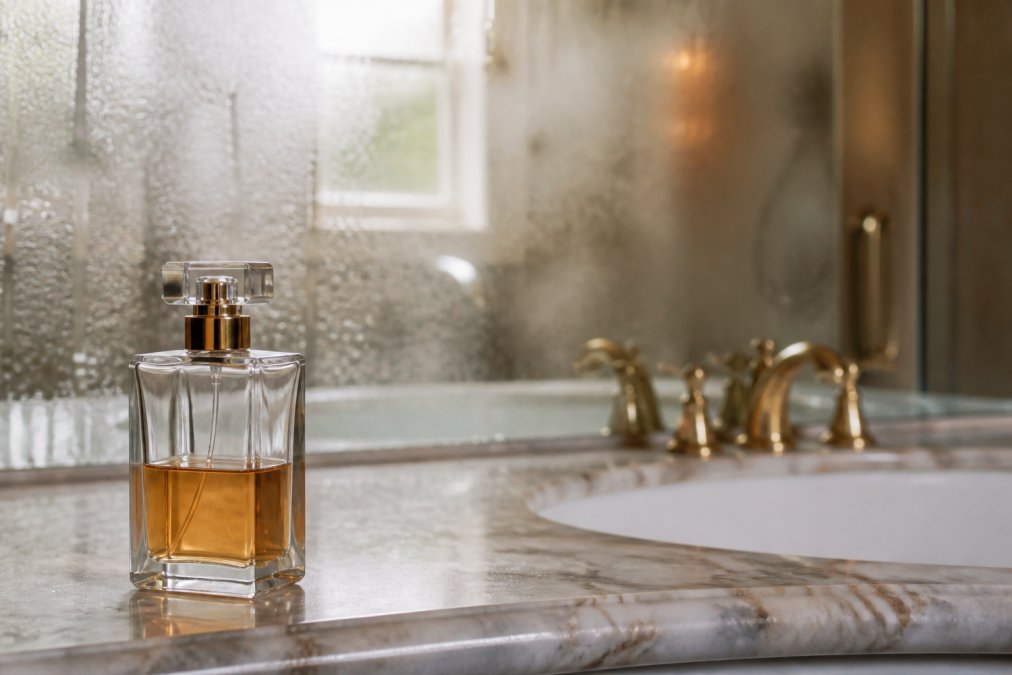
If you have ever wondered whether perfume expire bathroom conditions matter, the short answer is yes, and faster than almost anywhere else in your home. Bathrooms combine the two conditions fragrance chemists warn against most: heat and humidity. Every shower turns a small, enclosed room into a warm, wet environment that attacks the juice inside the bottle.
Heat Damage From Showers and Steam
Heat accelerates every chemical reaction inside a perfume bottle, including the ones you want to stop. A hot shower can push bathroom temperatures well above the stable range fragrance formulators design for. Warmth speeds up the breakdown of the delicate top notes first, so citrus, bergamot, and light florals fade before the base ever gets a chance to develop.
Humidity Levels and Water Vapor in the Air
Humidity is the quieter problem. Water vapor in the air can work its way past a cap seal over time, and moisture introduces contaminants that disturb the balance of an alcohol-based formula. The result is a scent that smells slightly sour, flat, or "off" rather than spoiled in an obvious way.
How Humidity and Temperature Fluctuations Break Down Fragrance Notes
Fragrance is a chemical composition, and like any composition it responds to its environment. When temperature fluctuations and humidity levels rise and fall repeatedly, the molecules that create your scent profile begin to separate and degrade at different rates. The practical effect is a fragrance that smells unbalanced, the bright opening disappears while the heavy base lingers, or the whole thing turns sharp and sour.
Which Notes Degrade Fastest in a Humid Bathroom
Not all fragrance notes age at the same speed. The pyramid structure of a perfume, top, heart, and base, maps directly onto how vulnerable each layer is to humidity and heat:
- Top notes (citrus, bergamot, neroli, light aldehydes): These are the smallest, most volatile molecules and the first to oxidize. In a humid bathroom, they can flatten within weeks. A perfume that once opened with a bright lemon spark may smell dull or slightly metallic.
- Heart notes (florals, spices, green notes): These sit in the middle and degrade more slowly, but humidity can cause them to lose their distinctiveness. A rose note may turn soapy or muddy rather than clearly floral.
- Base notes (woods, resins, musk, amber, vanilla): These are the heaviest molecules and the most resistant. They often survive long after the top and heart have faded, which is why an aged perfume frequently smells like nothing but its dry-down, a faint, sweet, or woody shadow of what it once was.
The Role of Temperature Swings
A hot shower can push bathroom temperatures well above the stable range fragrance formulators design for. Warmth speeds up every chemical reaction, including the ones you want to stop. But the bigger issue is not steady heat, it is the repeated rise and fall. Each shower heats the room, then the room cools. Those cycles cause the liquid inside the bottle to expand and contract, which can stress the cap seal and let in more air and moisture.
Why Alcohol-Based Formulas Behave Differently
Most fine fragrances use a high concentration of ethanol, which acts as a solvent and preservative. Ethanol is relatively stable, but it is also volatile, it evaporates faster than the oils it carries. In a humid bathroom, the alcohol can absorb moisture from the air, diluting the formula and changing how it projects on skin. Oil-heavy blends and solid perfumes lack that alcohol buffer, so they may resist humidity slightly better in the short term but are more prone to turning rancid as the carrier oils oxidize.
A Note on Light
Light exposure works alongside humidity and heat. Ultraviolet light breaks down light-sensitive molecules, and even indirect bathroom light, especially from a window, can accelerate the process. A bottle on a sunny bathroom windowsill is getting hit with heat, humidity, and UV all at once, which is the worst possible combination for longevity.
How Long Does Perfume Last? Understanding Perfume Shelf Life
Perfume shelf life depends almost entirely on storage. A well-kept bottle in a cool, dark place can stay true for years, while one kept in a humid bathroom may turn in a fraction of that time.
The variables that matter most:
- Light exposure: Direct sunlight breaks down light-sensitive molecules fast.
- Temperature stability: Constant warmth is worse than occasional cool air.
- Air in the bottle: Less air means slower oxidation.
- Formula type: Alcohol-based scents generally outlast oil-heavy blends.
Opened vs. Unopened: How Storage Changes the Clock
An unopened bottle is protected by its cap seal and full fill level, so it ages slowly. Once you break that seal, air enters the picture and the clock speeds up. This is the single biggest reason opened and unopened perfumes behave so differently.
| Storage Factor | Unopened Bottle | Opened Bottle |
|---|---|---|
| Air exposure | None | Increases with each spray |
| Oxidation risk | Low | Moderate to high |
| Typical lifespan | Several years | One to three years |
| Best location | Cool, dark cabinet | Cool, dark cabinet, upright |
Signs of Expired Perfume You Should Not Ignore
Knowing the signs of expired perfume saves you from wearing something that has turned. Watch for these indicators:
- Color shift: A darkened or cloudy liquid usually means oxidation.
- Sour or sharp opening: The top notes have degraded.
- Weakened projection: The scent fades within minutes.
- Sediment or separation: Visible particles signal chemical breakdown.
- A rubbing-alcohol smell: The alcohol has separated from the oils.
How to Store Perfume Properly (Even in Small Spaces)
Learning how to store perfume properly comes down to three rules: keep it cool, keep it dark, and keep it sealed. You do not need a dedicated room. A bedroom drawer, a closet shelf, or a closed box away from the shower works well. But if your only available space is the bathroom itself, you need a more deliberate approach, one that creates a microclimate inside the room rather than pretending the room is suitable.
If the Bathroom Is Your Only Option
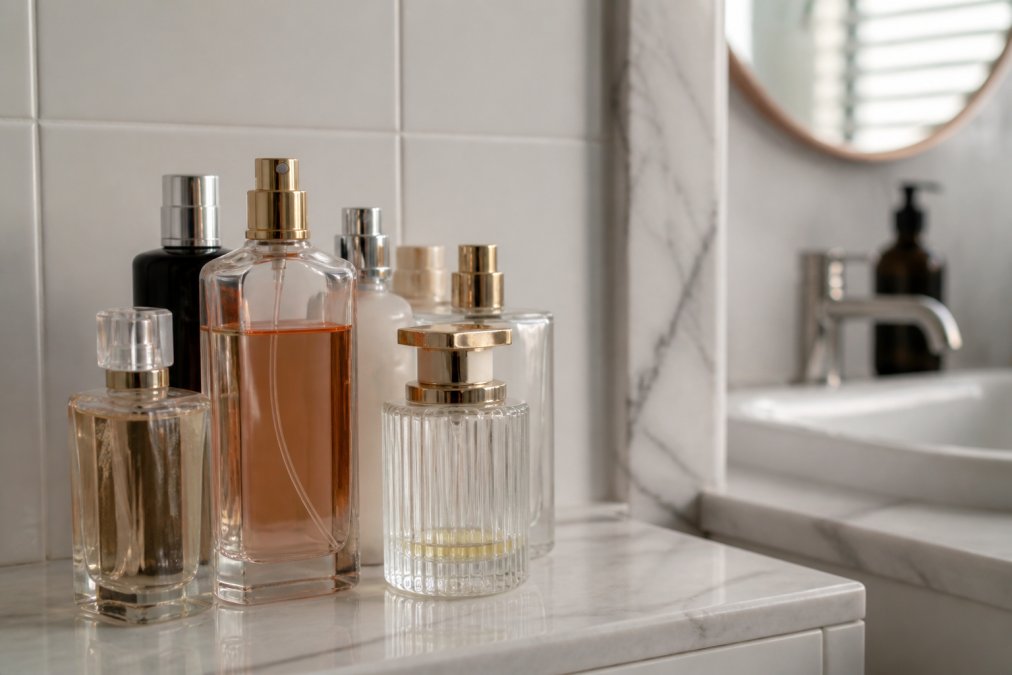
Most people who ask whether perfume expire bathroom storage is a real problem are asking because they have nowhere else to put it. Here is how to minimize the damage when the bathroom is the only space you have:
- Use a sealed storage box, not an open shelf. A tight-lidded plastic or wooden box creates a buffer against steam and humidity. Keep it closed except when you are reaching for a bottle.
- Store bottles in their original boxes. The box blocks light and adds a second layer of protection against moisture. If you tossed the box, wrap the bottle in a soft cloth or keep it in a drawer.
- Choose the farthest spot from the shower. A cabinet under the sink on the opposite wall from the shower is better than a shelf next to it. Distance from the steam source matters more than most people realize.
- Never store on a windowsill or above the toilet. Windowsills get UV light and heat. Above the toilet puts bottles in the path of flushing aerosols and humidity spikes.
- Keep bottles upright and tightly capped. Lying a bottle on its side invites leaks past the seal, and a loose cap lets in air and moisture.
- Rotate your daily-use bottle out of the bathroom. If you wear one fragrance most days, keep that bottle in a bedroom drawer and bring it in only when you need it. The bottle you use least can stay in the sealed bathroom box.
- Add a moisture absorber. A small silica gel packet or a rechargeable dehumidifier puck inside the storage box can pull down humidity between showers. Replace or recharge it on a schedule.
Small-Space Storage Solutions That Actually Work
If you have limited room outside the bathroom, these options fit in tight spaces:
- Under-bed storage bins: A flat, lidded bin slides under most beds and stays cool and dark. Line it with a soft cloth to prevent bottles from knocking together.
- Closet shelf or hanging organizer: A high shelf in a bedroom closet, away from any heating vent, is one of the best spots in a small home.
- A dedicated drawer in a dresser: Even a single drawer works. Keep it away from the kitchen or any room that gets hot during the day.
- A decorative box on a bookshelf: A closed box on a shelf in a cool room hides your collection and blocks light at the same time.
- A wine fridge or beverage cooler: If you have one, a small wine fridge set to a stable cool temperature is an excellent perfume cabinet, but see the refrigerator debate below before assuming a kitchen fridge is the same thing.
The Refrigerator Debate: Helpful or Harmful?
The refrigerator debate divides fragrance lovers, and the honest answer is: it depends. A fridge is cold and dark, which slows oxidation, but a kitchen fridge is also humid and full of food odors that can migrate into a poorly sealed bottle. The constant opening and closing also creates temperature swings every time someone grabs a snack.
Frequently Asked Questions
Is storing perfume in the bathroom bad?
Yes. Bathrooms combine three of the worst conditions for fragrance: heat from showers, high humidity, and frequent temperature swings. These speed up oxidation and cause alcohol to evaporate, which weakens the scent and shortens its life. Even a sealed bottle loses quality faster on a bathroom shelf than in a bedroom drawer or closet.
How can you tell if perfume is expired?
Look for a darker or cloudy color, a sticky or thicker texture, and a scent that smells sour, metallic, or vinegary instead of its original blend. Top notes usually fade first, so a fragrance that once opened bright and now smells flat or sharp has likely turned. Check the batch code and manufacture date if the bottle has one.
What is the ideal temperature for storing perfume?
A steady 60 to 70 degrees Fahrenheit works well for most fragrances. The goal is consistency, not cold. Repeated swings between hot and cool air stress the chemical composition more than a slightly warm but stable room. Keep bottles away from windows, radiators, and shower walls where temperatures shift throughout the day.
Does light exposure affect perfume quality?
Yes. Ultraviolet light breaks down the aromatic compounds that give a fragrance its character, which is why many bottles come in dark or opaque glass. Direct sunlight can degrade a scent in weeks. Store bottles in a closed cabinet, drawer, or original box to block light, and keep them in an upright position so the cap seal stays tight.
Perfume is a small luxury that deserves better than a steamy shelf, and protecting it is as simple as changing where you keep it. At Ruth+Bo, our story-driven fragrances are built to evolve beautifully on the skin, and they last longest when stored with intention. Explore our discovery sets to find your signature scent, or choose a thematic gift set for someone you love. Add to cart and give your fragrance the care it deserves.