

How to Layer Fragrances for Beginners: A 2026 Guide
Table of Contents
- What Fragrance Layering Actually Is (and Why It Works)
- How to Layer Fragrances for Beginners: A Step-by-Step Process
- Fragrance Layering Rules That Keep Scents From Clashing
- Best Perfume Combinations for Layering by Scent Family
- How to Make Perfume Last Longer With Layering
- How Skin Chemistry Changes What You Smell
- Testing Layered Scents Before You Commit
- Frequently Asked Questions
Last Updated: September 27, 2026
What Fragrance Layering Actually Is (and Why It Works)
Fragrance layering is the practice of wearing two or more scents together so they blend into one custom scent on your skin. This guide from Ruth+Bo breaks down how to layer fragrances for beginners, step by step, without the guesswork.
Most beginners assume layering means spraying two perfumes and hoping for the best. It doesn't work that way. Layering works because fragrance is built in three stages: top notes, heart notes, and base notes. When you stack scents that share a base note, the blend holds together instead of fighting itself.
The real reason layering matters: a single perfume fades in a predictable arc. Layering lets you control that arc. You can boost longevity, soften a sharp opening, or add warmth that wasn't there before.
Here's the part most guides skip. Layering isn't about mixing random bottles. It's about understanding the fragrance wheel and note families before you spray anything.
How to Layer Fragrances for Beginners: A Step-by-Step Process
The beginner-friendly process has four steps: prep the skin, apply the heavier scent, add the lighter scent, then lock the blend in. Total time is about five minutes, including dry-down waits.
Step 1: Prep the Skin (Moisturize First)
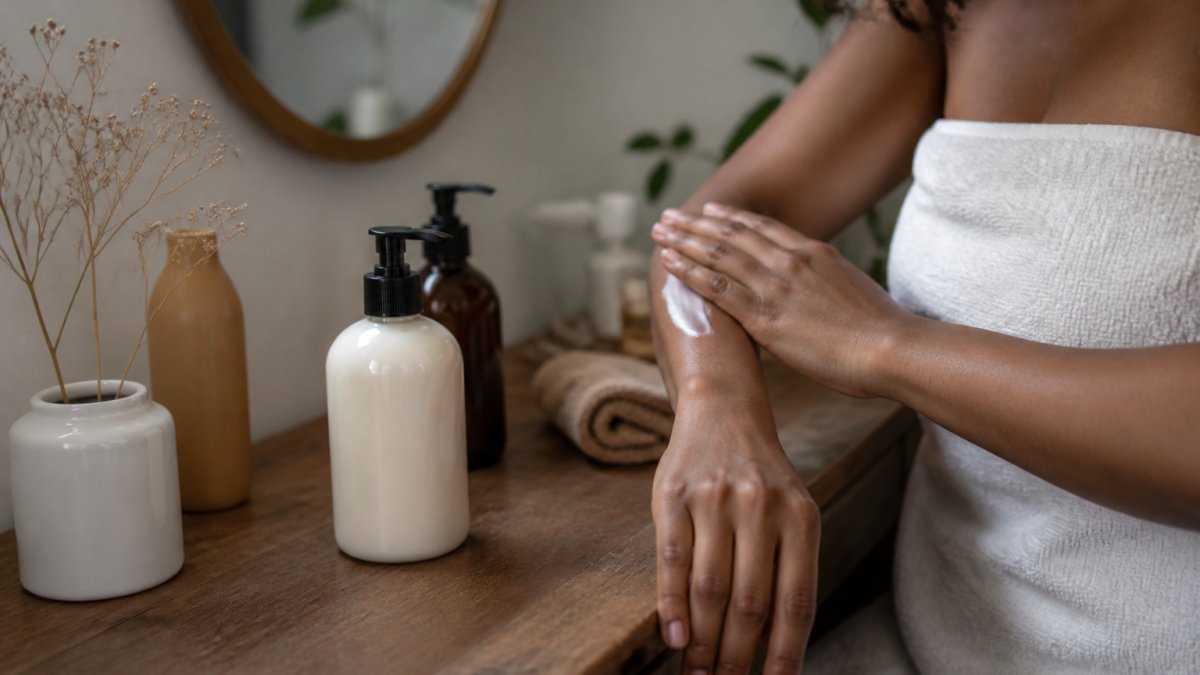
Dry skin loses scent fast because fragrance molecules need oil and moisture to cling to. Apply an unscented lotion or a matching body oil to your pulse points, then let it absorb for a full minute before spraying anything. Moisturized skin holds fragrance molecules longer, which means your layered blend lasts through the day instead of fading by lunch.
If you have oily skin, you can skip the heavy lotion and use a light body oil instead, too much product can mute the top notes.
Step 2: Apply the Heavier Scent First
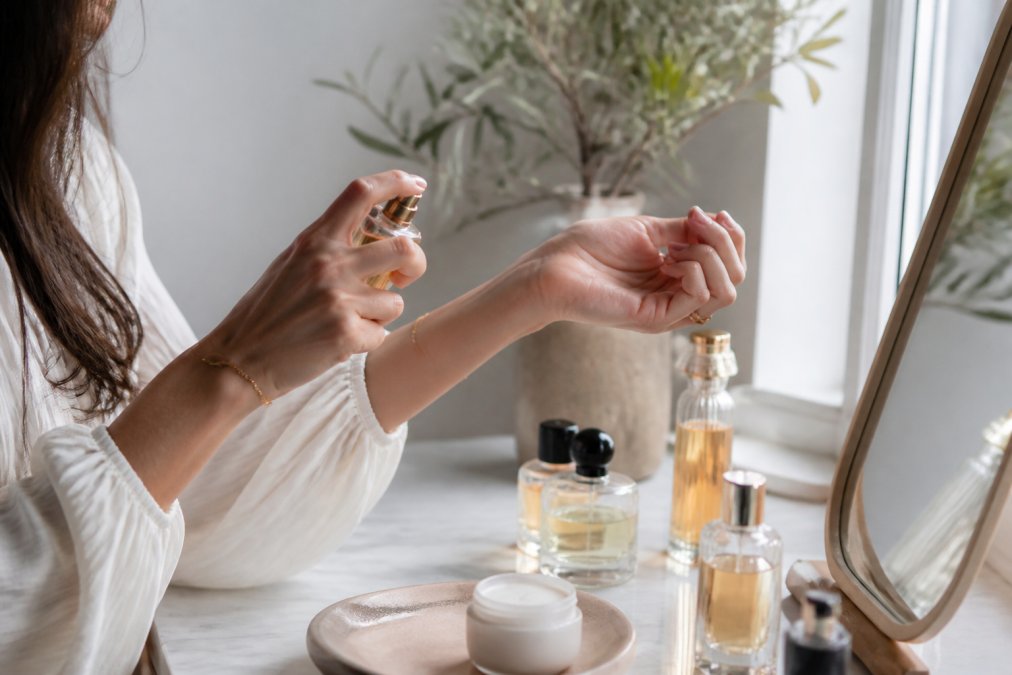
Spray the deeper, heavier fragrance on your pulse points: wrists, inner elbows, and the base of your throat. Heavier scents usually sit in the base note range, musk, amber, patchouli, oud, or vanilla. Use two sprays maximum. Hold the bottle about six inches from your skin so the mist lands evenly instead of pooling in one spot.
Step 3: Add the Lighter Scent on Top
Now spray the lighter, brighter scent. Citrus, floral, fresh, and aquatic accords belong here. Hold the bottle further from your skin, about eight to ten inches, and use one or two sprays. The lighter scent sits on top and lifts the blend.
Step 4: Lock the Blend In (Optional)
Once both layers have dried for about two minutes, you can extend wear by pressing, not rubbing, a matching body oil or solid perfume over the top. Rubbing breaks the fragrance molecules and shortens wear; pressing lets the oil seal the blend without disturbing it.
How Skin Chemistry Changes the Result
Here's the part most step-by-step guides skip: the same four steps produce a different scent on every person. Skin pH, oil content, and body heat all shift how each layer dries down. Oily skin tends to hold fragrance longer and push base notes forward; dry skin lets top notes fade faster. Higher body heat accelerates the opening, so a blend that smells sharp on you at first may smell softer on someone with cooler skin.
Fragrance Layering Rules That Keep Scents From Clashing
The core rule: match note families, not brands. Two scents from different houses can layer beautifully if they share a base note. Two scents from the same house can clash if their accords pull in opposite directions.
Keep these rules in mind:
- Match at least one note family between the two scents
- Always apply heavier notes first, lighter notes second
- Never layer more than two or three scents at once
- Test on skin, not on paper, before committing
- Avoid layering two strong orientals unless you want a heavy result
- Keep the total spray count under five across all layers
What to Do When a Blend Clashes (Troubleshooting)
Most guides tell you which scents to avoid but never tell you what to do when a combination goes wrong on your skin. Here's how to fix a clash without scrubbing everything off.
Why Clashes Happen in the First Place
A clash isn't random. It happens when two scents compete for the same note family without sharing a bridge note. For example, two strong aquatics layered together fight because they both push the same fresh, ozonic accord, the result reads as loud and one-dimensional rather than layered. Two sweet gourmands layered together can turn cloying for the same reason.
Best Perfume Combinations for Layering by Scent Family
The best perfume combinations for layering pair a warm base with a bright top. Think vanilla plus citrus, or musk plus floral.
Pairings That Work Across the Fragrance Wheel
| Base Scent | Top Layer | Result |
|---|---|---|
| Vanilla | Citrus or bergamot | Warm and bright |
| Musk | Floral | Soft and clean |
| Amber | Spicy | Rich and bold |
| Woody | Fresh green | Grounded and crisp |
| Patchouli | Rose | Classic and deep |
Pairings to Avoid
Some combinations fight each other. Heavy aquatic scents clash with strong orientals. Sharp green scents can flatten a sweet gourmand. If the two scents pull in opposite directions, the blend reads as messy, not layered.
How to Make Perfume Last Longer With Layering
Layering is one of the most effective ways to make perfume last longer. The heavier base layer anchors the lighter top layer, so the whole blend holds for hours instead of fading in one.
Here's how to extend wear:
- Moisturize before you spray, every time
- Spray on pulse points where skin is warmest
- Add a matching body oil under your perfume
- Keep the lighter layer closer to your skin
- Store bottles away from heat and direct sunlight
How Skin Chemistry Changes What You Smell
Skin chemistry changes how a fragrance reads on you. Oils, pH, and body heat all shift the dry down, which is why the same perfume can smell different on two people.
A few things that change your scent profile:
- Oily skin holds fragrance longer than dry skin
- Higher body heat pushes top notes forward faster
- Diet and medication can shift how a scent dries down
- Hormonal changes affect scent perception over time
Testing Layered Scents Before You Commit
Test layered scents on your own skin before you buy full bottles. A blend that smells great on a paper strip can turn sharp or flat once it hits your body heat.
Use this simple test routine:
- Spray the base scent on one forearm and let it dry for 30 seconds
- Spray the top scent over it and wait five minutes
- Check the blend at 30 minutes, then again at two hours
- Note how the dry down changes through the day
- Only commit to a full bottle if it still smells good at hour four
Frequently Asked Questions
What is the correct order for layering fragrance?
Apply your heaviest, most concentrated scent first, then layer lighter fragrances on top. Start with a moisturizer or body oil as your base, follow with an eau de parfum or the densest scent in your lineup, and finish with an eau de toilette or lighter mist. This order lets the base notes anchor the composition while top notes from the lighter scent lift and brighten it. Reversing the order often buries the delicate notes under heavier ones.
Is layering three perfumes too much?
Three is usually the ceiling for beginners. Two well-chosen scents are easier to control and rarely clash. If you want to try three, keep each one in a different fragrance family and apply the lightest amount of the middle and top layers. Overloading your skin with too many accords muddies the dry down and shortens longevity because the notes compete rather than support each other.
Can you layer different fragrance families together?
Yes, but some combinations work better than others. Citrus pairs well with woody or musk scents, floral blends nicely with amber or vanilla, and spicy orientals can sit under a fresh eau de toilette for contrast. The safest starting point is to layer within related families, like two woody scents, then branch out once you know how your skin chemistry responds to the mix.
How do you make layered scents last longer?
Moisturized skin holds fragrance longer than dry skin, so apply an unscented lotion or a matching body oil before your first spray. Target pulse points, the inner wrists, base of the throat, and behind the ears, where body heat helps the scent bloom. Spraying a light mist on your hair or clothing also extends wear, though test on fabric first. Layering a matching body product under your perfume adds hours of longevity.
Layering fragrances takes practice, and the first few attempts rarely land perfectly. The good news is that a curated starting point removes most of the guesswork. Ruth+Bo builds story-driven fragrances for both men and women, with discovery sets for sampling and thematic gift sets for couples. Each scent is designed to evolve on the skin, so layering feels intentional from the first spray. Explore the Ruth+Bo collection and find the blend that tells your story.
%0A%0AHow%20to%20Layer%20Fragrances%20for%20Beginners:%20A%20Step-by-Step%20Process%0AStep%201:%20Prep%20the%20Skin%20(Moisturize%20First)%0AStep%202:%20Apply%20the%20H...)