
How to Choose a Meaningful Fragrance Gift
Table of Contents
- Start With the Recipient's Scent Personality
- Decode Fragrance Notes and Concentration
- Why Discovery Sets Are the Best Fragrance Gifts for Gifting
- Meaningful Gifts for Wedding Anniversary: Choosing a Scent That Tells Their Story
- The Psychology of Scent and Post-Gift Experience
- Fragrance Etiquette and Sustainability in Gifting
- Conclusion
- Frequently Asked Questions
Last Updated: September 16, 2026
Start With the Recipient's Scent Personality
A meaningful fragrance gift starts with the person, not the bottle. The most memorable gifts match a scent to the recipient's existing olfactory profile rather than the giver's taste.
Observe What They Already Wear
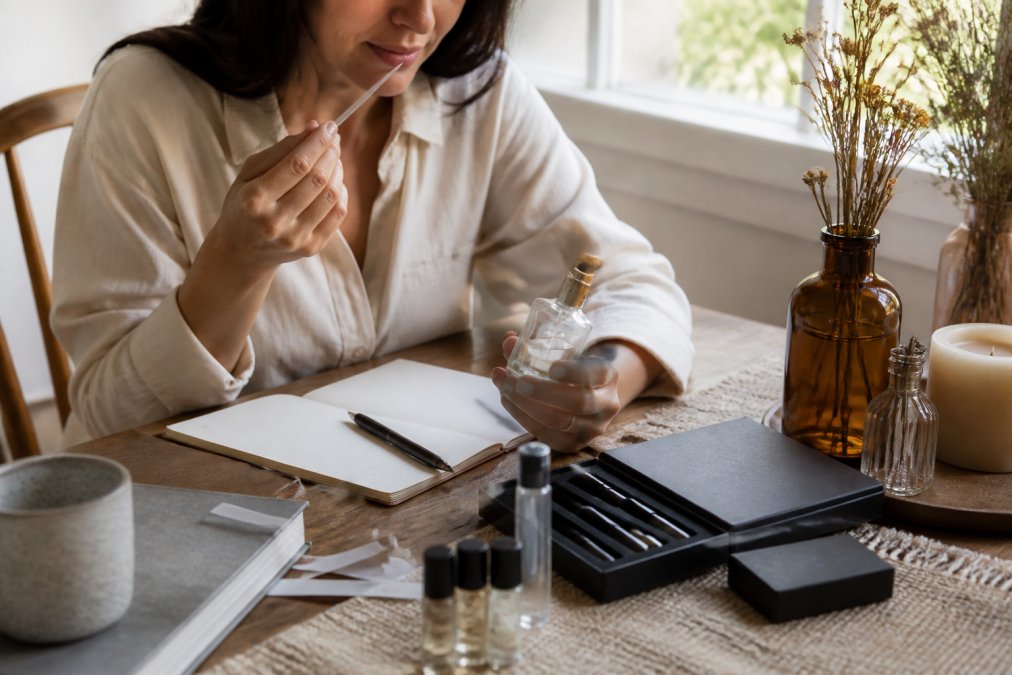
A meaningful fragrance gift begins with observation. Note the bottles on their dresser, the scents they reach for on weekdays versus weekends, and how they talk about fragrance. Someone who wears fresh citrus in summer and warm amber in winter has a wider range than someone loyal to one signature scent.
Match Personality Traits to Fragrance Families
Fragrance families organize scents by dominant materials and overall character. The four core families are floral, oriental (often called amber), woody, and fresh, with subfamilies like fougere, citrus, and gourmand.
Match the person, not the trend:
- Reserved and understated: clean citrus, soft musk, or light floral
- Bold and expressive: amber, oud, or spicy gourmand
- Grounded and classic: woody, fougere, or chypre
- Playful and warm: vanilla, gourmand, or fruity floral
Decode Fragrance Notes and Concentration
Understanding notes and concentration separates a thoughtful gift from a lucky guess. The same fragrance family can smell completely different depending on how it's built and how strong it is.
Top, Heart, and Base Notes
Scent notes unfold in three stages. Top notes hit first and fade within minutes: citrus, light herbs, bright aromatics. Heart notes define the fragrance's character for the first few hours: florals, spices, fruits. Base notes anchor everything and last longest: woods, musk, amber, resins.
Eau de Toilette vs. Eau de Parfum
Scent concentration determines how long a fragrance lasts and how close it sits to the skin.
- Eau de toilette (EDT): lighter, brighter, typically 5-15% fragrance oil. Good for daytime and warm weather.
- Eau de parfum (EDP): richer, longer-lasting, typically 15-20% oil. Better for evening and cool weather.
- Parfum/extrait: the most concentrated and most expensive, usually 20-30% oil.
| Concentration | Oil Content | Longevity | Best For |
|---|---|---|---|
| Eau de toilette | 5-15% | 3-5 hours | Daytime, warm weather |
| Eau de parfum | 15-20% | 5-8 hours | Evening, year-round |
| Parfum/extrait | 20-30% | 8+ hours | Special occasions |
Why Discovery Sets Are the Best Fragrance Gifts for Gifting
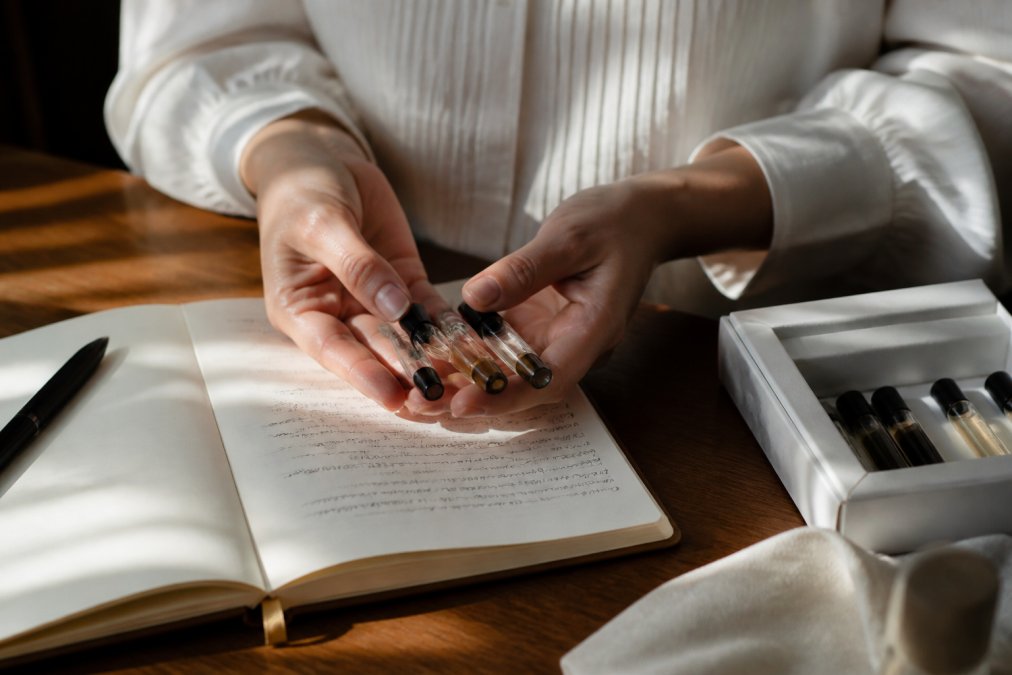
The best fragrance discovery sets for gifting solve fragrance shopping's biggest problem: you can't know how a scent will react to someone else's skin chemistry until they wear it. A discovery set hands that decision back to the recipient.
Meaningful Gifts for Wedding Anniversary: Choosing a Scent That Tells Their Story
Occasion changes how a fragrance gift lands. The same bottle that feels romantic on an anniversary can feel presumptuous at a workplace gift exchange, and a discovery set that delights a close friend can feel impersonal to a partner.
Match the Occasion to the Weight of the Scent
Think of occasions on a spectrum from intimate to public, then match scent weight to that spectrum.
- Intimate and personal (anniversaries, engagements, milestone birthdays): heavier concentrations and richer bases, amber, oud, sandalwood, vanilla, read as deliberate and lasting. An eau de parfum or extrait signals that the gift was chosen for the person, not grabbed off a shelf.
- Celebratory but social (holidays, housewarmings, graduations): mid-weight eau de parfum in a recognizable family, floral, woody, fresh, travels well across settings and won't overwhelm a room.
- Professional or semi-formal (retirement, promotion, thank-you gifts): lighter eau de toilette, skin scents, or home fragrance. These respect the recipient's environment, which is itself a form of thoughtfulness.
- Just-because and early-relationship gifts: discovery sets and travel sprays. They carry meaning without the pressure of a full-size commitment.
Anniversary Gifting: Turn a Memory Into a Scent Brief
Meaningful anniversary gifts should connect to a shared memory, not just a preference. A fragrance tied to a place, a season, or a moment in a couple's history carries weight a random designer bottle never will.
Use a simple three-question brief before you shop:
- Where were you? A coastal honeymoon points toward salt, citrus, and driftwood accords. A mountain cabin points toward pine, cedar, and smoke. A city trip points toward leather, spice, and incense.
- What season was it? Spring and summer memories translate to green, floral, and citrus openings. Fall and winter memories translate to amber, spice, and resin.
- What did they wear then? If you can recall a scent from that period, even a candle, a soap, or a hotel lobby, that note is the anchor. Build the gift around it.
Occasions Where Fragrance Is the Wrong Gift
- The recipient has a known sensitivity, migraine trigger, or allergy to fragrance materials.
- The recipient works in a scent-free office, a hospital, a school with a fragrance policy, or a clinical setting.
- The relationship is professional and the recipient has never mentioned fragrance.
- The occasion calls for a shared experience rather than a personal object, in which case a home fragrance, a candle, or a linen spray is the better call.
The Psychology of Scent and Post-Gift Experience
Most gift guides stop at the handoff, skipping the two topics that determine whether a fragrance gift becomes meaningful: the psychology of scent and what happens after the box is opened.
Why Scent Attaches to Memory So Quickly
Scent is processed through the olfactory bulb, which sits unusually close to the amygdala and hippocampus, the brain regions tied to emotion and memory. That proximity is why a single smell can surface a decades-old moment faster than a photograph, and why fragrance gifts outlast almost any other present: the recipient doesn't just smell the fragrance, they feel it, and attach it to whoever gave it.
Using Scent-Memory Deliberately
You can use this mechanism on purpose. Three practical moves:
- Anchor to a positive, specific memory. A scent that echoes a honeymoon, a first apartment, or a favorite season will trigger that memory every time it's worn. Vague associations ("it smelled nice") don't stick; specific ones do.
- Avoid anchoring to a difficult period. If the recipient associates a certain note with a stressful job or a loss, that note will carry the association forward. When in doubt, choose a neutral or forward-looking profile.
- Let the recipient build the association. A discovery set lets them wear several scents across a few weeks and notice which one they reach for on good days. That self-selected scent becomes the meaningful one.
The Post-Gift Protocol
The week after the gift matters as much as the unboxing. A simple follow-up sequence:
- Day 1-2: Don't ask for a verdict. Skin chemistry and first impressions shift within the first hour.
- Day 7: Ask one open question, "How does it wear on you?", rather than "Do you like it?" The first invites a real answer; the second invites politeness.
- Day 14-30: If it's a hit, offer to help them find a matching body product or a second scent in the same family. If it's not, offer the exchange path before they have to ask.
Handling the Return or Exchange
Fragrance is one of the hardest categories to return, and a recipient stuck with a scent they don't love will quietly stop wearing it, defeating the purpose of a meaningful gift.
Before you buy, confirm three things:
- The retailer's return window and condition rules. Many retailers accept unopened or lightly used bottles within a set window; some accept opened bottles with a receipt; some don't accept fragrance returns at all. Know which one you're buying from.
- Whether the brand offers a sample-first or exchange program. Brands that ship a sample vial alongside a full bottle, or that allow a one-time exchange, remove the risk entirely.
- Whether a discovery set is the safer gift. If you're unsure about the recipient's chemistry or taste, a discovery set with a credit toward a full bottle is the lowest-risk meaningful option.
Fragrance Etiquette and Sustainability in Gifting
Fragrance etiquette and sustainability determine whether your gift lands well.
- Look for full ingredient disclosure, not just "fragrance"
- Prefer refillable or recyclable packaging where available
- Support brands that name their sourcing, not just their notes
Conclusion
The hardest part of gifting fragrance isn't finding a scent someone will like, it's finding one that carries meaning, matches their chemistry, and lasts past the first wear. That takes observation, knowledge of notes and concentration, and a willingness to let the recipient choose within a curated range.
Frequently Asked Questions
How do I choose a fragrance gift for someone without knowing their taste?
Start by noting what they already wear and any scents they compliment. A discovery set is the safest option because it lets them try several profiles without commitment. If you know they prefer fresh, citrus, or woody scents, focus on those fragrance families. For a truly meaningful fragrance gift, pair the set with a handwritten note explaining why you chose it.
What makes a fragrance gift feel personal and meaningful?
Personalization comes from connecting the scent to a shared memory or the recipient's story. Choose notes that reflect their personality or a place you both love. Ruth+Bo offers story-driven options. Including a note about why you selected that scent transforms it from a generic present into a meaningful fragrance gift.
Should I buy a fragrance gift set or a single bottle?
A discovery set is ideal when you are unsure of their preference or want to give them a fragrance wardrobe. Single bottles work best when you know their signature scent or want to mark a milestone with one special fragrance. For weddings or anniversaries, a thematic gift set with paired scents can symbolize shared moments.
How can I tell if a fragrance matches someone's personality?
Observe their style and the scents they already enjoy. Outgoing people often gravitate toward citrus or gourmand notes, while introspective individuals may prefer woody or amber scents. Ask about favorite memories involving smell, like a garden or a favorite candle. This helps you identify fragrance personality types and select a scent that feels authentically theirs.