
Fragrance Decant vs Sample: What's the Difference?
Table of Contents
- What Is a Fragrance Decant?
- What Is a Perfume Sample?
- Key Differences Between Decants and Samples
- How Decants Are Created and Sanitization Standards
- The Benefits of Niche Perfume Discovery Sets
- How to Store Fragrance Decants for Maximum Shelf Life
- Legal and Ethical Considerations of Decanting
- Conclusion: Finding Your Signature Scent
- Frequently Asked Questions
Last Updated: September 17, 2026
What Is a Fragrance Decant?
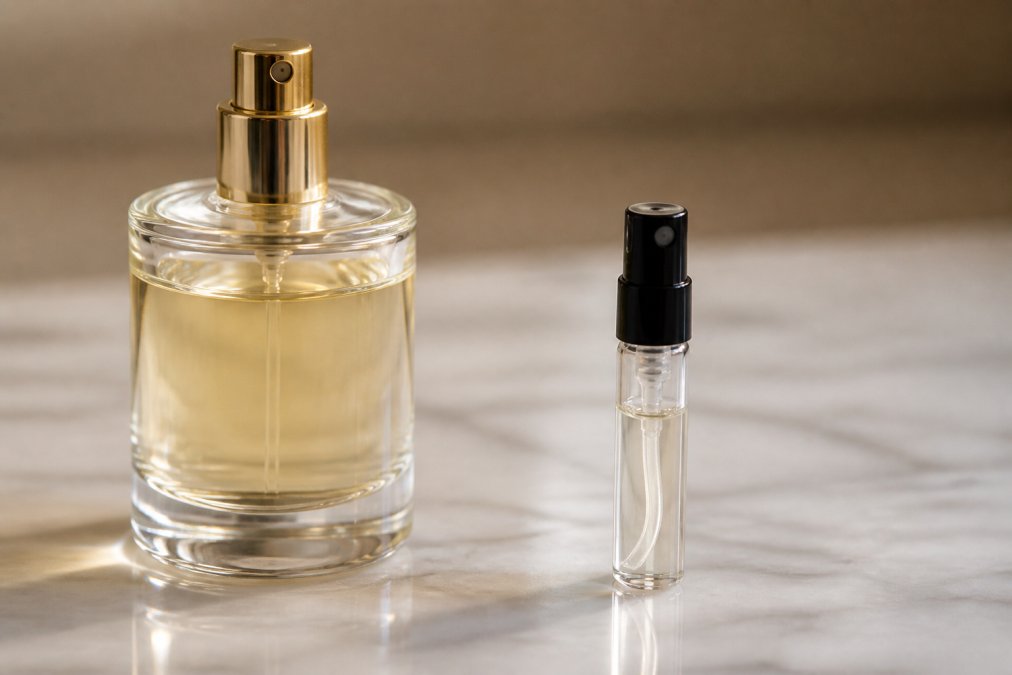
A fragrance decant is a portion of perfume transferred from its original bottle into a smaller container, typically a glass vial or travel atomizer. This lets you wear a scent for days or weeks before deciding whether to buy the full bottle. At Ruth+Bo, we see this question constantly from customers who want to explore story-driven scents without committing to a full-size purchase.
The term "decant" comes from the act of pouring liquid from one vessel into another. In the fragrance world, it specifically refers to hand-poured portions from an authentic, manufacturer-sealed bottle. The juice inside is identical to what you'd get in a full bottle. Only the container changes.
Decants usually range from 2ml to 10ml. A 5ml decant typically provides 40-60 sprays, enough for several weeks of regular wear. That's the real appeal: you get a genuine test drive, not a one-time sniff.
What Is a Perfume Sample?
A perfume sample is a small quantity of fragrance provided by the manufacturer or a retailer, usually in a 1-2ml vial or a carded spray. Samples are often free with purchase or sold at a low cost. They're designed for a quick introduction, not extended wear-testing.
Manufacturer samples arrive sealed and branded.
Key Differences Between Decants and Samples
The main difference between a fragrance decant and a sample comes down to volume, source, and purpose. Decants are larger, hand-poured from original bottles, and built for extended testing. Samples are smaller, often manufacturer-sealed, and meant for brief introduction.
Comparison Table: Decant vs Sample
| Factor | Fragrance Decant | Perfume Sample |
|---|---|---|
| Typical size | 2ml to 10ml | 0.7ml to 2ml |
| Source | Hand-poured from original bottle | Manufacturer or third-party filled |
| Sprays available | 20-60+ | 5-15 |
| Best for | Extended wear-testing | Quick first impression |
| Container | Glass vial or travel atomizer | Carded vial or plastic spray |
| Cost-per-ml | Lower | Higher |
| Sealing | Hand-sealed | Factory-sealed (manufacturer) |
The cost-per-ml difference matters more than most buyers realize. A sample looks cheap upfront, but once you calculate the per-milliliter cost, decants often deliver better value for anyone planning more than a few wears.
How Decants Are Created and Sanitization Standards
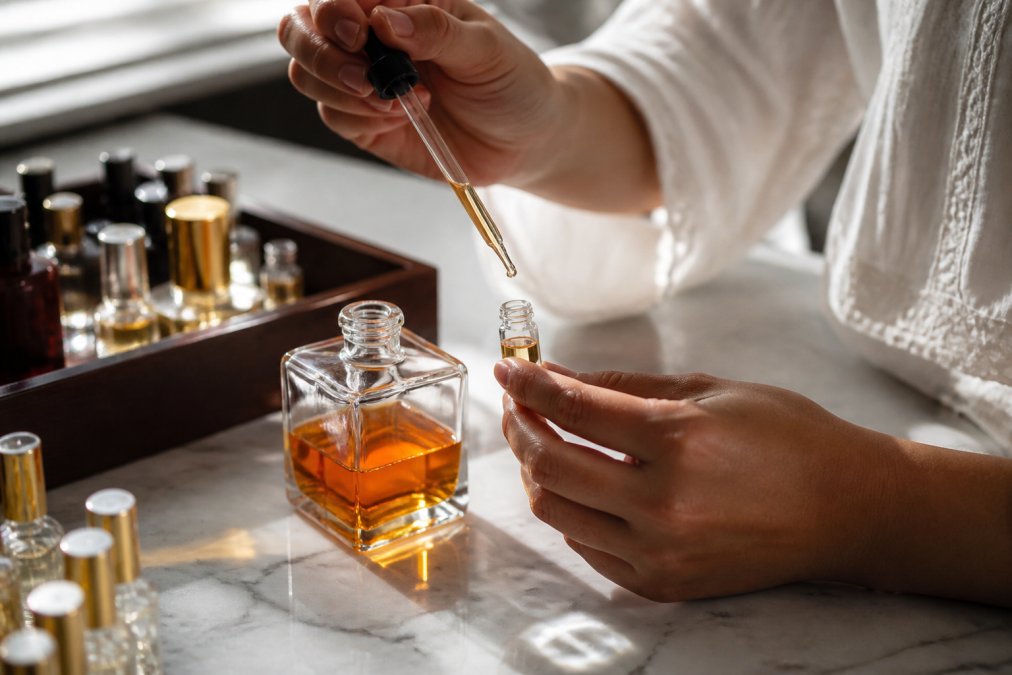
Proper decanting is a sterile process, not a kitchen-table pour. Reputable decanters work in clean environments, use disinfected tools, and transfer fragrance directly from an unopened or well-maintained original bottle into a sterile glass vial.
The steps typically look like this:
- Sanitize all tools with isopropyl alcohol before each session
- Work in a low-dust, temperature-controlled space
- Use a clean pipette or transfer syringe for each fragrance
- Fill sterile glass vials, never reused plastic containers
- Seal immediately and label with the fragrance name and batch code
The Benefits of Niche Perfume Discovery Sets
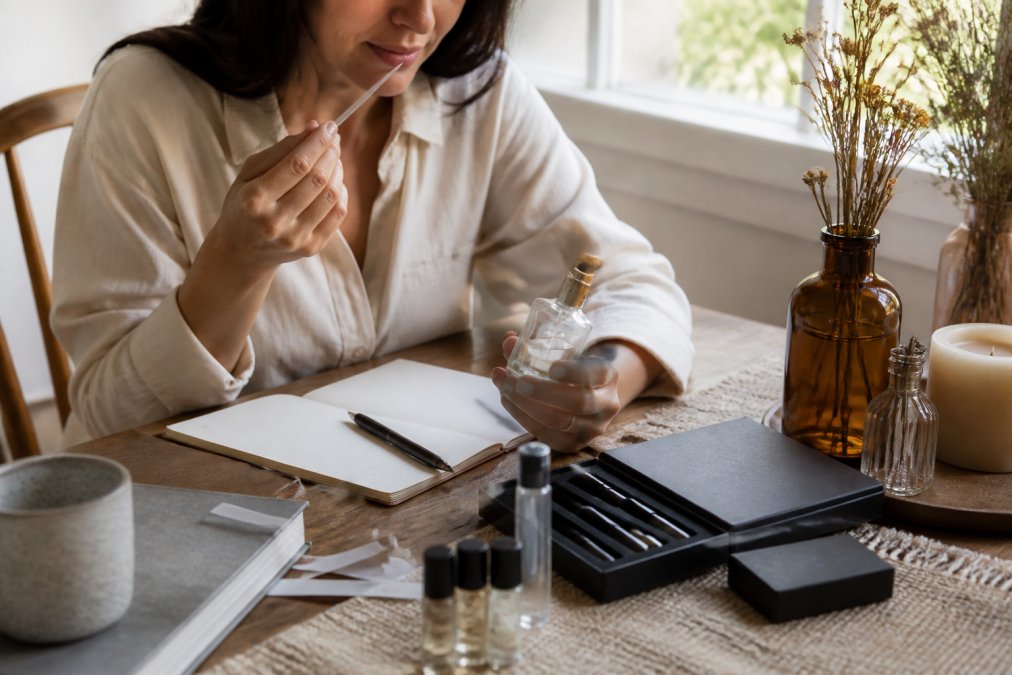
Discovery sets are the middle ground between a single sample and a full decant: a curated group of small vials from one house or theme, sold together so you can compare several scents side by side. They matter to the decant-vs-sample question because they change the economics of testing.
The benefits go beyond cost:
- Skin chemistry testing. A scent that reads beautifully on a paper blotter can turn sharp, soapy, or flat on skin. Sets let you test several compositions in real conditions over consecutive days.
- Occasion matching. You learn which scent suits a wedding versus a workday versus a quiet evening, rather than guessing from a description.
- Gift confidence. Thematic sets remove the guesswork for anniversaries and holidays because the recipient can choose their own favorite from the group.
- Curated exploration. A well-built set guides you through related scent profiles, which is more useful than a random assortment of unrelated samples.
How to Tell a High-Quality Decant or Sample From a Poor One
This is the part most guides skip, and it's the fastest way to judge a seller. A professional decant has a few visible tells:
- Clean, dry threads. No residue or crust around the neck or cap, which signals the fill was done carefully and sealed promptly.
- A proper atomizer or crimped seal. A crimped collar or a quality screw cap with a gasket holds pressure; a loose press-fit stopper does not.
- Accurate labeling. Fragrance name, house, fill volume, and ideally a batch code or fill date. Handwritten labels with no volume are a warning sign.
- Clear, particle-free liquid. Cloudiness, sediment, or floating specks suggest contamination or a degraded source bottle.
- Glass, not plastic. A rigid glass vial with a snug cap is the baseline; a soft plastic sprayer is a red flag.
How to Store Fragrance Decants for Maximum Shelf Life
Storage is where decants diverge most sharply from factory-sealed bottles, and it's the topic most guides wave away with a single line about keeping things cool and dark. The reason decants are more fragile comes down to headspace and seal integrity, not just temperature.
Follow these storage rules:
- Keep vials upright so liquid never sits against the seal, where it can degrade gasket material
- Store in a closed drawer, box, or cabinet, not on a sunny windowsill or open shelf
- Avoid bathrooms, where humidity and temperature swing with every shower
- Tighten the cap after every use and avoid leaving the vial open while you decide
- Aim to use within 12-24 months, sooner for citrus-forward or light compositions
- Keep the original box or a labeled sleeve so you can track fill dates
Legal and Ethical Considerations of Decanting
Decanting sits in a legal gray area that varies by how the fragrance is sold and labeled. In the United States, the Federal Trade Commission's guidance on deceptive advertising makes one thing clear: sellers cannot misrepresent a product's origin or imply manufacturer authorization they don't have.
The ethical rules are simpler than the legal ones:
- Never claim a decant is manufacturer-sealed when it isn't
- Never refill and resell a bottle as "new"
- Always disclose the source bottle and its condition
- Respect trademarks: don't use a brand's logo to imply partnership
- Be transparent about fill dates and storage conditions
Conclusion: Finding Your Signature Scent
Choosing between a decant and a sample comes down to how much testing you need before committing. Samples give you a first impression. Decants give you a relationship with a scent, enough time to know whether it belongs in your rotation.
Frequently Asked Questions
Are fragrance decants worth it?
Decants let you wear a scent for several days or weeks before buying a full bottle, which reduces the risk of a blind buy. A 5ml or 10ml decant often provides dozens of sprays, enough to test how a fragrance performs on your skin in different weather and settings. For expensive niche perfumes, that extended wear-testing is valuable. The main trade-off is cost-per-ml: decants cost more per milliliter than a full bottle, so they work best as a trial step rather than a long-term supply.
Is decanting perfume illegal?
Decanting a fragrance you own for personal use is not illegal. The legal gray area appears when a third party buys a bottle, transfers it into smaller vials, and sells those vials under the original brand's name. That can raise trademark concerns if the packaging implies an official affiliation. Reputable decant sellers label their products clearly as hand-poured and independent. If you are buying decants, look for sellers who are transparent about their process and do not present their vials as manufacturer-sealed products.
Does decanting a fragrance ruin it?
The act of transferring fragrance into a clean glass vial does not ruin it. Problems arise from poor technique: using contaminated equipment, exposing the liquid to heat or direct sunlight, or storing it in a vial with a weak seal that allows evaporation and oxidation. A properly sanitized glass atomizer filled in a cool, dim environment and kept sealed will preserve the scent profile well. Plastic spray vials are more permeable to air over time, so glass is the better choice for anything you plan to keep longer than a few weeks.
How many sprays are in a 2ml sample vs a 5ml decant?
A 2ml vial typically delivers around 20 to 25 sprays, depending on the atomizer. A 5ml decant generally provides 50 to 60 sprays. That means a 2ml sample is enough for roughly a week of daily wear if you use three sprays per application, while a 5ml decant can last two to three weeks. For a fragrance you want to test across different seasons or occasions, the 5ml size gives you a more complete picture of how the scent evolves.
What should I look for when buying a fragrance decant online?
Check three things: the vial material, the seller's sanitation claims, and the batch code. Glass vials with a quality atomizer preserve the fragrance better than plastic. Sellers who mention sterile equipment and hand-poured processes are more likely to deliver a clean product. A visible batch code on the original bottle, which the seller photographs, helps confirm authenticity. If a listing shows no batch code and uses vague language about sourcing, treat it with caution.