

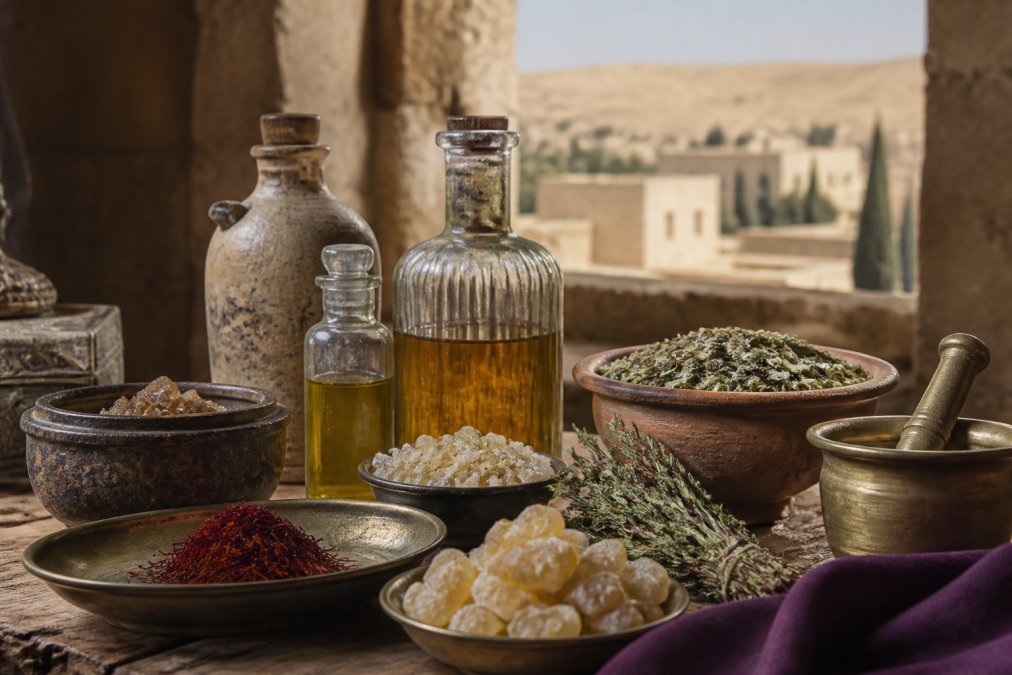
Scents That Evoke Biblical Narratives: A Guide
Table of Contents
- Scents That Evoke Biblical Narratives: Why Story Matters in Fragrance
- Frankincense and Myrrh: The Sacred Gifts of Worship
- The Role of Incense in Temple Worship and Spiritual Practice
- Spikenard, Rose of Sharon, and Other Aromatic Resins in Scripture
- Benefits of Narrative Fragrances for Personal Identity
- Biblical Essential Oils for Prayer and Spiritual Reflection
- How to Choose a Spiritual Scent That Resonates With You
- DIY Biblical Scent Blending: Creating Your Own Narrative Fragrance
Last Updated: August 17, 2026
Scents That Evoke Biblical Narratives: Why Story Matters in Fragrance
When you smell something, you experience a story. The olfactory system connects directly to the brain's limbic system, responsible for memory and emotion, which is why fragrance has held spiritual significance across cultures for millennia. At Ruth+Bo, fragrance is more than a finishing touch, it's a vehicle for identity, memory, and meaning, connecting personal identity with timeless narratives drawn from scripture.
The practice of using scents in religious contexts dates back thousands of years. Archaeological research on ancient temple practices documents that frankincense and myrrh were among the most valued commodities in the ancient world, traded along routes connecting the Mediterranean to the Arabian Peninsula. These were sacred offerings, used in temple worship, anointing ceremonies, and rituals that shaped spiritual practice across religions.
Today, people want scents that tell stories and connect them to something larger than themselves. Below, we'll explore the most significant scents in biblical tradition, explain how to choose one that resonates with your spiritual journey, and show you how to create your own narrative fragrance blends.
Frankincense and Myrrh: The Sacred Gifts of Worship
Frankincense and myrrh stand as the most iconic scents in biblical tradition, inseparable from the Nativity and temple worship. Frankincense, derived from the Boswellia tree, produces a resin burned in temples for at least 5,000 years, with a warm, slightly spicy aroma. Myrrh, from the Commiphora tree, offers a deeper, earthy scent, bittersweet and grounding. Together, they represent the duality of spiritual experience: the uplifting, transcendent quality of frankincense paired with the grounded, contemplative nature of myrrh.
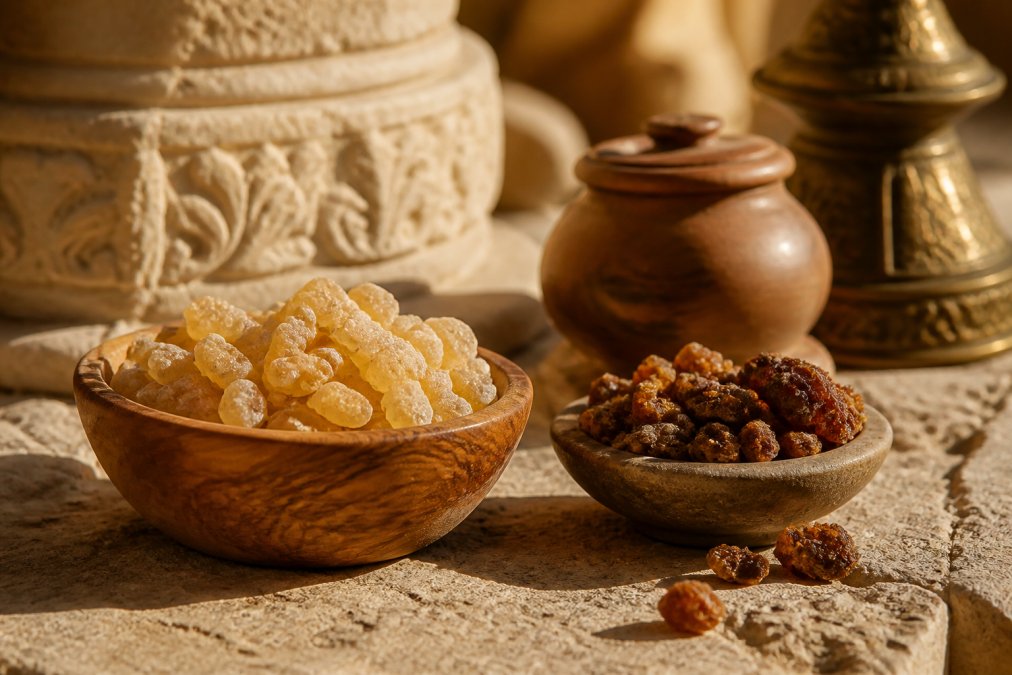
In the biblical narrative, the Magi's gifts carried layers of meaning. Frankincense symbolized worship and prayer, the sweet savor rising to heaven. Myrrh represented sacrifice and suffering, foreshadowing the crucifixion. When you wear a fragrance built around frankincense and myrrh, you embody these ancient meanings. The combination works because the two resins balance each other: frankincense lifts and opens the senses, while myrrh grounds and deepens the experience. For those exploring scents that evoke biblical narratives, frankincense and myrrh offer an accessible entry point with well-established symbolic meanings.
The Role of Incense in Temple Worship and Spiritual Practice
The use of incense in temple worship was ceremonial, prescribed, and deeply symbolic. The Hebrew Bible describes the ketoret, the sacred incense formula used in the Jewish temple, with remarkable specificity. The ketoret included frankincense, myrrh, stacte, onycha, galbanum, and other aromatic compounds in exact proportions. According to Jewish historical sources on temple practices, this formula was so sacred that making it outside the temple context was explicitly forbidden.
The incense wasn't meant to be possessed or worn; it existed solely to create an atmosphere of holiness. The smoke rising from the altar represented prayers ascending to heaven, a visible manifestation of spiritual intention. This reveals how ancient cultures understood fragrance: not primarily about personal enjoyment but about creating a threshold between the ordinary and the sacred, using the senses to mark transitions in consciousness.
The practice persists across religions today, in Christian liturgy, Islamic tradition, Hindu temples, and Buddhist monasteries. When choosing a fragrance rooted in temple incense traditions, look for complexity, multiple notes that unfold over time, reflecting the ketoret's seven-ingredient sophistication.
Spikenard, Rose of Sharon, and Other Aromatic Resins in Scripture
Beyond frankincense and myrrh, scripture mentions numerous other aromatic plants and resins, each with its own symbolic weight. Spikenard, mentioned in the Song of Solomon and in the Gospel accounts of Mary anointing Jesus' feet, represents one of the most precious aromatic substances in the ancient world. It was imported from India at great expense, used only for the most significant occasions. When Mary anointed Jesus with spikenard, she performed an act of profound devotion and sacrifice. Biblical scholarship on anointing practices documents that anointing with precious oils was reserved for prophets, priests, and kings.
The Rose of Sharon, mentioned in the Song of Solomon as a symbol of beauty and beloved identity, carries associations with divine love and human longing. Other biblical aromatics include onycha (a shellfish-derived scent used in the ketoret), galbanum (a resinous plant with a slightly green, earthy character), and stacte (likely a form of myrrh). Collectively, they represent the sophistication of ancient perfumery and offer opportunities for deeper connection beyond the most famous aromatics.
Benefits of Narrative Fragrances for Personal Identity
Wearing a fragrance tied to a biblical narrative creates a daily practice of intention-setting. Every time you apply the fragrance, you're reminded of the story it represents, the values it embodies, the spiritual lineage it connects you to. Research in sensory psychology shows that fragrance creates stronger memory associations than almost any other sense, making it a powerful tool for identity formation.
For people navigating questions of faith, identity, and belonging, a narrative fragrance offers something tangible, a way to express your values without words. If you wear a fragrance inspired by Ruth's story, a narrative about loyalty, redemption, and finding belonging in unexpected places, you're making a statement about what matters to you. Many people use fragrance as an anchor for meditation or prayer, with the scent itself becoming a trigger for the mental and emotional state you cultivate during your practice.
Biblical Essential Oils for Prayer and Spiritual Reflection
Essential oils derived from biblical botanicals offer a concentrated, immediate way to engage with these scents. Unlike full fragrances, which blend multiple notes and may include synthetic components, pure essential oils provide direct access to the aromatic compounds of the plants themselves. Many spiritual practitioners use essential oils in conjunction with prayer or meditation, a drop of frankincense oil on cloth held near the face during prayer creates an olfactory anchor for intention.
The advantage of essential oils is their versatility: use them in diffusers to create sacred atmosphere, anoint yourself before prayer, add them to carrier oils for personal anointing, or use them in simple rituals. However, essential oils require care, they're potent and should be diluted before direct skin application. Quality varies significantly; pure, therapeutic-grade oils are more expensive but offer better results. Brands like Abba Oil offer anointing oils specifically formulated with biblical botanicals, combining the purity of essential oils with the spiritual intention of the practice.
How to Choose a Spiritual Scent That Resonates With You
Choosing a fragrance rooted in biblical narrative requires asking not just "Do I like this?" but "Does this story speak to me? Does this fragrance help me embody the values I want to live into?"
Start by considering which biblical narratives resonate most deeply with you. Are you drawn to stories of redemption and unexpected blessing, like Ruth's story? To narratives of courage and devotion? The fragrance you choose should reflect a narrative that matters to you. Ruth+Bo offers fragrances inspired by specific biblical figures, each with its own scent profile and symbolic meaning.
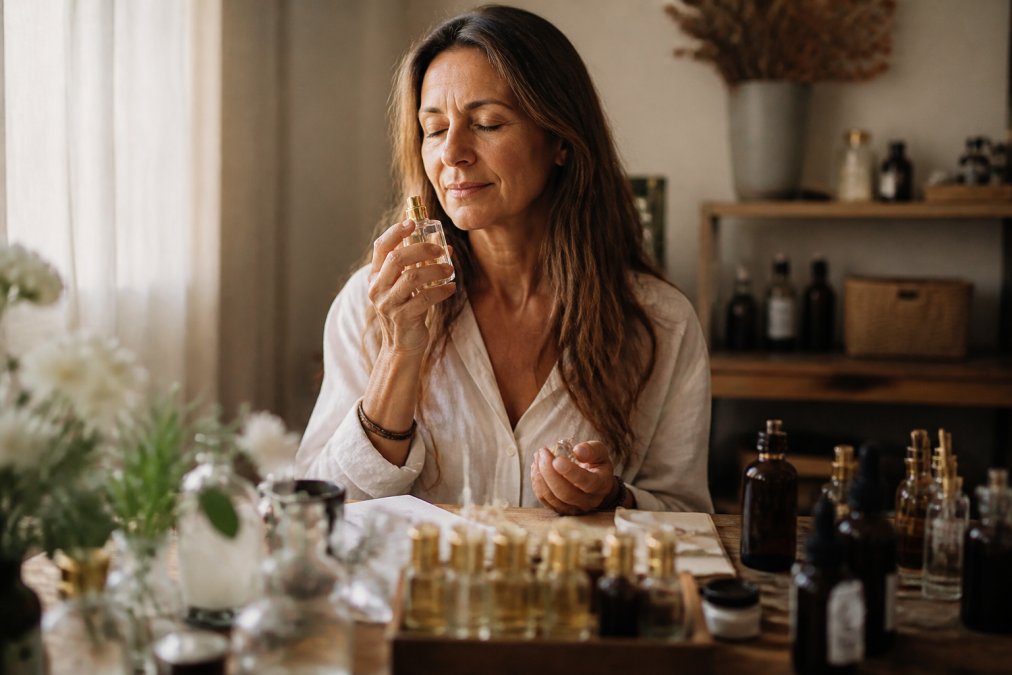
When you experience the fragrance, give yourself time. Fragrance evolves; the top notes fade within minutes, giving way to the heart notes, which eventually settle into the base notes. Spend at least 15-20 minutes with a scent before deciding whether it resonates. Consider your own chemistry, fragrance interacts with your skin's natural pH and oils, which means the same scent smells slightly different on every person. Ruth+Bo includes sample vials with purchases, allowing you to test the fragrance on your skin over several days. Finally, trust your intuition. The goal is to find a fragrance that makes you feel more like yourself, more aligned with your values, more connected to your spiritual practice.
DIY Biblical Scent Blending: Creating Your Own Narrative Fragrance
For those seeking deeper engagement with scents that evoke biblical narratives, creating your own blends offers personalization and creative expression. Start with a simple three-note structure: a top note (bright, volatile), a heart note (the main character), and a base note (grounding, lasting).
A basic formula for a personal fragrance blend uses this ratio:
- 20% top notes (bright, volatile oils)
- 50% heart notes (the main character)
- 30% base notes (grounding, lasting)
For example, a Ruth-inspired blend might include lemon or bergamot as top note (brightness, hope), rose or geranium as heart note (love, compassion), and frankincense with a touch of vanilla as base note (grounding, sacredness). Mix these essential oils in the ratio above, then dilute the blend in a carrier oil (jojoba, sweet almond, or fractionated coconut oil work well). A typical dilution is about 15-20% fragrance oils to carrier oil.
The creative process itself becomes spiritual practice. As you blend, you're thinking about the narrative you want to embody, the qualities you want to cultivate, the story you want to tell. Document your experiments and keep notes on which combinations work and how the blends evolve over time. Fragrance continues to develop as the oils meld together; a blend that seems unbalanced on day one might become beautiful by day seven.
Choosing a fragrance rooted in biblical narrative is an act of intentionality. It's a way to anchor your spiritual practice in something sensory and immediate, to wear your values, to create sacred space in your daily life. Whether you choose a professionally crafted fragrance from Ruth+Bo that embodies a specific biblical story, explore pure essential oils for prayer and meditation, or create your own blends, you're engaging in a practice as old as temple worship itself. Ruth+Bo's curated collections make this practice accessible, offering story-driven fragrances that deliver sophistication and meaning. Start with a discovery set to explore what resonates, then build a collection that reflects your own spiritual journey.
| Fragrance Type | Best For | Longevity | Projection |
|---|---|---|---|
| Frankincense & Myrrh Blends | Spiritual practice, meditation | 6-8 hours | Moderate |
| Single-Note Essential Oils | Anointing, ritual use | 2-4 hours | Low to moderate |
| Narrative Eau de Parfum | Daily wear, personal identity | 8+ hours | Moderate to strong |
| DIY Blends | Personalization, creative expression | Varies | Varies |
| Anointing Oils | Prayer, spiritual ceremony | 3-5 hours | Intimate |
Frequently Asked Questions
What are biblical scents and why do they matter in modern fragrance?
Biblical scents are fragrances rooted in aromatic resins, oils, and botanicals mentioned throughout scripture, frankincense, myrrh, spikenard, and rose of Sharon among them. These scents carry spiritual symbolism tied to worship, consecration, and divine presence. In modern fragrance, they matter because they connect wearers to timeless narratives and spiritual meaning beyond the olfactory experience. Narrative fragrances that evoke biblical stories create a personal connection to faith and identity, transforming a simple scent into a sensory reminder of devotion, redemption, or grace.
Which essential oils mentioned in the Bible are used in perfumes today?
Several biblical essential oils remain central to modern perfumery. Frankincense (from Boswellia trees) symbolizes worship and appears in the Nativity account. Myrrh represents sacrifice and redemption. Spikenard, the costly oil used by Mary Magdalene to anoint Jesus, conveys profound love. Rose of Sharon, referenced in the Song of Solomon, embodies beauty and grace. Onycha, galbanum, and stacte were components of the Ketoret (sacred incense formula). These oils are valued not only for their complex, lasting scent profiles but for their ability to ground wearers in spiritual narratives and ancient tradition.
How can fragrance be used as a tool for spiritual reflection and prayer?
Fragrance engages olfactory memory, the brain's most direct link to emotion and memory. When you wear a biblical essential oil for prayer, the scent becomes a sensory anchor that deepens focus and intention. Many faith-driven adults use narrative fragrances during meditation, prayer, or spiritual practices to create sacred atmosphere and strengthen their connection to meaning. The scent becomes a ritual element that signals to your mind and spirit that you are entering a space of reflection. Over time, that fragrance becomes associated with your spiritual practice, making it a powerful tool for returning to that state of presence and devotion.
What makes narrative fragrances different from typical commercial perfumes?
Narrative fragrances are intentionally crafted around a story, biblical figure, or spiritual theme rather than designed purely for mass appeal. Each scent is layered with meaning, the notes, the ingredients, and the inspiration all work together to evoke a specific emotional or spiritual journey. Brands like Ruth+Bo create fragrances inspired by biblical figures like Ruth, Boaz, David, and Bathsheba, where the scent profile mirrors the character's qualities. This approach transforms fragrance from a decorative accessory into a personal statement of identity and faith. The result is a more sophisticated, emotionally resonant experience that appeals to conscious consumers seeking depth and authenticity.
This article was written using GrandRanker