

Benefits of Narrative Fragrances: A Complete Guide
Table of Contents
- What Makes Narrative Fragrances Different
- How Storytelling in Perfumery Creates Meaning
- The Emotional Connection to Perfume and Memory
- Narrative Fragrances as Tools for Personal Expression
- Exploring Modern Fragrance Discovery Sets
- The Neuroscience Behind Scent and Storytelling
- How to Identify a Narrative Fragrance That Resonates
- Conclusion
- Frequently Asked Questions
Last Updated: September 3, 2026
What Makes Narrative Fragrances Different
A narrative fragrance is a scent composition designed to tell a story or evoke a specific emotional journey through its structure and evolution on the skin. Unlike traditional fragrances that prioritize a single dominant note or generic appeal, narrative fragrances use the three-part structure of fragrance notes, top, middle, and base, to create a deliberate arc of experience. The scent unfolds over time, revealing different facets as it develops, much like chapters in a book or movements in a symphony.
What distinguishes narrative fragrances from conventional perfumery is their intentionality. Each note is selected not just for its individual beauty, but for how it contributes to a larger sensory story. At Ruth+Bo, we understand that fragrance can be far more than a pleasant smell. It can be a vehicle for meaning, a way to express identity, and a bridge between memory and aspiration. This approach transforms the act of wearing a fragrance from a routine grooming choice into a conscious, reflective experience.
The narrative structure also creates longevity and complexity that casual fragrance wearers often miss. A fragrance that unfolds a story keeps the wearer engaged throughout the day, discovering new dimensions as the composition develops. This is why narrative fragrances tend to resonate more deeply with those who appreciate sophistication and intentional design. They reward attention and invite the wearer into a deeper relationship with the scent itself.
How Storytelling in Perfumery Creates Meaning
Storytelling in perfumery works because scent bypasses rational thought and speaks directly to emotion and memory. When a perfumer constructs a narrative fragrance, they're not simply combining pleasant-smelling molecules. They're engineering an olfactory experience that mirrors how we experience narrative in other forms, through progression, contrast, and resolution.
The composition of a narrative fragrance typically follows a deliberate arc. The top notes provide the opening statement, the first impression that draws the wearer in. These volatile, bright notes fade quickly, giving way to the heart of the fragrance. The middle notes reveal the central narrative, often the most complex and emotionally resonant part of the composition. Finally, the base notes ground the story, providing depth and longevity while the narrative concludes or transforms into something reflective.
This structure mirrors storytelling itself. Consider how a novel opens with an engaging scene, develops its central conflict through the middle chapters, and resolves with a meaningful conclusion. A narrative fragrance operates on the same principle, except the reader is the wearer, and the story unfolds across hours rather than pages. This creates an intimate form of communication between the perfumer's intention and the wearer's sensory experience.
The psychological impact of this approach is significant. When someone wears a fragrance with a clear narrative, they're not just smelling something pleasant, they're participating in a story. They become aware of the progression, anticipate the transitions, and develop a relationship with the scent that's far more meaningful than with a fragrance that smells the same throughout. This engagement is what transforms a fragrance from a commodity into a personal experience.
The Emotional Connection to Perfume and Memory
The relationship between scent and emotion is one of the most powerful sensory connections the human body experiences. Unlike sight or sound, which are processed first by the thalamus before reaching the cortex, olfactory information travels directly to the limbic system, the brain's emotional center (peer-reviewed research). This direct pathway explains why a single scent can instantly transport someone to a specific moment in time or trigger profound emotional responses.
Olfactory Memory and the Limbic System
The limbic system processes smell before conscious thought, which is why fragrance memories feel so vivid and emotionally charged (the NIH). When you encounter a scent, your brain doesn't just register it as a pleasant or unpleasant odor. It simultaneously activates memory centers, emotional processing regions, and areas associated with reward and motivation. This neurological reality means that fragrance isn't merely a sensory experience, it's an emotional one.
This is why people often describe a fragrance as "transporting" them to another time or place. A narrative fragrance, designed with this neurological understanding in mind, can be deliberately constructed to evoke specific emotional states or memories. The composition might include notes that trigger nostalgia, excitement, comfort, or confidence. When a fragrance tells a story that aligns with these emotional pathways, the wearer experiences something far more profound than a pleasant smell.
Nostalgia and Personal Identity
Nostalgia is one of the most potent emotional responses fragrance can trigger. A scent associated with a meaningful period in someone's life, childhood, a significant relationship, a place of importance, can instantly reconnect them with that era and the identity they held during that time. Narrative fragrances often deliberately incorporate notes that evoke nostalgia while simultaneously offering something new and sophisticated.
This dual function allows narrative fragrances to serve as tools for exploring identity. Someone might wear a fragrance that honors their heritage or a meaningful chapter of their life while simultaneously expressing who they are becoming. The story embedded in the fragrance becomes a conversation between past and present, between memory and aspiration. For those seeking personal expression through fragrance, this capacity to hold multiple layers of meaning is invaluable.
The ephemeral nature of scent, the fact that it fades and must be reapplied, that it changes throughout the day, that it's invisible yet unmistakable, mirrors the nature of memory itself. Both are fleeting, personal, and impossible to fully capture or explain to others. This parallel makes fragrance a uniquely appropriate medium for exploring and expressing the emotional dimensions of identity and history.
Narrative Fragrances as Tools for Personal Expression
Fragrance is one of the most personal forms of self-expression available. Unlike clothing, which is visible to others, fragrance creates an invisible aura around the wearer. It's a choice that affects how others perceive you, but more importantly, it affects how you perceive yourself. A narrative fragrance, one that carries meaning and intention, becomes a tool for articulating aspects of identity that might otherwise remain unexpressed.
For those seeking to communicate values or beliefs through fragrance, narrative fragrances offer a sophisticated alternative to generic commercial scents. A fragrance rooted in faith or timeless values, for example, allows the wearer to express spiritual or philosophical commitments without explicit declaration. The fragrance becomes a subtle but meaningful statement about what matters to them. This is particularly valuable for individuals who want their personal choices to reflect their deeper convictions.
The discovery of a fragrance that resonates with one's sense of self is often a transformative experience. When someone finds a scent whose narrative aligns with their own story, they often describe wearing it as feeling "authentic" or "like myself." This alignment between fragrance narrative and personal identity suggests that scent operates as a form of non-verbal communication, a way of expressing self to the world and to oneself. Narrative fragrances facilitate this expression by offering depth and intentionality rather than generic mass appeal.
Exploring Modern Fragrance Discovery Sets
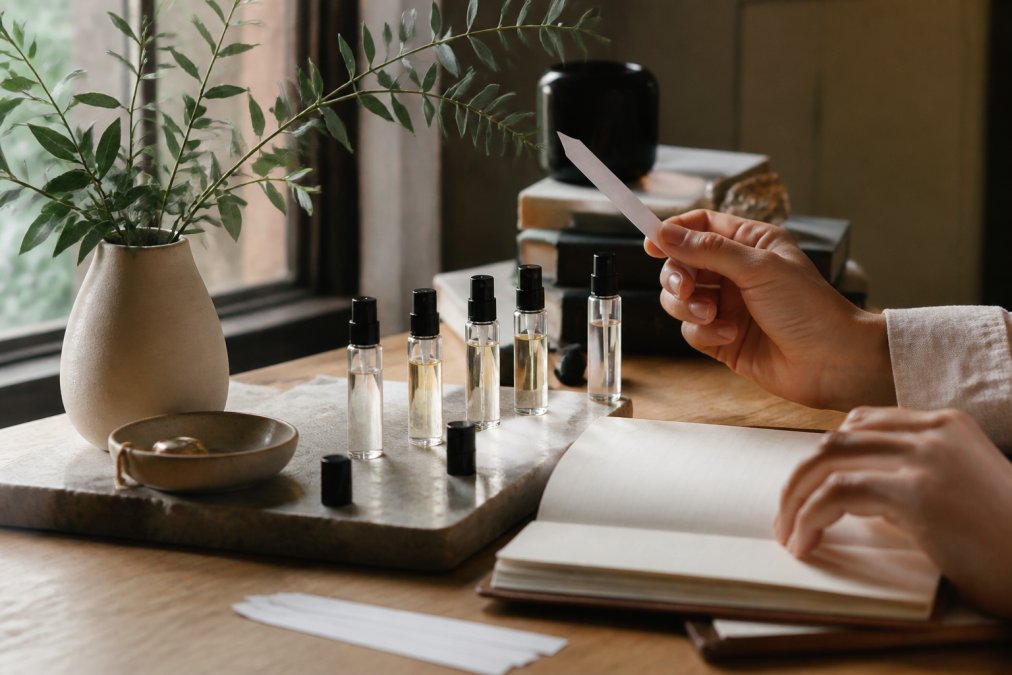
One of the most practical barriers to engaging with narrative fragrances is the challenge of discovery. Fragrance is intensely personal and subjective. What resonates with one person might feel entirely wrong for another. This is where fragrance discovery sets become invaluable. Rather than committing to a full bottle of an unfamiliar fragrance, discovery sets allow the wearer to explore multiple scents and identify which narratives speak to them.
Modern fragrance discovery sets are designed with the understanding that finding the right fragrance is a journey, not a transaction. A well-curated discovery set introduces the wearer to different fragrance families, narrative approaches, and scent profiles. The wearer can experience how each fragrance develops on their own skin chemistry, how it interacts with their body's natural scent, and whether its narrative resonates over hours of wear. This extended trial period is essential because fragrance preferences are deeply individual.
At Ruth+Bo, discovery sets are curated to allow exploration of story-driven fragrances without overwhelming the wearer with choice. Each set is thoughtfully assembled to showcase different narrative approaches, perhaps pairing a fragrance rooted in faith with one exploring timeless elegance, or offering complementary scents for different occasions and moods. This curation respects the wearer's time and intelligence while opening doors to new olfactory experiences.
The practical advantage of discovery sets is significant. They eliminate the risk of purchasing a full bottle of a fragrance that doesn't work for your skin chemistry or personal preferences. They allow for extended testing, which reveals how a fragrance truly performs throughout its lifecycle. And they democratize access to quality, narrative-driven fragrances by making exploration affordable and manageable.
The Neuroscience Behind Scent and Storytelling
The intersection of neuroscience and fragrance storytelling reveals why narrative fragrances are so effective at creating meaningful experiences. The human brain is fundamentally a pattern-recognition and story-making system. We interpret sensory information by fitting it into narratives that make sense to us. When fragrance is structured as a narrative, with clear progression, development, and resolution, it aligns with how the brain naturally processes experience.
The olfactory bulb, which receives scent information, has direct connections to the amygdala and hippocampus, brain regions essential for emotional processing and memory formation (peer-reviewed research). This anatomical reality means that scent experiences are encoded in memory differently than visual or auditory experiences. A fragrance encountered once can create a lasting memory trace that's activated instantly by that scent in the future. This is why people often report that a particular fragrance "takes them back" to a specific moment.
When a fragrance is designed as a narrative, when it tells a story through its composition, it engages additional cognitive systems. The wearer's brain isn't just processing sensory information; it's following a sequence, anticipating transitions, and creating meaning from the progression. This cognitive engagement strengthens memory formation and emotional resonance. A narrative fragrance becomes more memorable, more emotionally significant, and more deeply integrated into the wearer's sense of self than a static, unchanging scent.
The concept of an olfactory journey, the idea that a fragrance should evolve and develop, is grounded in this neuroscience. The brain experiences novelty and change as rewarding. A fragrance that remains static throughout the day becomes background noise to the wearer's olfactory system. A fragrance that evolves, that reveals new dimensions as it develops, maintains the brain's engagement and attention. This is why narrative fragrances, with their deliberate structural progression, tend to feel more sophisticated and rewarding to wear.
How to Identify a Narrative Fragrance That Resonates
Identifying a narrative fragrance requires understanding what to look for in composition, intention, and personal alignment. The first indicator is intentionality in design. A narrative fragrance is typically described by its creator with reference to a story, theme, or emotional arc. Rather than simply listing pleasant notes, the fragrance's description should reference its narrative structure, how it opens, what it develops into, and how it concludes. This intentional storytelling in the description often reflects intentional storytelling in the composition.
The second indicator is complexity and evolution. Narrative fragrances are designed to reveal themselves over time. When you first apply a narrative fragrance, the top notes should be engaging and clear. As these fade, the heart of the fragrance should emerge, often more complex and nuanced than the opening. Finally, the base should provide depth and longevity while the overall composition feels complete. If a fragrance smells essentially the same throughout its wear time, it's likely not designed as a narrative composition.
The third indicator is personal resonance with the stated narrative. Does the fragrance's story speak to you? Does it align with values, memories, or aspirations you hold? This alignment is crucial because a narrative fragrance is only truly effective if its story resonates with the wearer. A beautifully composed fragrance with a narrative you don't connect with will never feel authentically yours. Conversely, a fragrance whose story speaks to you will feel meaningful every time you wear it.
Testing a fragrance through a discovery set allows you to assess all three indicators without commitment. You can observe whether the composition evolves, read the fragrance's narrative context, and determine whether it aligns with your own story. This exploratory approach is far more effective than purchasing a full bottle based on a description or a single sniff in a store. The intimate nature of fragrance, how it interacts with your individual skin chemistry, means that extended testing is essential to truly understand whether a narrative fragrance resonates with you.
Conclusion
The benefits of narrative fragrances extend far beyond pleasant scent. They offer a way to express identity, engage with memory and emotion, and experience fragrance as a form of personal storytelling. In a world of mass-produced, generic fragrances, narrative fragrances stand apart as intentional, meaningful creations designed for those who seek depth and authenticity in their choices.
At Ruth+Bo, we believe fragrance should reflect the sophistication and intentionality you bring to every aspect of your life. Our curated collection of narrative-driven fragrances, rooted in story and faith, invites you to discover scents that align with your values and express your unique identity. Through our discovery sets and thematic gift options, you can explore fragrances that tell stories worth wearing. Add to cart to begin your journey into narrative fragrance and experience how scent can become a meaningful extension of who you are.
Frequently Asked Questions
How do narrative fragrances evoke specific memories or emotions?
Narrative fragrances work through the olfactory system's direct connection to the limbic system, the brain's emotional center. When you experience a scent with a story, your brain links the fragrance notes to the narrative's themes and emotions. This creates a multisensory experience where the top, middle, and base notes unfold like chapters in a story, triggering memories and emotional responses more powerfully than traditional fragrances. The scent journey becomes personal, turning the ephemeral nature of perfume into a meaningful sensory experience.
What makes a fragrance 'narrative' compared to traditional scents?
A narrative fragrance is intentionally composed around a story or theme that gives the scent purpose beyond its composition. While traditional fragrances focus on pleasant smells and longevity, narrative fragrances are built with a specific emotional arc or message. They often feature distinctive fragrance notes chosen to represent characters, moments, or themes from their story. This storytelling approach creates brand differentiation and deeper consumer connection, transforming a simple fragrance into an artistic expression that speaks to personal identity and values.
Can narrative fragrances help in building a personal brand?
Yes. Narrative fragrances allow you to express your personal imprint and values through scent. When you choose a fragrance rooted in a meaningful story, you're making a statement about who you are and what matters to you. Whether drawn to faith-based narratives, timeless stories, or specific aesthetic themes, wearing a narrative fragrance becomes part of your brand identity. This sensory branding approach creates a distinctive presence that others remember, making it a powerful tool for personal expression and brand building in everyday life.
Why do consumers connect more deeply with story-driven perfume brands?
Story-driven perfume brands create emotional resonance by giving fragrances meaning beyond scent. When a brand shares the narrative behind a fragrance, its inspiration, its cultural or historical context, its artistic vision, consumers feel connected to something larger than a product. This marketing psychology approach builds trust and loyalty because customers understand the brand's values and purpose. The olfactory experience becomes intertwined with the brand's identity, making the fragrance feel personal and intentional rather than arbitrary.
This article was written using GrandRanker