
EDP vs Toilette Longevity: Which Lasts Longer?
Table of Contents
- EDP vs Toilette Longevity: The Concentration Gap That Decides Everything
- Eau de Toilette vs Eau de Parfum: A Side-by-Side Comparison
- Perfume Projection vs Longevity: Two Different Measurements
- How to Make Perfume Last Longer on Your Skin
- Skin Chemistry, Climate, and Other Factors That Affect Scent Duration
- How to Choose the Right Concentration for Your Needs
- Frequently Asked Questions
Last Updated: October 2, 2026
EDP vs Toilette Longevity: The Concentration Gap That Decides Everything
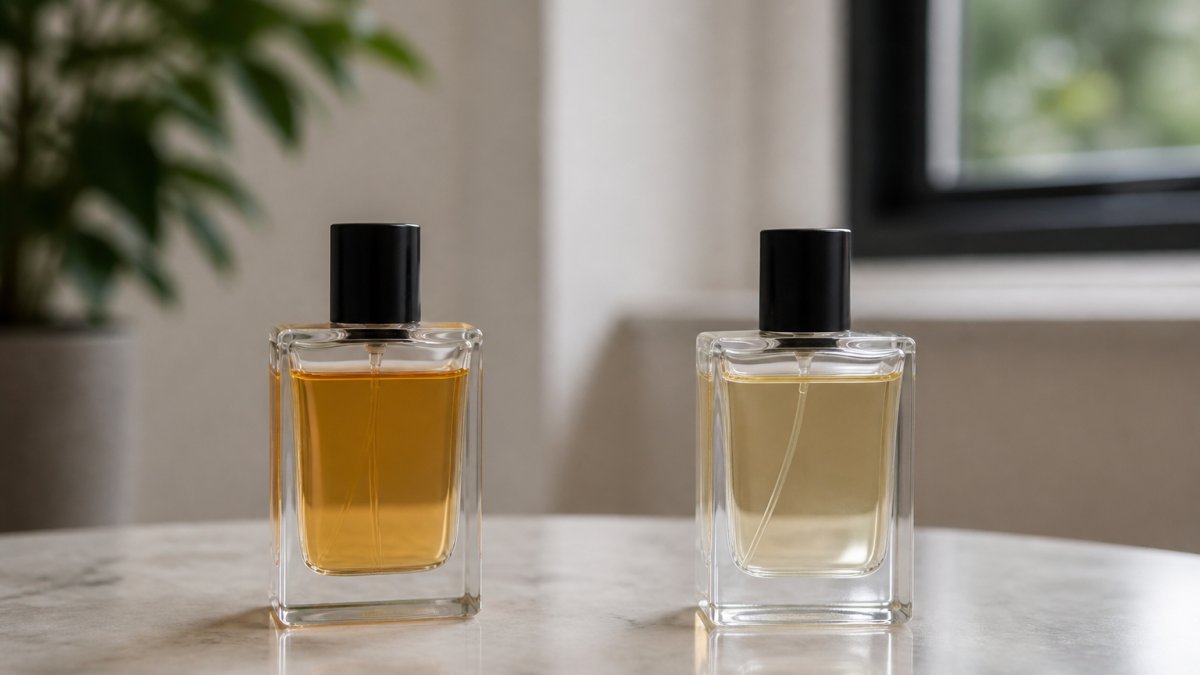
The edp vs toilette longevity difference comes down to one number: fragrance oil concentration. Eau de parfum typically holds 15 to 20 percent perfume oil, while eau de toilette sits closer to 5 to 15 percent.
Most shoppers assume the more expensive bottle simply smells better. Not quite. The real divide is wear time. Below, we break down what EDP and EDT actually deliver, how projection differs from longevity, and the application habits that stretch a scent well past its expected window.
Eau de Toilette vs Eau de Parfum: A Side-by-Side Comparison
Eau de parfum lasts longer than eau de toilette because it carries more perfume oil and less alcohol. That single formula change shifts everything: intensity, staying power, and how the scent develops on skin. The Ulta Beauty fragrance education guide frames it simply, more oil means more staying power.
| Factor | Eau de Toilette | Eau de Parfum |
|---|---|---|
| Fragrance oil | Roughly 5-15% | Roughly 15-20% |
| Alcohol content | Higher | Lower |
| Typical wear | A few hours | Most of a day |
| Projection | Lighter, closer | Fuller, more noticeable |
| Best for | Daytime, warm weather | Evening, cooler weather |
Fragrance Oil Percentages and Alcohol Content
Fragrance concentration is the ratio of perfume oil to alcohol in a bottle. Alcohol carries the scent and evaporates fast; oil lingers and releases slowly. A higher oil load means a slower evaporation rate and a longer dry down. EDT leans on alcohol, so it blooms quickly and leaves quickly. EDP holds more oil, so it unfolds gradually and clings to skin.
Longevity and Intensity: What to Expect Hour by Hour
EDP usually runs several hours longer than EDT on skin, though exact timing varies by person and formula. EDT tends to open bright and fade within a few hours. EDP carries its heart notes and base notes much further into the day, which is why the two feel like different scents by evening. Neither is "better" in the abstract; they serve different moments.
Perfume Projection vs Longevity: Two Different Measurements
Projection and longevity measure different things, and confusing them leads to bad purchases. Longevity is how long a fragrance stays detectable on skin. Projection is how far it travels from your body. A scent can project loudly for an hour and vanish, or sit close for ten hours. The Luvo Parfums concentration breakdown notes that EDP generally outlasts EDT, but projection depends on molecular weight and diffusion, not concentration alone.
How to Make Perfume Last Longer on Your Skin
Most advice on making fragrance last longer stops at "moisturize and hit your pulse points." That is the entry-level version. The version that actually adds hours is about understanding where fragrance evaporates from, how fast, and what you can put between the scent and the air.
Application Techniques That Change the Wear Time
Where you spray matters as much as what you spray. Fragrance evaporates from skin at a rate tied to surface temperature and blood flow, so the same eau de toilette can last two hours on one spot and four on another.
- Pulse points work because they are warm, not because they are magic. Wrists, the base of the throat, behind the ears, and the inner elbows sit over arteries, so they run warmer than surrounding skin. Warmer skin projects more but also evaporates faster, which is why pulse points give you a strong opening and a shorter tail. If you want longevity over projection, spray one pulse point and one cooler area like the forearms or the back of the neck.
- Spray distance changes the droplet size. Holding the bottle six to eight inches from skin deposits a finer, more even mist that dries down gradually. Spraying from two inches soaks one spot, which floods the nose at first and then fades unevenly.
- Do not rub. Rubbing wrists together generates friction and heat, which accelerates the evaporation of top notes and crushes the opening. Let the fragrance air-dry.
- Apply to damp skin. Right after a shower, your skin is hydrated and its barrier is intact. Fragrance applied to damp, moisturized skin has more water to bind to and evaporates more slowly than fragrance applied to dry skin.
- Hair and clothing hold scent longer than skin, with caveats. Fabric fibers trap fragrance molecules and release them slowly, which is why a scarf can smell like your perfume days later. But alcohol and oils can stain silk, and some fabrics (especially light-colored synthetics) can discolor. Hair holds scent well because it is porous, but the alcohol in high-concentration sprays can dry it out over time. A common compromise is to spray a light mist into the air and walk through it, or to apply to a scent-safe layer like a cotton undershirt.
Layering Strategies for a Longer Scent Trail
Layering is the single most underused technique for extending an eau de toilette. The idea is simple: put a slower-evaporating base under a faster-evaporating top so the top has something to cling to.
- Start with an unscented or matching body lotion. The oil and water in lotion create a film that fragrance molecules bind to, slowing their release. This can add one to three hours to a light eau de toilette without changing the scent profile.
- Use a matching body oil or a single-note oil as an anchor. A drop of sandalwood, vanilla, or musk oil on the pulse points before your fragrance gives the base notes something to merge with. This is especially effective with eau de toilette, which often lacks the heavy base notes that give eau de parfum its staying power.
- Stay inside one fragrance family. Layering a fresh citrus eau de toilette over a warm amber oil can clash. The safer approach is to layer within the same family, a citrus EDT over a light citrus body lotion, or a floral EDP over a matching floral body cream.
- Layer concentrations, not just scents. Many houses sell the same fragrance in eau de toilette, eau de parfum, and a matching lotion. Applying the lotion, then the eau de toilette, then a single spray of the eau de parfum on top gives you the brightness of the EDT with the staying power of the EDP.
The Order of Operations
If you want the maximum wear time from an eau de toilette, the sequence is: shower, moisturize with an unscented or matching lotion while skin is still damp, apply a single-note oil or matching body oil to pulse points, spray the eau de toilette from six to eight inches, let it dry without rubbing, and finish with one spray on a scent-safe fabric layer like a cotton undershirt or scarf.
Skin Chemistry, Climate, and Other Factors That Affect Scent Duration
Concentration sets the ceiling on wear time, but your body and your environment decide where the scent actually lands under that ceiling. Two people wearing the same eau de parfum can see a four-to-six-hour spread in how long it lasts, and most of that gap has nothing to do with the bottle.
Skin Chemistry: Why the Same Scent Behaves Differently on Two People
Skin chemistry is the sum of your skin's pH, oil production, hydration level, and surface temperature, and each one changes how volatile compounds in a fragrance evaporate.
- Sebum (skin oil): Oily skin holds fragrance molecules longer because the oils act as a fixative, slowing evaporation. Dry skin does the opposite, it absorbs the alcohol carrier quickly and lets the scent flash off. A common pattern is that people with dry skin get noticeably shorter wear from an eau de toilette than people with oilier skin.
- Skin pH: Skin sits naturally in a mildly acidic range. When your pH shifts, from diet, medication, hormonal cycles, or even a new body wash, the way acidic and base notes interact with your skin changes. This is why a fragrance can smell sharper on you than on a friend.
- Hydration: Well-hydrated skin has a stronger moisture barrier, which slows the rate at which alcohol and top notes evaporate. Dehydrated skin is essentially a dry sponge for scent.
- Body temperature: Warmer skin accelerates evaporation. That is why fragrance applied to the chest or neck tends to fade faster than fragrance applied to the wrists or inner elbows.
Diet plays a smaller but real role. Spicy foods, garlic, and alcohol can shift body odor and skin oil composition over time, subtly changing how a fragrance reads on you. It is not a switch you flip before a night out, but it is one reason your signature scent can smell different after a lifestyle change.
Climate and Environment: How Humidity and Temperature Rewrite the Clock
Temperature and humidity change the evaporation rate of every concentration, which means the same eau de toilette that lasts three hours in a dry office can last five hours in humid summer air, or the reverse.
- High heat: Speeds up evaporation of the alcohol carrier and the top notes. A scent blooms loudly for the first hour and then collapses. This is why heavy eau de parfum can feel overwhelming at midday in July but perfect at the same hour in January.
- High humidity: Slows evaporation because the air is already saturated with water vapor, so fragrance molecules leave the skin more slowly. Humid air also amplifies projection, which is why a light eau de toilette can suddenly feel like too much in a coastal summer.
- Cold, dry air: The opposite effect. Evaporation slows, so the scent lasts longer but sits closer to the skin. Winter is where eau de parfum earns its reputation, the dry air lets base notes unfold slowly instead of flashing off.
- Air conditioning and forced heat: Both strip moisture from the air and from your skin. Indoor climate control can cut an hour or more off wear time compared to the outdoor conditions on the same day.
The Practical Takeaway
If you want a single rule: match concentration to climate, not just to occasion. An eau de toilette is often the smarter choice in humid heat because it will not over-project, while an eau de parfum performs best in cool, dry conditions where its base notes have time to develop. And if your skin runs dry, treat moisturizing as part of your fragrance routine, not an optional step, it is the cheapest way to buy back wear time.
How to Choose the Right Concentration for Your Needs
Match concentration to the occasion, not the price tag. EDT suits daytime, warm weather, and close quarters where a lighter touch works better. EDP fits evenings, cooler months, and moments when you want the scent to carry. For a fragrance that evolves through the day, EDP gives the dry down room to develop. The Fragrantica community discussions show how widely real-world wear times vary, which is exactly why testing on your own skin matters more than any label.
Discovery sets solve this. Ruth+Bo's discovery sets let you sample story-driven scents on your own skin before buying full size.
Frequently Asked Questions
Does Eau de Parfum last longer than Eau de Toilette?
Yes, in most cases. Eau de Parfum typically contains 15-20% fragrance oil, while Eau de Toilette sits around 5-15%. That higher oil concentration slows evaporation, so EDP generally lasts 6-8 hours on skin compared to 3-5 hours for EDT. The gap widens further on dry skin or in warm climates, where lighter formulas fade faster.
Is it better to buy Eau de Parfum or Eau de Toilette for daily wear?
It depends on your routine and environment. Eau de Toilette works well for office settings, warm weather, or anyone who prefers a lighter scent they can refresh at lunch. Eau de Parfum suits evening events, cold weather, and people who want one application to carry them through the day. Many fragrance enthusiasts keep both concentrations of a favorite scent.
How does skin chemistry affect the longevity of a fragrance?
Skin chemistry plays a major role. Oily skin holds fragrance molecules longer because oils slow evaporation, while dry skin releases scent faster. Your skin's natural pH, body temperature, and even diet can shift how a formula develops. This is why the same Eau de Parfum may last eight hours on one person and four on another.
How can I make my fragrance last longer throughout the day?
Start with moisturized skin, since hydrated skin holds scent better than dry skin. Apply to pulse points like wrists, neck, and behind the ears, and avoid rubbing the wrists together, which breaks down the top notes faster. Layering a matching body lotion or using a fragrance primer underneath can add hours of wear.
Does the scent profile change as a fragrance dries down?
Yes. The dry down is the final stage of the fragrance pyramid, when top notes and heart notes fade and base notes like musk, amber, or sandalwood take over. Eau de Parfum tends to show a richer, more developed dry down because its higher oil concentration gives base notes more time and material to unfold on the skin.
Choosing a fragrance blind is a gamble, and concentration labels only tell part of the story. Your skin chemistry, the climate you live in, and how you apply each scent decide the real wear time. Ruth+Bo offers curated feminine and masculine collections, discovery sets for sampling, and thematic gift sets featuring paired scents, all built around fragrances rooted in story and faith. Add to cart and find the concentration that lasts on you.