
Is Narrative Fragrance Worth the Investment in 2026?
Table of Contents
- What Makes a Narrative Fragrance Different From Designer Scents
- The Benefits of Narrative Fragrances: Emotional Resonance and Scent Identity
- Perfume Longevity and Ingredient Quality: What You Actually Pay For
- Cost-Per-Wear Analysis: The Math Behind Luxury Positioning
- Luxury Fragrance Discovery Sets: How to Test Before You Commit
- Fragrance Fatigue: When Storytelling Stops Selling
- Verdict: Who Should Invest in Narrative Fragrance (and Who Shouldn't)
- Frequently Asked Questions
Last Updated: September 23, 2026
What Makes a Narrative Fragrance Different From Designer Scents
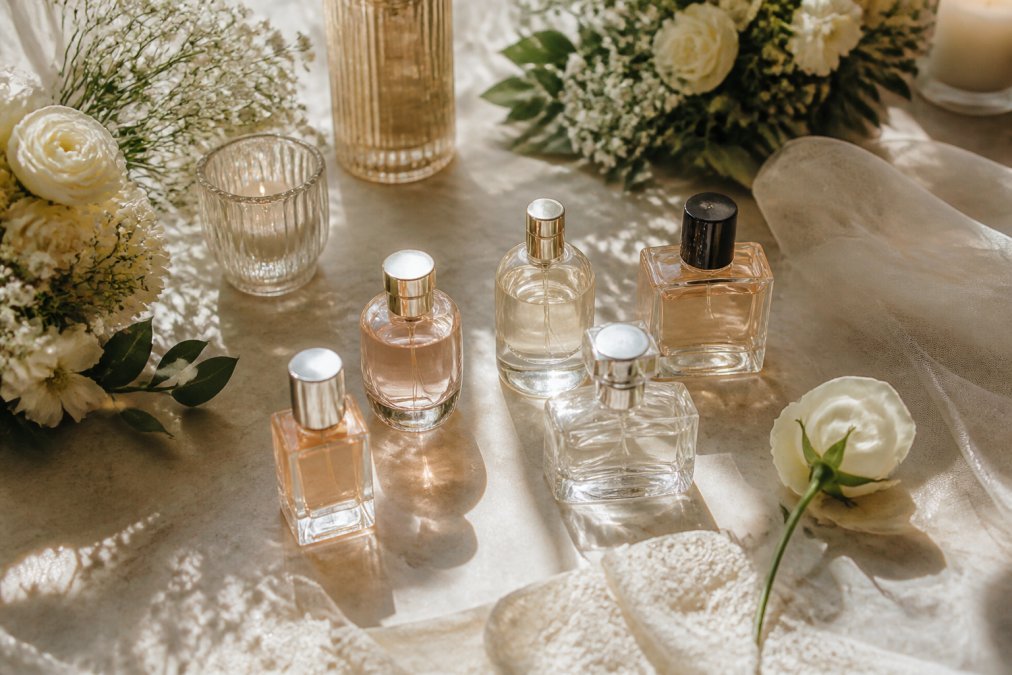
A narrative fragrance is a scent built around a specific story, memory, or theme, rather than a broad market-tested appeal. This guide from Ruth+Bo examines whether that storytelling justifies the price. Designer scents chase mass appeal; narrative scents chase meaning. The difference shows up in how the fragrance develops and who it's made for.
Designer releases are engineered to sell broadly. They often lean on familiar, pleasant profiles that won't offend in a crowded room. Narrative-driven perfumes take a narrower path. They're composed around an idea, and that idea shapes every note choice.
The trade-off is real. A story-driven scent may not please everyone, but it rarely feels generic. For buyers who want a fragrance to feel like theirs, that distinction matters more than broad appeal.
The Benefits of Narrative Fragrances: Emotional Resonance and Scent Identity
The main benefit of a narrative fragrance is emotional resonance. When a scent connects to a story, it stops being a product and becomes a form of self-expression. That connection drives repeat purchases and long-term brand loyalty.
Scent and memory are tightly linked in the brain. A fragrance tied to a meaningful theme can trigger a stronger personal association than a random pleasant smell. This is why many buyers describe a signature scent as part of their identity, not just a grooming product.
How Olfactory Memory Shapes Brand Loyalty
Olfactory memory is the brain's ability to link a smell to a specific person, place, or moment. Because smell routes through the brain's emotional centers, these associations form fast and last a long time.
For fragrance houses, this is the whole game.
Perfume Longevity and Ingredient Quality: What You Actually Pay For
Perfume longevity and ingredient quality are the two factors that most justify a higher price. A fragrance that lasts eight hours and uses quality raw materials costs more to make than one that fades in two. The question is whether you're paying for those materials or just the label.
Scent Concentration, Sillage, and Projection Explained
Three terms decide how a fragrance performs. Understanding them helps you judge value before you buy.
- Scent concentration: how much fragrance oil is in the formula. Higher concentration usually means longer wear.
- Sillage: the scent trail you leave behind as you move. Strong sillage means people notice you after you've passed.
- Projection: how far the scent radiates from your skin. High projection fills a room; low projection stays close.
Cost-Per-Wear Analysis: The Math Behind Luxury Positioning
Cost-per-wear is the price of a fragrance divided by the number of times you actually wear it. This single calculation cuts through luxury marketing faster than any review. A scent you wear twice a week for a year costs far less per wear than one that sits untouched.
How to Run the Numbers
Start with cost-per-milliliter. Divide the full bottle price by the bottle size in milliliters. A 50 ml bottle at $150 works out to $3.00 per ml. A 100 ml bottle at $200 works out to $2.00 per ml. The larger bottle is the better per-ml deal even though the sticker price is higher, a point most buyers miss at the counter.
Here's how to run it yourself:
- Note the full price and bottle size in ml
- Divide price by ml to get cost-per-milliliter
- Estimate sprays per application (most people use two to four)
- Divide total sprays by sprays-per-application to get total wears
- Divide price by total wears to get cost-per-wear
- Compare that figure against a cheaper scent you'd wear more often
The Wear-Frequency Multiplier
A fragrance you love and wear daily often wins on cost-per-wear, even at a higher sticker price. A costly bottle you save for rare occasions loses. Run both numbers before you commit, and the narrative premium becomes a decision you can actually see rather than a feeling you have to trust.
Luxury Fragrance Discovery Sets: How to Test Before You Commit
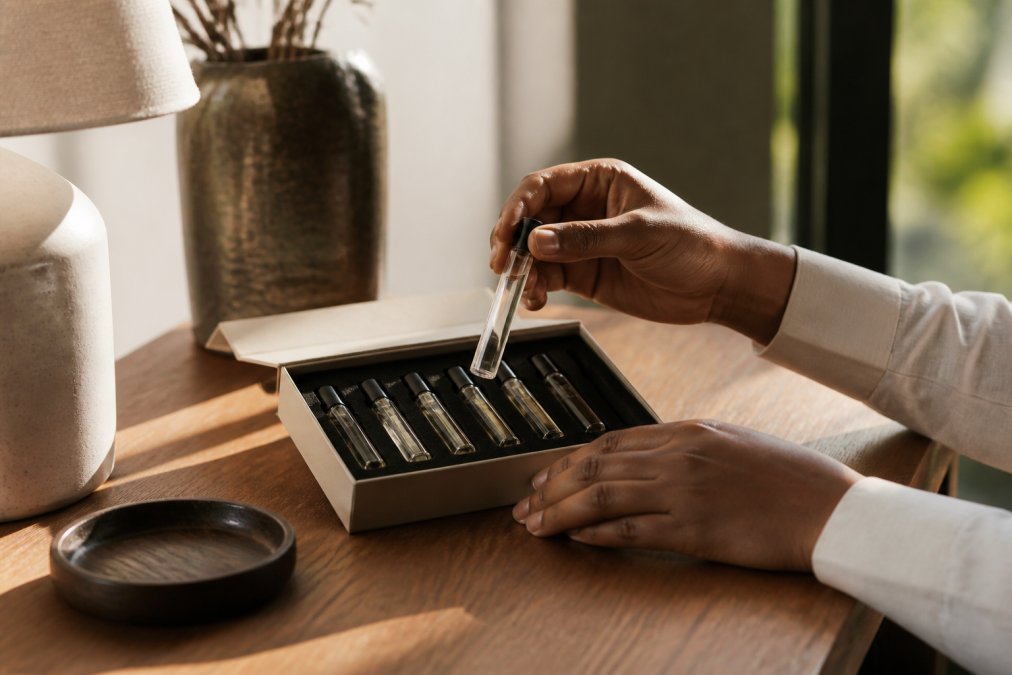
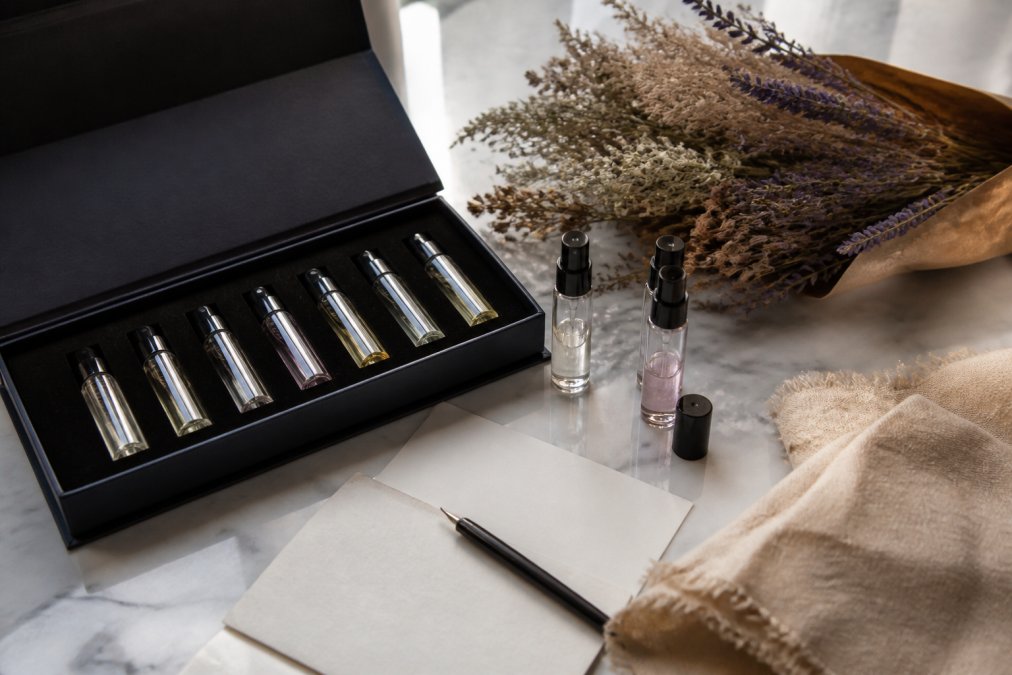
A luxury fragrance discovery set is the lowest-risk way to test scents before buying a full bottle. Instead of committing to one expensive fragrance, you sample several and learn what works on your skin. Ruth+Bo offers discovery sets built for exactly this purpose.
Blind Buy Risk and Decanting as a Safety Net
A blind buy is purchasing a full bottle without ever smelling it first. It's the single biggest source of fragrance regret. Decanting, or buying a small portion of a scent, reduces that risk.
Fragrance Fatigue: When Storytelling Stops Selling
Fragrance fatigue is the point where a compelling story no longer justifies the price. Buyers eventually ask what the scent actually does for them, and a good narrative can't answer that alone. The story opens the door; performance keeps the customer.
Why Your Nose Stops Noticing What You Love
Olfactory habituation is the brain's tendency to tune out a constant smell. It's the same reason you stop smelling your own home after a few minutes and why a perfume you adored in the store can feel invisible by midweek. The receptors aren't broken, the brain has simply filed the scent as background noise.
The Two Kinds of Fatigue
It helps to separate two patterns that get lumped together:
- Sensory fatigue: You can't smell the fragrance on yourself anymore, but others still can. This is habituation, not a performance problem. The fix is rotation, not replacement.
- Emotional fatigue: The story that once felt personal now feels like marketing. This is the fatigue that actually threatens the investment, because it's about meaning, not molecules.
How to Tell Which One You're Feeling
Ask a simple question: do other people still comment on the scent? If yes, the fragrance is performing and you've simply gone nose-blind, rotate in a second scent for a few weeks and the first one will come back. If no one notices and you no longer care whether they do, the narrative has stopped doing its job for you.
What This Means for the Investment Question
A narrative fragrance is worth it if the story still moves you after the novelty wears off. That's a higher bar than most reviews set. The test isn't whether the scent smells good in the store, it's whether you still want to wear it in month three, when your nose has stopped noticing and the marketing copy is a distant memory.
Verdict: Who Should Invest in Narrative Fragrance (and Who Shouldn't)
Narrative fragrance is worth the investment if you value self-expression, wear scent regularly, and want a fragrance tied to meaning. It's a poor fit if you want a cheap everyday scent or you buy on impulse without sampling.
Here's how the options stack up:
| Buyer Type | Best Approach | Why It Works |
|---|---|---|
| Identity-driven wearer | Full bottle of a story-driven scent | Daily wear lowers cost-per-wear |
| Curious first-timer | Discovery set | Tests skin chemistry with low risk |
| Gift shopper | Thematic gift set | Thoughtful, story-led presentation |
| Budget-only buyer | Drugstore designer scent | Lower upfront cost, less meaning |
Frequently Asked Questions
What defines a narrative fragrance compared to mass-market scents?
A narrative fragrance is built around a specific story, theme, or emotional concept that shapes every decision from raw material sourcing to bottle design. Mass-market scents prioritize broad appeal and consistent replication. Narrative fragrances often use higher concentrations of natural ingredients and complex olfactory pyramids with distinct top, middle, and base notes that evolve over hours. The brand narrative becomes part of the product's value, not just its marketing.
Do story-driven perfumes offer better longevity and quality?
Not automatically. Longevity depends on scent concentration, fixatives, and how a fragrance interacts with your skin chemistry. Extrait de parfum concentrations (20-40%) typically last longer than eau de toilette (5-15%). Narrative brands often invest in higher-quality raw materials and artisan craftsmanship, which can improve sillage and projection. But price alone does not guarantee performance. Always test a sample on your skin before committing to a full bottle.
Are niche narrative fragrances a better investment than designer perfumes?
It depends on what you value. Designer fragrances like Dolce & Gabbana The One offer versatility and broad appeal at accessible price points. Niche narrative fragrances provide uniqueness, symbolic ownership, and often superior ingredient quality. A cost-per-wear analysis helps: if a scent becomes your signature identity, the investment justifies itself. If it sits unused, it does not.
What should I look for when buying a high-end narrative fragrance?
Start with a discovery set or decant to assess how the scent performs on your skin over several hours. Check the olfactory pyramid to understand the top, middle, and base notes. Look for transparency about ingredient sourcing and IFRA compliance. Read reviews that mention scent longevity, sillage, and batch variation. Finally, consider whether the brand narrative resonates with your personal identity, because emotional resonance drives long-term satisfaction more than hype.
How does a brand's narrative influence the perceived value of a fragrance?
Marketing storytelling shapes consumer psychology by connecting a scent to memories, values, or aspirations. When a fragrance house communicates artisan craftsmanship, heritage, or faith-based meaning, buyers often perceive greater value beyond the liquid itself. This emotional resonance builds brand loyalty and supports premium pricing. However, the narrative must be backed by real ingredient quality and performance, or consumers experience fragrance fatigue and move on.
Choosing a fragrance is really a question about what you want scent to do in your life. If you want it to carry meaning, Ruth+Bo offers story-driven fragrances, curated collections for men and women, and discovery sets that let you test with confidence before you commit. Explore the collection and find a scent that feels like yours.