
How to Store Perfume to Keep It Fresh: 2026 Guide
Table of Contents
- What Happens When You Store Perfume Wrong
- Perfume Shelf Life: How Long Your Fragrance Actually Lasts
- Signs of Expired Perfume: How to Tell If Your Fragrance Has Turned
- The Best Place to Store Perfume in Your Home
- Step-by-Step: How to Store Perfume to Keep It Fresh
- Travel Storage Solutions for Your Fragrance Collection
- Sustainability and Bottle Recycling in Fragrance Care
- Frequently Asked Questions
Last Updated: September 29, 2026
What Happens When You Store Perfume Wrong
Most people who love a scent eventually watch it fade. The cause is rarely a bad bottle. It is almost always the storage environment.
Perfume is a mix of fragrance oils, alcohol, and water. That blend is sensitive to light, heat, and air. When those elements get in, the scent changes. This guide breaks down how to store perfume to keep it fresh, so your favorite bottle smells the same on day 300 as it did on day one.
The stakes are higher than most people think. Fragrance is an investment, and a bottle left on a sunny windowsill can turn in a matter of weeks. Below, we cover the science, the mistakes, and a step-by-step routine you can start today.
Perfume Shelf Life: How Long Your Fragrance Actually Lasts
The shelf life of perfume depends on its ingredients and how it is stored. Most well-kept fragrances last three to five years. Some last much longer.
Perfume shelf life is the window in which a fragrance keeps its intended scent profile before the notes start to break down. Citrus and light floral scents fade faster than heavy woods and resins. Alcohol-based formulas tend to outlast oil-based ones.
Here is a rough guide:
| Fragrance Type | Typical Shelf Life | Why |
|---|---|---|
| Citrus and light florals | 1-2 years | Volatile compounds break down fast |
| Fresh and green scents | 2-3 years | Moderate stability |
| Woods, amber, musk | 3-5+ years | Base notes resist oxidation |
| Oil-based perfumes | 1-3 years | No alcohol to slow decay |
The 3:1:1 Rule and What It Means for Storage
Think of the 3:1:1 rule as a simple memory tool for storage. Three parts darkness, one part cool air, one part seal.
Darkness slows UV exposure. Cool air limits temperature fluctuations. A tight seal keeps oxygen out. Miss one, and the other two work harder to compensate. Miss all three, and the bottle turns.
Signs of Expired Perfume: How to Tell If Your Fragrance Has Turned
Signs of expired perfume show up first in the top notes, then move down. The opening spray smells sharp or sour. The middle smells thin. The base turns syrupy or plastic.
Watch for these signals:
- Color darkens or turns brown
- Liquid looks cloudy or has sediment
- Scent smells like vinegar or nail polish remover
- The alcohol smell overpowers the fragrance
- Spray feels sticky or leaves residue
- The scent vanishes within minutes of applying
If you notice two or more of these, the bottle has likely turned. Oxidation is the usual cause.
The Best Place to Store Perfume in Your Home
The best place to store perfume is a cool, dark, dry spot with a stable temperature, but the ideal spot depends on what is in the bottle. A citrus-heavy cologne and a resinous oud have different tolerances, and matching storage to fragrance family is the detail most guides skip.
Start with the baseline every fragrance needs:
- Temperature: a steady 60-70°F. Stability matters more than cold. A closet that holds 68°F year-round beats a garage that swings from 50°F to 90°F.
- Light: total darkness or near-darkness. UV and visible light both drive photo-oxidation, and the damage is cumulative.
- Humidity: low and consistent. Under 50% relative humidity is a reasonable target for most homes.
- Air exposure: minimal. A tight cap and an upright bottle limit oxygen contact.
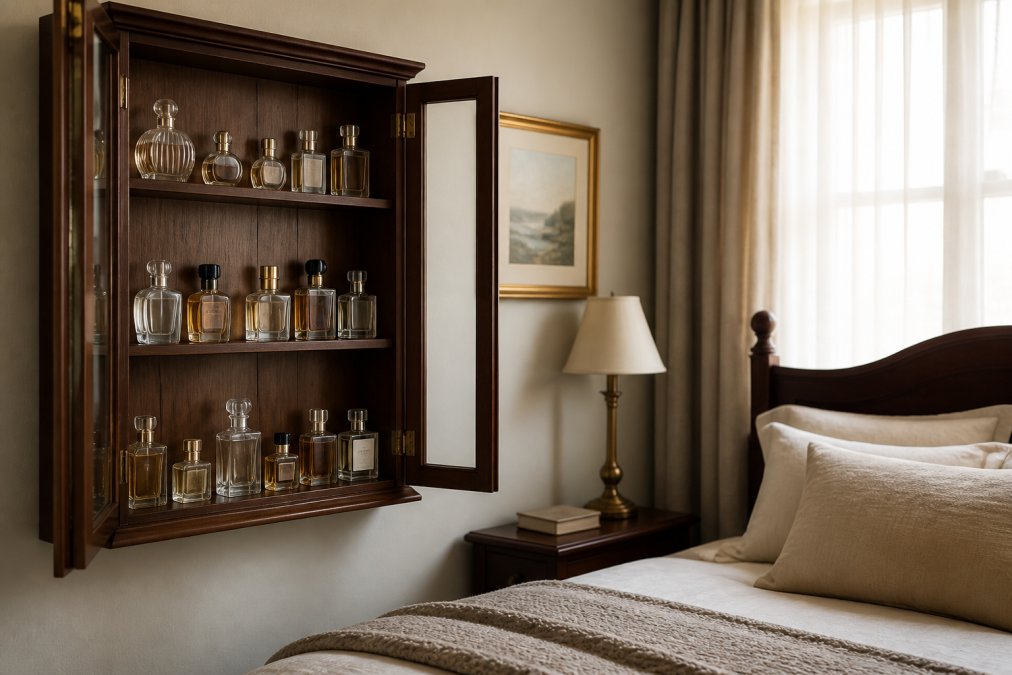
A bedroom closet, an interior dresser drawer, or a dedicated perfume cabinet on an interior wall all meet these conditions. Avoid exterior walls, which track outdoor temperature swings, and avoid rooms with appliances that cycle heat, kitchens, laundry rooms, and utility closets.
Tailoring Storage to Fragrance Family
Not all notes age at the same rate, and the difference is measurable in months, not days.
Citrus and light florals rely on small, volatile molecules, limonene, linalool, citral, and similar terpenes. These oxidize quickly when exposed to heat, light, or oxygen. The oxidation products smell sharp, soapy, or like stale citrus peel. For these bottles:
- Prioritize darkness above all else. A closed box inside a drawer is better than an open shelf in a dim room.
- Keep them cool but not cold. A steady 65°F is better than a refrigerator that cycles.
- Plan to use them within one to two years. Buy smaller sizes if you do not wear them often.
Fresh, green, and aquatic scents sit in the middle. They hold their character longer than citrus but still lose crispness under heat. Standard cool-dark-dry storage is enough, and a two-to-three-year window is realistic.
Woods, amber, resins, and musk are built on heavier, less reactive molecules. They tolerate minor temperature drift and lower light levels with less noticeable change. These are the bottles you can safely keep in a slightly less protected spot, and they often improve with a year or two of controlled aging. A three-to-five-year window, sometimes longer, is common.
Oil-based perfumes behave differently. Without alcohol to slow oxidation, the carrier oil itself can turn rancid. Store these even more carefully than alcohol-based scents: cool, dark, tightly sealed, and used within one to three years.
A Simple Decision Rule
If you are unsure where a bottle belongs, ask two questions:
- How volatile are the top notes? Citrus and light florals go in the most protected spot you have.
- How often do I wear it? Daily bottles can live in an accessible drawer; special-occasion bottles go deeper into the dark.
That is the whole system. The bottles you wear most get the most convenient spot; the bottles most prone to turning get the most protected one.
Step-by-Step: How to Store Perfume to Keep It Fresh
Follow these steps to protect every bottle in your collection.
- Pick the right room. Choose a cool, dark space like a bedroom closet or dresser drawer.
- Keep the original packaging. The box blocks light and protects bottle integrity.
- Tighten the cap after every use. An airtight seal keeps oxygen out.
- Store bottles upright. Lying them down invites leaks and air exposure.
- Group by frequency of use. Daily scents up front, special-occasion bottles behind.
- Keep the atomizer clean. Wipe the nozzle to prevent clogging and residue.
- Check the temperature. Aim for a stable range, not a cold one.
- Rotate seasonal scents. Store off-season bottles in a darker spot.
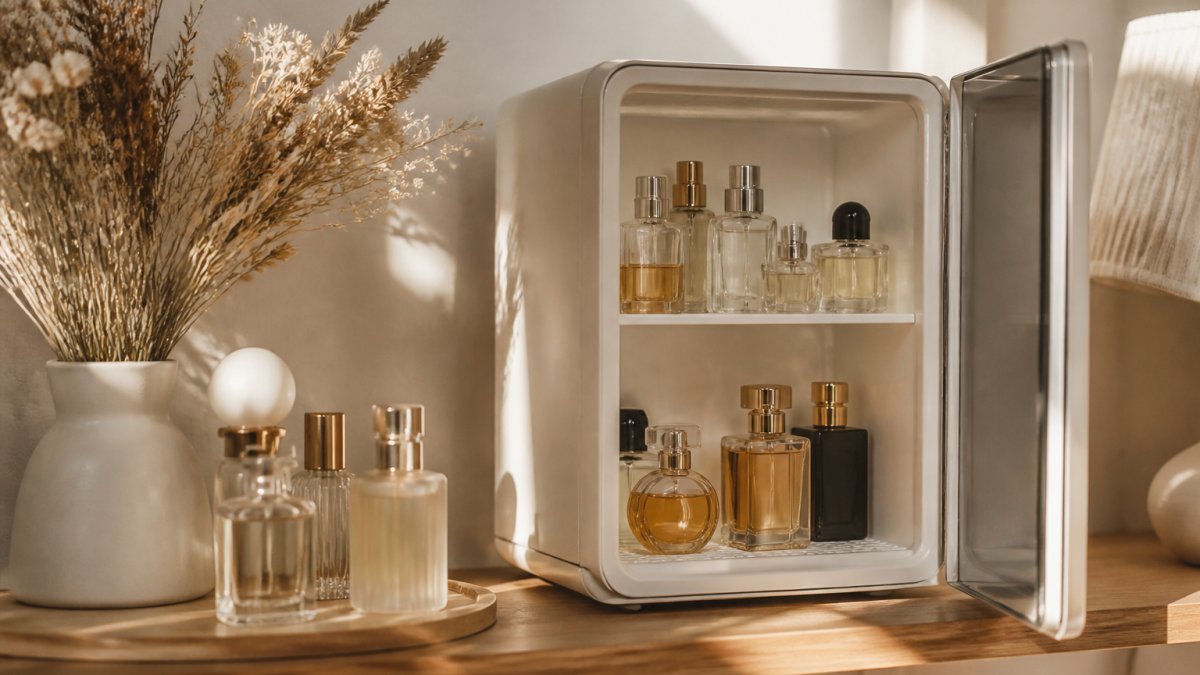
A mini-fridge set to a moderate temperature can work for a large collection. Do not use a kitchen fridge. Food odors and cold shock both harm fragrance oil.
Write the purchase date on the bottom of each box with a marker. It takes five seconds and saves you from guessing later.
Travel Storage Solutions for Your Fragrance Collection
Travel is where most collections take damage. A hot car, a checked bag, and a leaky cap can ruin a bottle in a single trip.
Pack smart with these habits:
- Use a hard-shell travel case with foam inserts
- Wrap each bottle in a soft cloth or sock
- Keep the atomizer locked or taped
- Carry fragrance in your personal bag, never checked luggage
- Avoid the glove compartment and trunk
For short trips, a travel-size atomizer is the safest choice. Decant a small amount and leave the full bottle at home. This protects the original and cuts weight.
Sustainability and Bottle Recycling in Fragrance Care
Glass perfume bottles are recyclable in most curbside programs, but the caps and sprayers often are not. Check your local rules before tossing the whole bottle in.
Clean the bottle first.
Reuse ideas for empty bottles:
- Refill with a travel decant
- Use as a small bud vase
- Store cotton swabs or bobby pins
- Display as part of a perfume cabinet
Frequently Asked Questions
Is a 7-year-old perfume still good?
It depends on how it was stored. Most perfumes have a shelf life of 3 to 5 years when kept in a cool, dark place. A 7-year-old bottle may still be usable if it was stored properly, but check for signs of expired perfume such as a sour or sharp smell, discoloration, or a change in consistency. If the scent has turned, it's best to replace it.
Does storing perfume in the bathroom ruin it?
Yes, the bathroom is one of the worst places to store perfume. Heat and humidity from showers cause temperature fluctuations and moisture exposure, which accelerate oxidation and fragrance degradation. Even with an airtight seal, repeated exposure to steam can break down the chemical composition. Move your bottles to a cool, dry place like a bedroom cabinet or closet.
Can you keep perfume in the refrigerator?
A refrigerator can work if it maintains a consistent temperature and low humidity, but it's not ideal for everyday perfumes. Frequent temperature changes when you take the bottle in and out can harm the fragrance. A mini-fridge dedicated to storage is better than a kitchen fridge. For most people, a cool, dark cabinet is simpler and safer.
How do I make my perfume last longer?
To extend perfume shelf life, store it in its original packaging or an airtight container, away from direct sunlight and heat. Keep it in a cool, dry place with stable ambient temperature. Avoid shaking the bottle and ensure the cap is tightly closed. Using a perfume cabinet or dedicated drawer can help maintain ideal conditions and preserve the scent profile.
Fragrance deserves the same care you give your skin. A cool, dark shelf and a tight seal will keep your collection smelling the way it was meant to. At Ruth+Bo, our story-driven scents are built to evolve on the skin, and proper storage helps every note arrive the way the perfumer intended. Explore our discovery sets and thematic gift sets to find a scent worth protecting. Add to cart and start your collection today.