
Why Niche Perfume Is Better: The Complete Buyer's Guide
Table of Contents
- Niche Perfume vs Designer Perfume: What Actually Sets Them Apart
- High-Quality Perfume Ingredients: Why Raw Materials Matter
- The Longevity of Niche Perfumes: Do They Really Last Longer?
- Niche Fragrance Exclusivity and Creative Freedom in Perfumery
- Why Niche Perfume Is Better for Building a Signature Scent Identity
- The Blind Buy Risk Factor: How to Shop Niche Fragrances Confidently
- Sustainability and Ethical Sourcing in Niche Fragrance Houses
- Pros, Cons, and Pricing: Making the Switch to Niche Perfume
Last Updated: August 1, 2026
The question of why niche perfume is better is one the fragrance world has debated for years, but the answer is becoming harder to ignore. At Ruth+Bo, we've spent considerable time studying how scent connects to identity, faith, and personal narrative, and the gap between niche and designer fragrance is far wider than most buyers realize. Below, we'll show you exactly how raw materials, creative freedom, longevity, and exclusivity combine to make niche fragrance the more meaningful choice, and how to shop it confidently.
Here's what most guides get wrong: they frame this as a price debate. It isn't. It's a question of intention.
Niche Perfume vs Designer Perfume: What Actually Sets Them Apart
Niche perfume is fragrance created by independent or artisan houses that prioritize creative vision and ingredient quality over mass-market sales volume. Designer perfume is produced by large fashion or lifestyle brands where fragrance is often secondary, engineered to appeal to the widest possible audience.
The distinction shapes every production decision. A designer house works from a marketing brief driven by trends and demographics. A niche house starts with the perfumer's artistic concept. Designer fragrances cluster around familiar, crowd-pleasing compositions. Niche fragrances take risks: unusual raw materials, unconventional structure, longer dry-down complexity.
How the Olfactory Pyramid Differs Between the Two
Designer fragrances are engineered so top notes dominate, built to sell in a 30-second spray test. Niche fragrances are built for the full arc. Top notes may be quieter, but middle and base notes receive far more depth. Oud resin, aged woods, rare musks, and high-concentration naturals create scent evolution that continues for hours. This is what most mass-market fragrances sacrifice for shelf appeal.
Comparison Table: Niche vs Designer at a Glance
| Factor | Niche Perfume | Designer Perfume |
|---|---|---|
| Creative direction | Perfumer-led, artistic | Marketing-led, trend-driven |
| Ingredient quality | Premium, often rare | Variable, cost-controlled |
| Batch size | Small, limited run | Large-scale mass production |
| Olfactory complexity | High, full pyramid depth | Moderate, top-note focused |
| Exclusivity | High, limited distribution | Low, widely accessible |
| Longevity and sillage | Generally superior | Generally moderate |
| Price point | Higher per bottle | Lower to mid-range |
| Signature scent potential | Strong | Low, widely shared |
High-Quality Perfume Ingredients: Why Raw Materials Matter
The single biggest driver of quality in any fragrance is what goes into it. Niche houses source premium ingredients that mass-market production cannot justify at scale: genuine Bulgarian rose absolute, real Haitian vetiver, aged Mysore sandalwood, and oud from specific regions, not synthetic approximations.
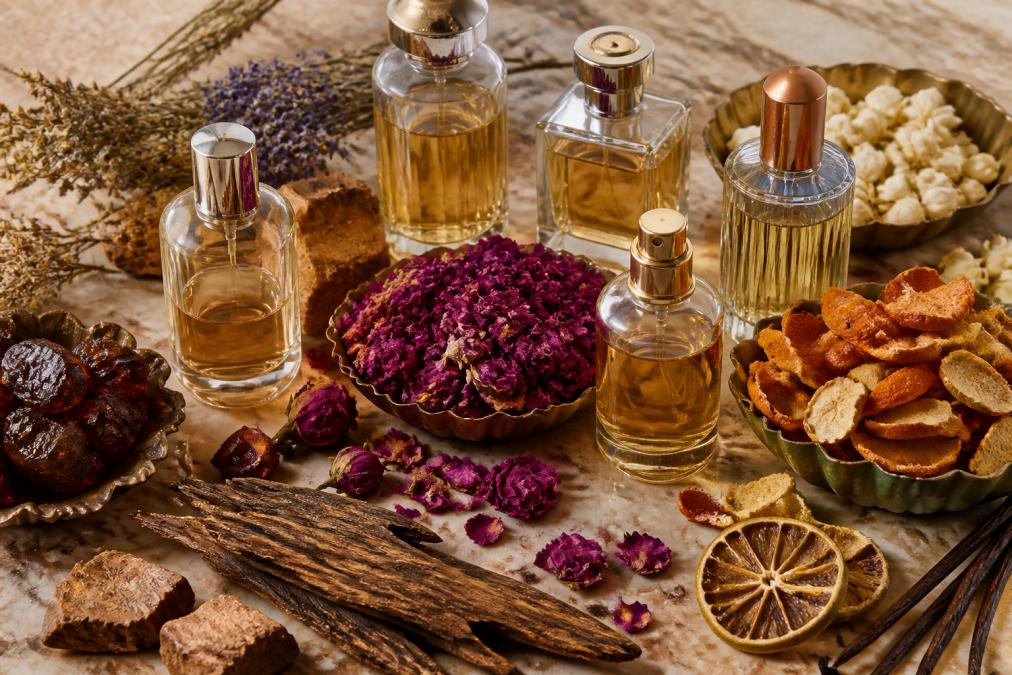
These raw materials cost significantly more per kilogram than synthetics, and the difference registers immediately on the skin. Natural ingredients interact with your skin chemistry in ways synthetics cannot fully replicate, producing characteristic scent evolution that fragrance enthusiasts describe as the fragrance "coming alive."
Synthetic vs Natural: What IFRA Compliance Means for Your Skin
The International Fragrance Association sets safety standards for fragrance ingredients used in consumer products. According to IFRA's ingredient standards and compliance guidelines, these standards govern concentration limits for hundreds of raw materials to protect consumer skin health.
For buyers, IFRA compliance is a baseline requirement. Many niche houses go further, selecting ingredients that are both IFRA-compliant and ethically sourced. What matters is that the house has formulated responsibly, which smaller, craft-oriented fragrance houses tend to approach with more rigor than mass-market operations.
The Longevity of Niche Perfumes: Do They Really Last Longer?
The longevity advantage of niche perfumes is real. Niche fragrances typically use higher concentrations of fragrance oil and rely more heavily on base notes with strong fixative properties: resins, musks, woods, and ambers that anchor the composition to the skin for hours.
A designer Eau de Toilette may project strongly for an hour and fade significantly by mid-afternoon. A well-constructed niche EDP can maintain meaningful sillage for eight to twelve hours, with base notes detectable even longer. Practically: you apply less, the fragrance performs more, and the cost-per-wear calculation shifts considerably in niche's favor.
Fragrance Concentration Guide: EDP, EDP Intense, and Beyond
Understanding concentration is essential to evaluating longevity claims honestly.
| Concentration Type | Fragrance Oil % | Expected Longevity | Best For |
|---|---|---|---|
| Eau de Cologne | 2-4% | 2-3 hours | Light, casual wear |
| Eau de Toilette | 5-15% | 3-5 hours | Everyday designer use |
| Eau de Parfum | 15-20% | 6-10 hours | Most niche releases |
| EDP Intense / Parfum | 20-30%+ | 10-14+ hours | Statement and signature scents |
| Extrait de Parfum | 25-40% | 12-24 hours | Collector and luxury niche |
Most niche houses release at EDP or above. Many designer releases sit at EDT concentration to keep production costs manageable. This alone explains much of the longevity gap.
Niche Fragrance Exclusivity and Creative Freedom in Perfumery
Creative freedom is the defining feature of niche fragrance houses. When a perfumer is not constrained by a marketing brief, celebrity endorsement, or cost-per-unit ceiling, they can work with unusual accords, unconventional structures, and ingredients that serve the composition rather than the budget.
This produces fragrances that feel genuinely distinctive. Niche fragrance exclusivity also comes from production scale: small, limited-run batches mean fewer bottles in circulation. You are far less likely to encounter your signature scent on a stranger, which matters more than most people admit before they experience it.
According to The Fragrance Foundation's industry overview, the niche and artisan fragrance segment has grown substantially as consumers seek more personal and meaningful sensory experiences. The handcrafted nature of many niche releases also means quality control is more direct. Smaller batches are easier to monitor, and ingredient substitutions are less likely when the perfumer is closely involved.
Why Niche Perfume Is Better for Building a Signature Scent Identity
A signature scent becomes part of how people experience and remember you. Designer fragrances undermine this through wide distribution, a scent worn by millions cannot function as a personal identifier.
Niche fragrance solves this structurally. Limited distribution, small batch production, and complex compositions that interact uniquely with individual skin chemistry mean your niche fragrance genuinely becomes yours.
The Psychology of Scent Identity: What Your Fragrance Says About You
Scent is the sense most directly linked to memory and emotional response. Research from Monell Chemical Senses Center's olfactory research consistently demonstrates that olfactory memory is more emotionally potent than visual or auditory memory. The fragrance you wear shapes how people remember interactions with you at a neurological level.
Choosing a fragrance with a genuine narrative, rooted in a specific story, place, or intention, adds another layer of meaning. At Ruth+Bo, fragrance collections are built around exactly this principle: each scent carries a story grounded in faith and timeless narrative, designed to connect personal identity with something larger than a trend cycle. This is why niche perfume is better for anyone who wants their fragrance to mean something.
A common mistake is choosing based on how it smells on someone else. Skin chemistry, pH, and body temperature all alter how a composition develops. Two people wearing the same niche EDP will smell meaningfully different by the two-hour mark, this is the feature, not the flaw.
The Blind Buy Risk Factor: How to Shop Niche Fragrances Confidently
The blind buy is the biggest practical objection to niche fragrance. The price point makes a wrong decision feel costly.
The solution is structured sampling before committing to a full bottle. Discovery sets allow you to test a range of compositions on your own skin, in your own environment, across a full day of wear before deciding.
Practical steps to reduce blind buy risk:
- Start with a discovery set. Sample multiple scents before committing to a full bottle.
- Wear each sample for a full day. Evaluate at the one-hour, four-hour, and eight-hour marks.
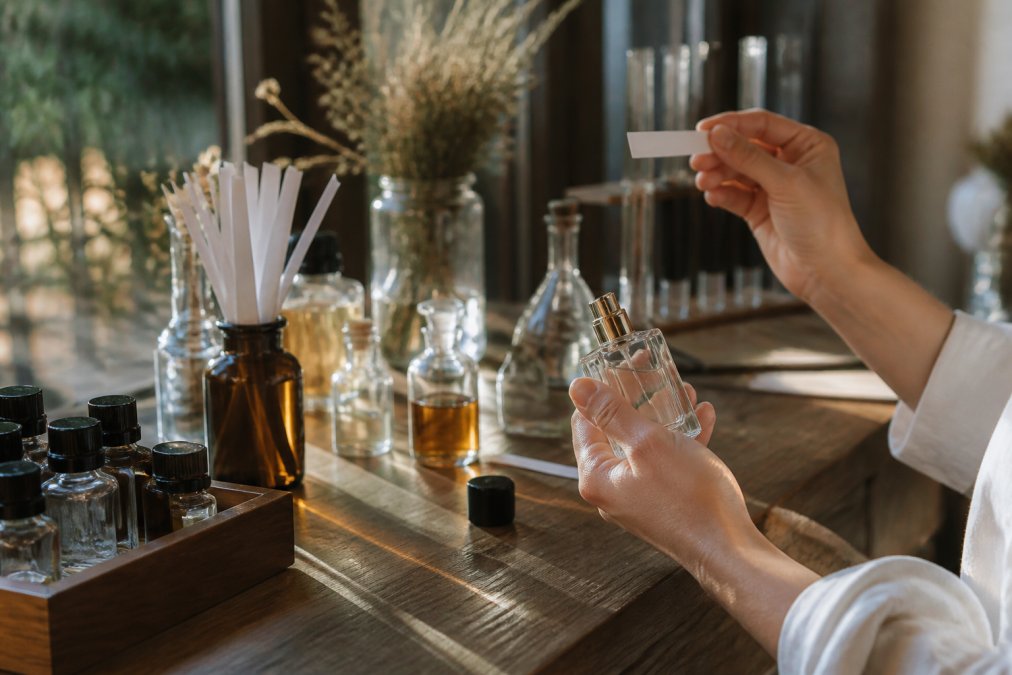
- Test on pulse points, not paper strips. Paper strips cannot replicate skin chemistry interaction.
- Read community fragrance notes. Fragrance communities describe scent profiles in granular detail.
- Check the house's return or exchange policy. Reputable niche houses stand behind their formulas.
Sustainability and Ethical Sourcing in Niche Fragrance Houses
Mass-market fragrance production operates at a scale that makes ingredient traceability difficult. Smaller niche houses have a structural advantage: they source smaller quantities, making direct relationships with growers and suppliers feasible. Many niche perfumers can name the specific farms or cooperatives supplying their rose absolute or vetiver root.
For conscious consumers, this matters beyond ethics. Ethically sourced raw materials are often higher quality because they come from producers who prioritize crop integrity over yield volume. The sustainability argument and the quality argument point in the same direction.
As documented in USDA Agricultural Marketing Service's guidance on sustainable sourcing, transparent supply chains in agricultural products are increasingly recognized as quality indicators as well as ethical ones. Niche houses that publish their sourcing practices give you verifiable information that mass-market brands rarely provide.
Pros, Cons, and Pricing: Making the Switch to Niche Perfume
The decision to move from designer to niche fragrance involves a practical trade-off assessment.
Pros and Cons of Niche Perfumes
Pros:
- Superior longevity and sillage from higher concentration and premium base notes
- Genuine exclusivity: limited distribution keeps your scent personal
- Creative compositions that evolve meaningfully across the olfactory pyramid
- Ethically sourced, traceable raw materials in many cases
- Stronger signature scent potential due to complex, skin-reactive formulas
- Narrative and intentionality built into the composition
Cons:
- Higher upfront cost per bottle compared to designer alternatives
- Blind buy risk requires sampling strategy before full commitment
- Less widely available, often requiring direct purchase from the house
- Some compositions are polarizing
Pros and Cons of Designer Perfumes
Pros:
- Widely accessible through department stores and online retailers
- Lower price point for entry-level purchase
- Familiar, crowd-tested compositions with broad appeal
- Easy to replace or repurchase anywhere
Cons:
- Mass production means limited exclusivity
- Lower fragrance oil concentration typically reduces longevity
- Marketing-driven briefs often limit creative ambition
- Ingredient quality is frequently cost-controlled
- High distribution means your scent is shared by many others
Pricing for niche fragrances varies considerably by house, bottle size, and concentration. Ruth+Bo's discovery sets are designed to give you meaningful access to the collection without requiring a full-bottle commitment upfront. Visit the Ruth+Bo website for current pricing on discovery sets and full bottles, as options are updated regularly.
The cost-per-wear comparison almost always favors niche when you account for higher concentration and longer longevity. A bottle that lasts twice as long at one and a half times the price is the better value, not the more expensive choice.
Frequently Asked Questions
What is the difference between niche and designer perfumes?
Niche perfumes are produced by independent or artisan fragrance houses that prioritize creative freedom, premium raw materials, and limited batch production over mass-market appeal. Designer perfumes are created by luxury fashion brands and manufactured at scale for broad accessibility. The core differences show up in scent complexity, ingredient quality, exclusivity, and how the fragrance evolves through its top, middle, and base notes on your skin over time.
Do niche fragrances actually last longer than designer ones?
The longevity of niche perfumes is generally stronger because they tend to use higher concentrations of fragrance oil and premium raw materials that anchor the scent profile more effectively. Many niche offerings are formulated as Eau de Parfum or higher concentrations, which support deeper sillage and extended wear. That said, longevity also depends on your skin chemistry, hydration level, and where you apply the fragrance, pulse points tend to project the scent best.
Why are niche perfumes more expensive than designer fragrances?
Niche perfume pricing reflects the cost of sourcing premium or rare ingredients, small-batch production, handcrafted compositions, and the absence of mass-market advertising budgets that designer brands use to subsidize lower retail prices. You are paying for the perfumer's artistry, ingredient quality, and exclusivity rather than a celebrity endorsement or department store placement. Discovery sets offered by many niche fragrance houses let you sample before committing to a full bottle.
How do I choose a niche perfume without smelling it first?
Start with a discovery or sample set from the fragrance house, many niche brands offer these specifically to reduce the blind buy risk. Read detailed descriptions of the top, middle, and base notes and how the scent evolves. Look for IFRA-compliant ingredient disclosures so you understand what's in the composition. Pay attention to concentration levels: a higher-concentration formula will smell richer and last longer. Checking return or exchange policies before purchasing also protects your investment.
Are niche perfumes safer or cleaner for your skin than designer fragrances?
Many niche fragrance houses voluntarily follow IFRA (International Fragrance Association) guidelines for ingredient safety, and some pursue additional clean or transparent sourcing standards. However, 'niche' alone does not guarantee a cleaner formula, you should look specifically for brands that disclose their ingredient lists, confirm IFRA compliance, and ideally offer third-party testing verification. Conscious consumers should ask directly about sourcing practices and certifications before purchasing.
Can niche perfume work for everyday wear, or is it only for special occasions?
Niche perfumes are designed to be worn as a genuine signature scent, not just reserved for events. The richer composition and longer longevity actually make them practical for daily wear, you typically need fewer applications to maintain projection throughout the day. The key is matching the scent profile to your lifestyle: lighter, citrus-forward or floral niche compositions suit daytime and professional settings, while deeper oud or resinous base notes may feel more fitting for evenings or cooler weather.
Finding a fragrance that genuinely fits your identity, your skin, and your values is harder than it should be in a market flooded with mass-produced options. Ruth+Bo was built to solve exactly that problem, offering story-driven fragrances rooted in faith and narrative, available through discovery sets that let you sample before committing and thematic gift sets that make meaningful gifting straightforward. Add to cart and find the scent that was made to be yours.
This article was written using GrandRanker